8 hours ago
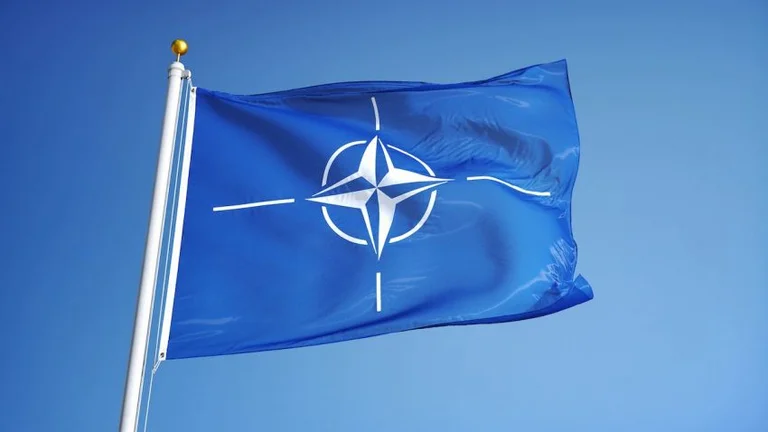
NATO warns: Europe must wake up, space is the new front of war
Periskopi(a year ago)
(a year ago)“Elon Musk and rival countries like China and Russia will dominate space unless European countries take serious action”, a top commander of the country has warned. NATO. “cannot have European sovereignty without investing in space. Today, a major, even urgent wake call is needed for Europeans to take steps”, Admiral Pierre Vandier said. [...]
There can be no European sovereignty without investing in space. Today, a major, even urgent wake call is needed for Europeans to take steps”, NATO Admiral Pierre Vandier said.
America's “We are calling for a kind of emancipation, for Europeans to mature and improve in many areas, including space. It's a great opportunity. ”
It becomes known that the war in Ukraine has shown the importance of spatial resources for communications in the field of battle and intelligence collection.
It has also stressed Europe's painful dependence on a very limited number of American companies, mainly SpaceX and Musk.
Moscow wants to place nuclear weapons in space?
At the same time, space is increasingly becoming a potential conflict zone.
The US Space Command recently described the space as a highly competitive strategic “environment”, referring specifically to China and Russia, and adding that Allied assistance will be the key to achieving dominance.
Secretary - General NATO's Mark Rutte has also voiced concern that Moscow wants to deploy nuclear weapons into space.
Now we see a number of actors developing space weapons” today, Vandier said, citing orbital weapons ʹ bombs placed in orbit that can fall to Earth by command, avoiding detection by early warning systems as well as weapons that can block or bring down satellites out of orbit.
“This means that we should monitor carefully what others are doing and be resistant to their attempts to destabilise”, Vandier added.
The rapid billionth of space is changing the structure of this space, which requires Europeans to change the business model of their companies, Vandier points out.
The military relies on commercial infrastructure in space, and most satellites and consultants are of double purpose, serving both civilian and military purposes.
To be flexible, the French Admiral explained, countries can no longer rely solely on large satellites in geostationary orbit, but need reserve constellations in earth's lower orbit.
Land's low orbit satellites are cheaper at between $100,000 and 150,000 dollars, compared to $300 million to $400 million worth of a single geostationary satellite.
They can also be launched more frequently at lower costs, writes PolyticoHe's following in on Telegrafie.
Market called “Space” is dominated by SpaceX
While Europeans are competitive in the field of geostationary satellites thanks to companies such as ArianGroup, the market called “New Space” is dominated mainly by SpaceX, which has drastically reduced the costs of launch thanks to reused missiles.
The economic model chosen by Europeans is based on geostationary satellites. Today the question is whether Europeans have reached a point where they have to change their model. From the economic point of view, if they don't, I think they'll be pushed from the market”, Vandier said.
Europeans today are far from the market center. This is a big problem because when it comes to European sovereignty, American, military or commercial offerings prevail, offering necessary service”, he continued.
Several European startups are reportedly trying to enter the New Space market, but with limited success.
The first launch of a Spectrum missile from the German start Isar Aerospace ended in an explosion less than a minute after being set up on March 30th by the Norwegian space centre Andøya.
In April, Norwegian defence company Kongsberg launched its first satellite, but through SpaceX.
Vandier proposes adoption of European Defence Law
Vandier has ideas about how Europeans can stay in the game.
NATO Commander, who has long complained that it is easier to be a technological entrepreneur in the US than in Europe, has proposed to the European Commission to adopt a European defence law.
This law would create conditions for developing new defence technology by establishing financial, regulatory and tax conditions that would encourage young entrepreneurs to develop dual-use technologies for Europe.
It also supports the US call for Europeans to create a space market modeled after them, which would allow the US Space Command to use commercial technology for monitoring space and intelligence collection.
According to Vandler, NATO is playing an increasingly active role in space, but still has much work to do in the proper division of tasks among allies.
“We are equipped with the means needed for understanding and strategic action, especially through awareness of the space situation. We will be able to see, understand and coordinate actions and inform 32 allies of what is happening. ”
NATO as an alliance could then decide on countermatures.
This will give us strength: it would not have the same degree or political significance if only France or the US would react”, Vandier said.
Besides the US and France, NATO's main space powers are the United Kingdom, Italy, Norway, Canada and Germany, according to the French Admiral.
“
Otherwise, NATO countries recognised space as an operational field in 2019.
However, this year's NATO capacity targets do not take into account space enough. /Periscope/