8 hours ago
MPJD) allocated nearly 15 thousand euros for the criticised book of Skelzen Gashi, bought 500 copies
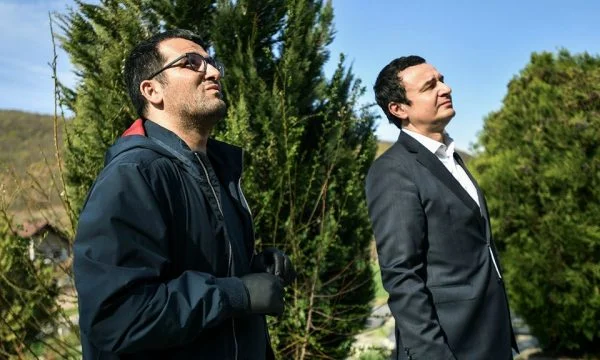
Periskopi(a year ago)
(a year ago)The Ministry of Foreign Affairs and Diaspore (MPJD) has acquired 500 copies of the book “Maskrat in Kosovo 1998-1999” of author Shkelzen Gashi, director of the non-governmental organisation “Avere”, simultaneously, former adviser to Albin Kurti. Copies of books sought by the Foreign Ministry are translated into English. They were purchased from the “Dukagini” [...]
Copies of books sought by the Foreign Ministry are translated into English.
They were purchased from the publishing house “Dukagini” through a negotiated tender without the publication of the MPJD '%s' contract announcement.
The tender has cost about 15 thousand euros.
During negotiations between the members of the assessment commission and the representative of the publishing house “Dukagini”, the parties reached agreement on the 1 euro discount from 15,000 to 14,999.00 euros.
A bigger discount of the price is considered impossible by “Dukagini”, which has claimed that the sale of the book is done without any financial benefit to the company.
The company's representative, Clarita Demiri, has said that profits from the sale of the book will go to support the creation of a platform dedicated to war crimes in Kosovo.
The reason for this is that the sale of this book is done without any financial benefit on our part, in order to support the creation of a war crimes site dedicated to Kosovo, which will be realised with revenues from this book”, the representative of the publishing house “Dukagini” was quoted as saying in the negotiation process.
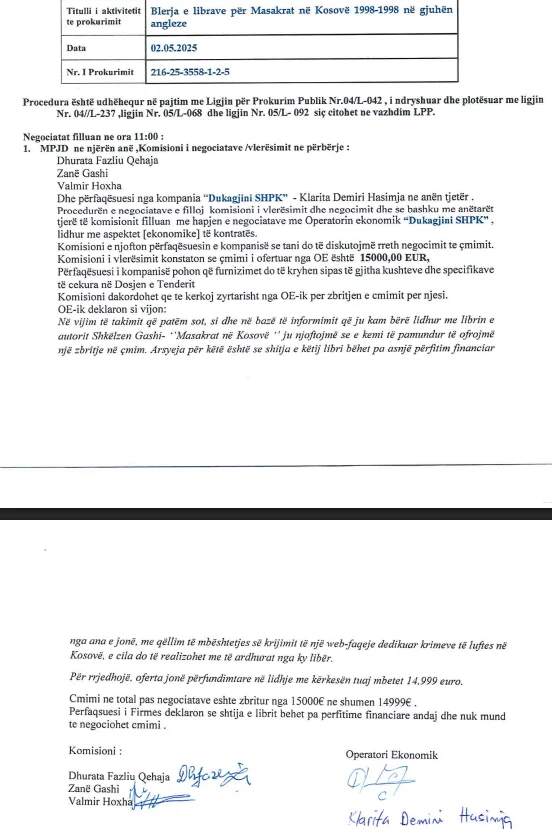
As a result, our final bid regarding your request remains 14.999 euros. The total price after the negotiations has dropped from $15,000 to 14999,”.
According to the Tent File for “the purchase of books for the 1998-1999 massacre in Kosovo in English”, MPJD has set as criterion “a number of massacres documented by Serbian forces against civilians, mainly Albanians, in 1998-1999”.
This book has been conveyed with criticism by historian Durim Abdullahu, who has identified the book's anomalies for massacres committed in Kosovo.