7 hours ago
Kosovo, Guinea, two countries with the largest decline in the World Media Freedom Index
Periskopi(a year ago)
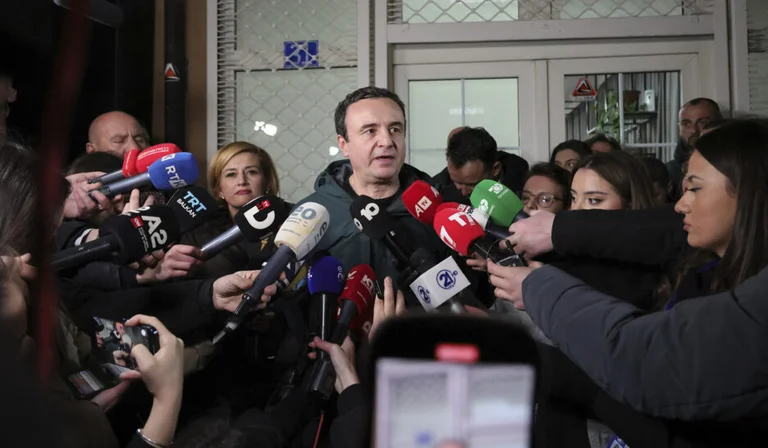
(a year ago)The latest Reporters Without Borders report on media freedom in most countries of the world has escalated the media situation in Kosovo. Kosovo fell 24 places in this report. From 75th place in 2024 this year is 99th. It may seem unbelievable, but by [...]
Kosovo fell 24 places in this report. From 75th place in 2024 this year is 99th.
It may seem incredible, but out of 180 states that are part of this report, only one state has been in greater decline than Kosovo.
It's about Guinea, which has fallen for 25 countries, and Kosovo for 24.
Kyrgyzstan has fallen for 24 countries, the same as Kosovo.
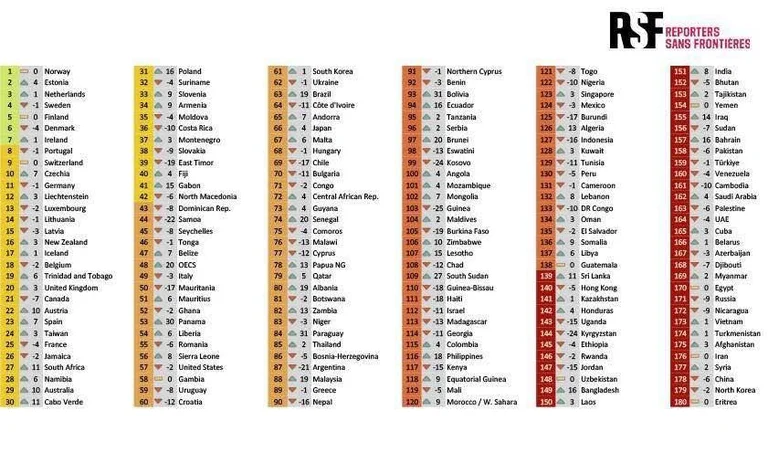
Samoa, for example, has a 22-seat drop. Argentina has a 21-seat decline, while other countries like Burkina Faso have fallen for 19 countries,
With the latest index, Kosovo is the worst position for media freedom in the region and the European Union.
This is ranking 99.
Albania ranks 80th, Bosnia and Herzegovina at 86th, Macedonia 42nd, Montenegro 37th, and Serbia 96th.
This is one of the lowest rankings Kosovo has had in history, marking a drop for 24 countries in contrast from last year.
If the indicators are spoken of, Kosovo has marked a decline from 59 to 93.
In economic indicators, Kosovo last year was at 71 this year, at 101. There are also reductions in social and security indicators, while rising in the legislature.
The report has cited the heavy language used against journalists, stressing them by power, linking journalists with Serbia.
“Although journalists are trusted by society, independent media and investigative journalists are often targets of insults and false news in social media. They are falsely accused of “cooperating with enemy”, rhetoric used by political and religious groups”, It says in the report.
Report describes Kosovo as media market, citing RTK as a public broadcaster. Among the problems is highlighted the violation of RTK's independence, as well as the KPM law that was brought down by the Constitutional Court. Political attacks are also mentioned.
“Even if the media manage to keep politicians responsible, journalists continue to be the target of political attacks. The Independent Media Commission (KPM) was subjected to a controversial legislative reform that risks further hampering its independence. Before the 2025 general elections, some private media were targeted by a boycott by the government, which also threatened the public broadcaster's independence RTK. Serbian-language media, which are under pressure from Serbian political forces, have complained of discrimination in access to public information, especially in their language, which is that of the constitutional minority”, It says Reporters Without Borders report.
The report also speaks of the economic aspect of the media.
“Media is financed mainly by advertising revenues from the private sector and is sometimes supported by municipal authorities or political parties. In addition, through their owners, private media editorial is exposed to interference by powerful political or business groups. Serbian-language media face the additional challenge of a small market in which some media depend on financing from neighbouring Serbia, while independent media would not survive without international financing”,It says in the report. /Periscope/