7 hours ago
What does Kosovo benefit from the CISMOA, the pact it linked to the US?
Periskopi(a year ago)
(a year ago)The Kosovo Security Force (FSK) and the US Department of Defence signed, on 13 May, the Co-operation and Security Agreement, known as the CSMOA. What is this pact, and how does it help Kosovo? The secure exchange of information and increased interoperability between the United States military and the Force [...]
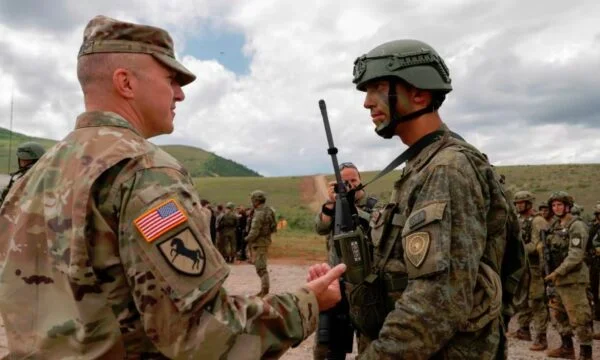
The secure exchange of information and increased interoperability between the United States military and the Kosovo Security Force (FSK) is formed with a pact between the two countries.
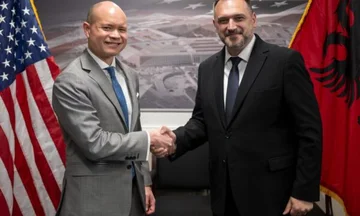
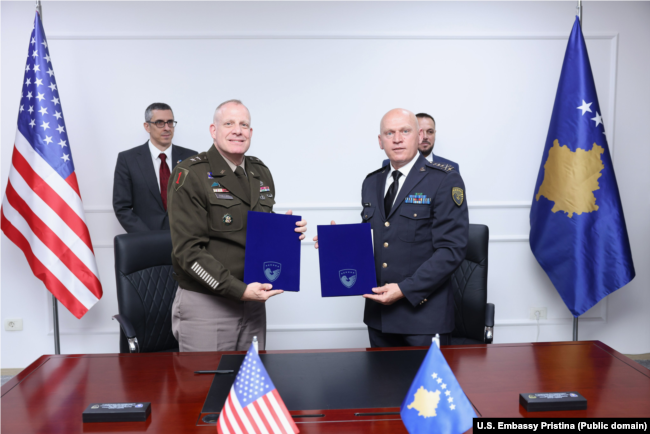
The Co-ordination and Security Agreement (CISMOA) was signed on 13 May by American Major General John Phillips, and Kosovo Lieutenant General Bashkim Jashar in Pristina.
Kosovo is the 33rd state with which the US has signed such an agreement.
From the American Embassy in Pristina, the pact was named as the “a major step forward in strengthening and security of both nations”, while from the Kosovo side as a “deal of particular importance”.
What is CISMOA?
The US signed CISMOA with international partners to enable safe exchange of sensitive military information and use of advanced communication equipment.
Kosovo's acting defence minister, Ejup Macedonia, explains about REL that the US is one of the main partners of military co-operation, from the KSF provides “most of the weapons and equipment”.
These include those with advanced technology, cryptographic data, and that “itself have many sensitive” elements.
CISMOA, says Macedonia, “can only afford that we're going to continue buying these devices we have in line with equipment and with US systems”
Former Kosovo Intelligence Agency chief inspector and security expert Burim Ramadani says the new pact represents the US element of symbolic and support for Kosovo, in particular for the security sector.
CISMOA, according to Ramadani, “means that KSF advances in communication and use of the same devices, in the same system, in the same line as the American Army, in cases of joint operations and interoperability”.
He adds that the agreement includes exchanging military information and intelligence.
This is a very important part. Once we say information exchange is known to be talking about classified information”, Ramadan points out.
How does CISMOA help Kosovo?
Kosovo authorities say the contents of the new agreement with the US cover many areas and aspects of military co-operation.
Much of the agreement is classified and cannot be transparent to the public, according to the Kosovo Defence Ministry.
However, for issues already known to the public, Macedonia explains in concrete terms what Kosovo benefits from CISMOA.
For example, the opposing missile system Yavelin, in the process of buying is Kosovo, according to Macedonia, contains data that has a link to advanced technology.
CISMOA allows the KSF direct access, through the secure communication channel, in the sensitive data contained in the system, as well as in the update given to those data, for more effective use, he says.
So we don't need additional demands and bureaucratic procedures, but this agreement allows us access to the data, into the sensational and classified elements of this system, and which have the US base of”, Macedonia points out.
He adds that the CISMOA allows the same approach to classified elements as well for American Black Hawk helicopters, for which Kosovo authorities have publicly expressed interest in having the KSF inventory.
This agreement, says Macedonia, opens the possibility to the Ministry of Defence of Kosovo to continue with the purchase of equipment and weapons from the US, according to the state-run “state concept”, procuring directly with the US government.
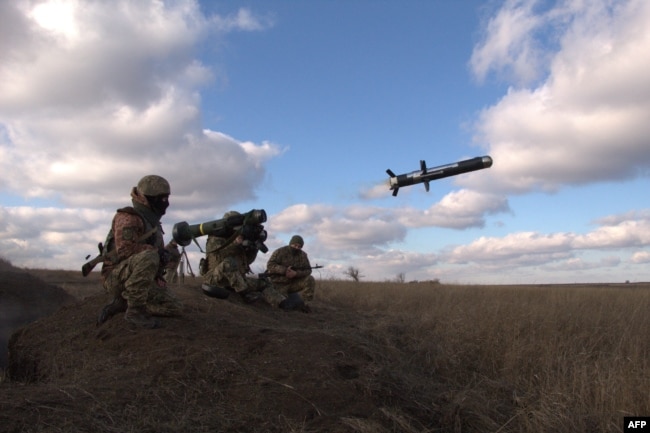
Countries that are not part of the CISMOA cannot have this access to updated military equipment data with sensational and GPS elements [the Global Positioning System], without any specific request from them and no special approval from the US, the minister in Kosovo's Defence Task shows.
The secure communication system, which guarantees CISMOA, is considered necessary for states that want to build military partnerships, and as such partnerships can be made on the basis of mutual credibility.
Ramadani stresses that credibility is linked to the exchange of information safely and communication with reliable equipment between the two armies.
In the concrete case, according to him, the KSF will advance in using the secure line with the US.
This, according to Ramadani, means direct communication with similar equipment and the same system, between the two armies in which security measures and information exchange are high.
So, they can't be bugged by hostile states or organisations”, Ramadan notes.
Although each country's armies have its own rules of internal and communication functioning, Ramadani says that, with the agreement reached, in the event of any interaction between KSF units and US Army units, in any peaceful mission or joint military exercises, the rule of internal functioning of the US Army would be valid.
“The US KSF and military will have same procedures and standards, as well as the same approach. So, like [ KSF to be a unit of the American Army, in terms of the communication system with them”, he explains. /Periscope/