7 hours ago
Inoculation Against HPV, over 13 thousand children vaccinated in Kosovo
Periskopi(a year ago)
(a year ago)During the first four months of 2025, over 13 thousand girls and boys around the age of 12 have been vaccinated in Kosovo against Human Papiloma Virus (HPV), the virus associated with certain types of cancer, including that of the cervix. Officials at the Kosovo National Institute of Public Health (IKSHPK) confirm the vaccine is under [...]
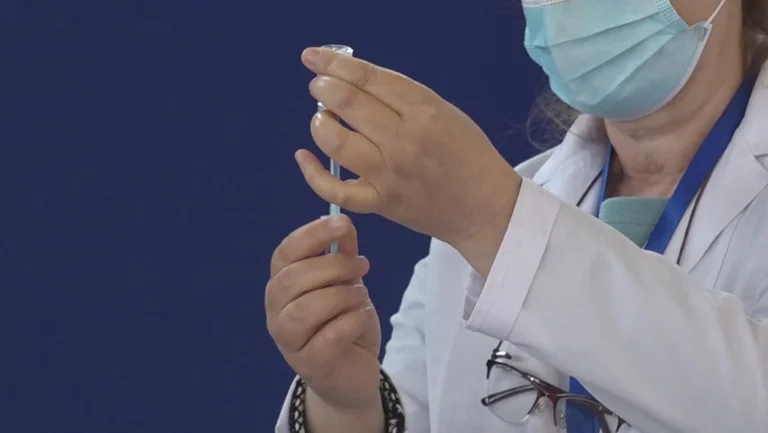
During the first four months of 2025, over 13 thousand girls and boys around the age of 12 have been vaccinated in Kosovo against Human Papiloma Virus (HPV), the virus associated with certain types of cancer, including that of the cervix.
Officials of the Kosovo National Institute of Public Health (IKSHPK) confirm that the vaccine is being implemented in all municipalities, though with challenges highlighted in Rahovec. Meanwhile, parents of children are facing difficult decisions because of disinformations, doubts, and social influences.
Human Papiloma Virus (HPV) is a group of common viruses that can infect the skin and mucose in different parts of the body, including the mouth, throat, bone organs and anus. Some species cause sexually transmitted infections, while others may lead to the development of cervical cancer, anus, penis, or even throat, language, and almonds.
The vaccine against this virus, according to experts, is one of the most powerful preventive measures available to the public health system, writes Radio Free Europe.
Boys Including and Applying Legal - Based vaccine
Dr. Fetije Fetaj, director of the IKSHPK Immunification Programme, says that child vaccine has started since early February for boys. It highlights for Radio Free Europe that the process is mandatory and envisioned in the official communication calendar.
From February 2nd, we even started with HPV vaccinating boys. Up until now, up to 45 percent of the students in this age group have been vaccinated”, she says.
This vaccine is more important than mandatory. We know it's very easy to read incorrect information on social networks, but accurate information is obtained from health professionals. It is a huge burden that a parent touth says no to the vaccine against Human Papiloma Virus”, Fetaj points out.
For many parents, the decision to vaccinate children has not been easy. Some have been influenced by incorrect information on social networks, while others have sought direct consultations with health professionals to make the right decision.
Blerta, a mother from Pristina, tells about the REL that it was initially against the vaccine, but after meetings with doctors and after personal research, it changed its stance.
I didn't mean to give him the vaccine at all. I thought it didn't have the effect that was being said, and I thought it might have other consequences on the girl's health. I've had the opposite idea, but I've been convinced soon after meeting with professionals. Then I even researched the” vaccine, Blerta explains.
Rahoveci, municipality where vaccines still exist
In the municipality of Rahovec, the vaccine process is not moving at the same pace as in other municipalities. QKMF Director Elbunin Kryeziu points out that there is a huge reluctance on the part of parents.
Some of them continue to hesitate and take that stance. Some of them have also been influenced by religious aspects, those individuals have refused all vaccines, not just this. [ HPV]. We've had and still have trouble vaccinating”, Kryeziu says.
N. Bajraktari, 18, high school student “Shjefan Xhechovi” in Pristina, says he does not intend to be vaccinated unless it becomes mandatory.
If necessary, mandatory, yes, I would be vaccinated, otherwise not. Until I have any health problems why would I vaccinate”, Bajraktari says.
He admits that he has not discussed the matter with his parents and that the information about the vaccine is received mainly in the media.
The choice to vaccinate children at the age of 12. Studies show that the organization of children aged 11,13 reacts more strongly to the vaccine by producing a higher and longer-term level of antibodies.
The World Health Organization recommends vaccination at the age of 9,14, with a special focus on the age age group 11,12, to ensure maximum protection against HPV infections.
In the absence of a vaccine in past years, some parents in Pristina had chosen to vaccinate their child in the private sector, paying up to 300 euros per dose.
IKSHPK Executive Director Ardita Barak highlights the importance of gender equality in the communication process, underlining that the involvement of boys is a step towards equal access to health protection.
“Importing HPV vaccines for both genders, in addition to the pre-emptive role, enables and guarantees equality in access to the prevention of diseases caused by HPV. I The KSHPK, through the management of the process, along with the QKMFs and the vaccination units in every municipality, will give their best to ensure that this process is as easy and accessible to each parent and child”, Barak points out.
Radio Free Europe has asked the Health Ministry to provide an overall assessment of the vaccine process and to let the actual amount of vaccines at hand be known.
Until the publication of this article, an official answer has not been received. /Periscope/