8 hours ago
Huth rebels brave despite US attacks
Periskopi(a year ago)
(a year ago)Since March 15th, the United States has intensified its air campaign against rebels Jeenas, Huth, who are backed by Iran. Washington has claimed to have hit over 1,000 targets. The air campaign aims to halt the rebels' attacks on boats in the Red Sea and increase pressure on Iran in the middle of negotiations [...]
The air campaign aims to halt the rebels' attacks on ships in the Red Sea and increase pressure on Iran in the midst of nuclear negotiations.
But, despite the extent of the attacks, analysts have raised questions about whether this attempt has caused any long-term impact, writes REL, broadcast Periscope.
“The Huth rebels remain located”, said Colin Clarke, director of politics and research at the Souhan Group, which handles security and intelligence counseling with headquarters in New York.
He stressed that since some of the rebels' infrastructure has been destroyed and personnel killed, the group appears to have turned this campaign to its advantage.
Any losses will likely be short-term and temporary”, he told Radio Free Europe, citing the strengthening of recruiting by the Huth rebels and the collection of funds.
Jeremy Binnie, Middle East defence analyst at the intelligence company Jasen, added that the rebels' ability to continue to conduct attacks on Israel separately and American fears undermine US claims that they have degraded their capacities.
The “is becoming more and more shameful for the US, whenever the Huth rebels attack Israel or bring down an MQ-9”, Bannie said.
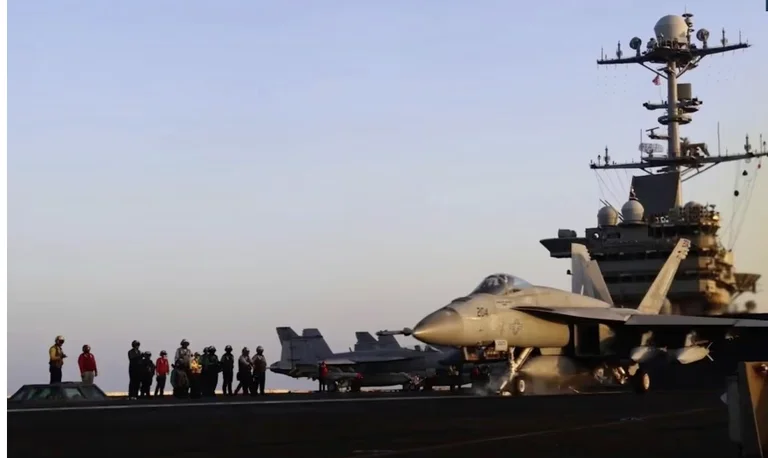
An admission recently made by the U.S. Navy, that an F/A-18 fighter plane crashed by USS Harry S. Truman during an maneuver to avoid an air strike by the Huth rebels has only reinforced the perception that the group continues to pose a major danger.
Meanwhile, the group has continued to launch missiles towards Israel, taking responsibility 2 May for two air strikes that prompted the Israeli Defence Forces to back the two attacks and activate warning sirens throughout the country.
The US Army Central Command insists that the campaign has degraded the pace and efficiency of the rebel Huthhi attacks.
The ballistic missile launch has dropped by 69 percent. Moreover, fears attacks have dropped by 55 percent”, the Central Command said through an announcement April 27th. “Iran undoubtedly continues to provide support to the Huth rebels. Rebels would continue to attack our forces only with the support of the Iranian regime”.
Have the attacks affected reports with Iran?
Analysts warn that the attacks may have an opposite effect on regional dynamics, drawing the Huth rebels closer to Iran instead of isolating themselves.
The group officially known as the Ansarallah Movement and declared a terrorist organisation by the United States is a key member of what is known as “Resistance Box” Iran's network of non-state actors, which has faced losses last year.
But since the outbreak of war in Gaza in October 2023, the Huthi rebels have stepped up their role within this alliance, taking responsibility for the attacks on Israel and Israel-related ships, attacks they have said to have carried out in solidarity with Palestinians.
While increasing their influence has enabled them some autonomy, experts said they remain deeply dependent on Iran for weapons and strategic support.
We know exactly what the U.S. Army can do and you've been warned”, US Defence Secretary Pete Hegseth wrote on May 1st to Iran. “You'll pay the consequences at the time and place we'll choose”.
However, Clarke argued the attacks could only deepen the Huth-Iran alliance.
“Sulmet has approached the rebels Huth to Iran”, he said, voicing doubts whether a nuclear agreement in the future would change Tehran's behaviour.
Binnie expressed skepticism as did Clarke. The U.S. officials can hope that the campaign pressures Iran”, he said, “but it's hard to say if this is happening”.
The fourth round of nuclear talks between Iran and the US was originally meant to be held in Rome on May 3rd, but was postponed due to, said Oman mediator, “logistical reasons”.
After weeks of ongoing bombings, the US does not seem to be close to halting attacks on rebels, or weakening the political support they have, raising questions about the strategic value of this campaign. /Periscope