8 hours ago
Hungary's parliament approves withdrawal from International Criminal Court
Periskopi(a year ago)
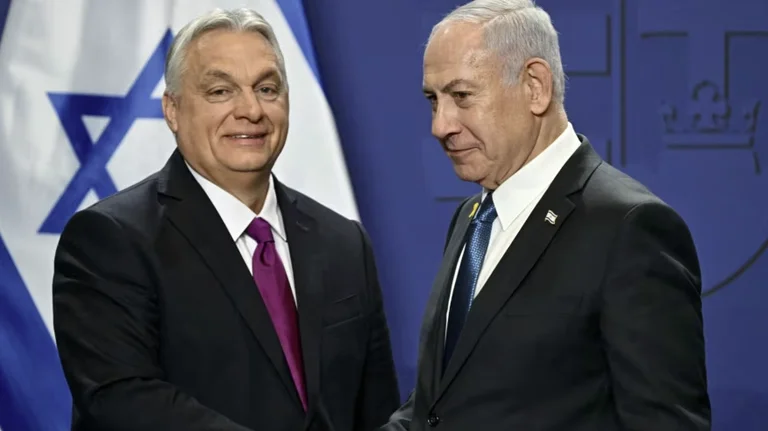
(a year ago)The Hungarian Parliament has approved on Tuesday the proposal for the country's withdrawal from the International Criminal Court (GJNP), with 134 votes to 37 against and 7 abstentions. The initiative was presented by Deputy Prime Minister Zsolt Semjen. According to the government's reasoning, the JNP has become a political actor. Portal 24.hu reported in July last year that after the request [...]
The initiative was presented by Deputy Prime Minister Zsolt Semjen.
According to the government's reasoning, the JNP has become a political actor.
Portal 24.hu reported in July of last year that following JNP Attorney General's request to issue a warrant to Israeli Prime Minister Benjamin Netanyahu, due to military action in Gaza, Hungarian Prime Minister Viktor Orban, had commissioned three ministers of his cabinet to consider the consequences of a possible withdrawal by the Court of dealt with the single European Union that would take such a step, follows. Periscope.
According to the Hungarian Radio Service Free Europe, the Orban government interpreted former US President Donald Trump's statement as a positive signal on February 5th, when the latter warned sanctions against the JNP following its arrest of Netanyah.
After issuing the order to Netanyah, Orban accused the JNP that “is interfering for political purposes in a developing conflict”, and said this decision undermines international law.
He declared that he would oppose the order and invite Netanyah to visit Hungary, guaranteeing that he would not be arrested.
According to the Hungarian government, this was possible because the Hungarian Parliament had never ratified the JNP statute, so it had no legal power in Hungary and could not implement any arrests on its basis.
On February 25th, Minister Gergely Gulyas said the government was seriously considering withdrawing from the JNP, which had also had a Hungarian judge compounded until the end of his mandate last year.
He said the Court, which was once a respected initiative, was now “based on a political actor”.
On April 1st, Justice Minister Bence Tuzson had presented a meeting of ambassadors held at the Ministry of Foreign Affairs, the draft of the withdrawal process.
Two days later, Gulyas publicly announced to social networks that the decision to withdraw was taken.
That decision was confirmed on May 7th, with the final vote by Parliament. /REL/