7 hours ago
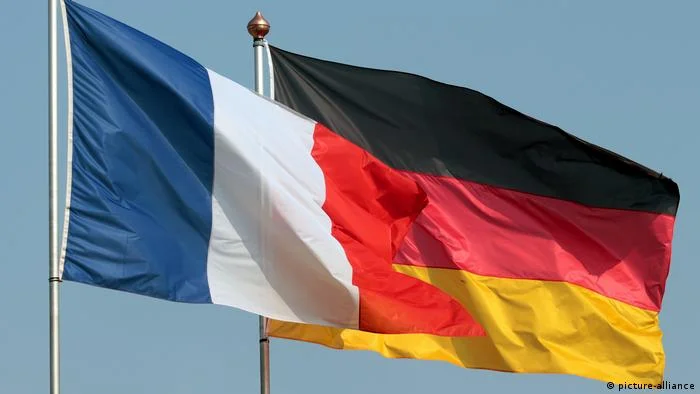
France and Germany with a “non-paper” for Republika Srpska
Periskopi(a year ago)
(a year ago)The European Union must suspend financial projects that are useful for Republika Srpska, and consider imposing sanctions aimed at individuals in this entity of Bosnia and Herzegovina, which undermine the sovereignty and constitutional order of the state. This is said, among other things, in an informal document (“non-paper”), compiled by France and [...]
This is said to be, among other things, in an informal document (“non-paper”), compiled by France and Germany, which has provided Radio Free Europe.
In the document of May 12th 2025, which has little more than two pages, the current constitutional crisis “reportedly presents the most serious challenge to Bosnia and Herzegovina's sovereignty, unity and territorial and functional integrity in the last 30 years”.
The existence of this document was disclosed by Serbia's Army Chief of General Staff Milan Mojsilovic on May 22nd, following a meeting of the Council for National Security, where he said the document, which was presented by Serbian President Aleksandar Vuciq, “exacerbates the position of Republika Srpska”, reports REL, broadcast Periscope.
Why has this document been compiled?
According to authors, Republika Srpska has undertaken several actions and legal processes that undermine Bosnia and Herzegovina's constitutional order, particularly after condemning the president of this entity, Milorad Dodik, on February 26th, by the Bosnia and Herzegovina Court for failing to implement High Representative's decisions.
These actions include the adoption of several laws, such as the ban on functioning of Bosnia and Herzegovina's state institutions on the territory of Republika Srpska, including the State Court and Prosecutorship, and the state agency for investigations (SIPA), as well as the Law for the High Judicial and Prosecutorial Council of Republika Srpska, and the law on the special registry of nongovernmental organisations.
Also, as controversial actions, the new draft of the Constitution of Republika Srpska, introduced in March, and the Law on Protection of the Constitutional Order of the Republic of Srpska is mentioned.
The immediate purpose of the document is “strengthening unconstitutional laws and attracting the new constitutional draft”.
The long-term resolution of the crisis will, in particular, require the complete and irreversible return of the Republika Srpska to Bosnia and Herzegovina's constitutional order, the restoration of Bosnian Serbs' commitment to the functioning of state institutions, and the fulfillment of all steps listed in the European Commission's recommendation of October 12, 2022”, the document says.
What measures does the document propose?
According to authors, measures to be taken include: limiting financial support for Republika Srpska, imposing targeted sanctions, slowing the EU membership process, and cutting off contacts with officials of this entity.
The document requires the EU to keep all projects that are, directly or indirectly, useful to Republika Srpska under the Investment Framework for the Western Balkans (WBIF).
The European Commission should not propose new projects that are useful to Republika Srpska. The criteria for unblocking the measures will take place after Republika Srpska's leader takes constructive steps, with preliminary consultation of member states.
Similarly, the EU must be co-ordinated with other international financial institutions, like the World Bank, to adopt similar approaches. Bilateral financial assistance for projects helping Republika Srpska should also be suspended.
As for sanctions, the use of the existing framework for restrictive measures against individuals or entities that undermine sovereignty, territorial integrity and the constitutional order of Bosnia and Herzegovina is proposed.
The document says that “is expected for the High Representative and/or the Commission's deputy head to bring in proposals in the coming weeks”.
Since there is no full consensus in the EU on this issue, the document suggests that member states individually impose travel bans on some Republika Srpska officials.
“National measures are temporary and returnable measures, with the aim of changing the behavior of individuals and target entities”, the document says.
It is also recommended that the EU suspend high-level contacts with condemned or accused leaders of Republika Srpska, including Dodik, Prime Minister Radovan Viskovic and Parliament Speaker Nenad Stevsa persecuted.
Communication with officials of the Republika Srpska Government or the Alliance of Independent Social Democrats (SNSD) should focus on emphasising the risk following the unconstitutional course of President Dodik, and the EU's readiness to reduce tensions when there are signs of change.
Bosnia and Herzegovina is a candidate country for EU membership, and the authors of the document assess that it must be clearly stressed that Republika Srpska's actions are incompatible with this path.
What is “non-paper”?
“Noon-paper” is an informal document, with no signature, no coating and no official delivery channels.
It contains a proposal or ideas, and it can be discussed in an informal way by political leaders or diplomats. /Periscope