7 hours ago
Former boss of NATO: Europe Needs New Security Model
Periskopi(a year ago)
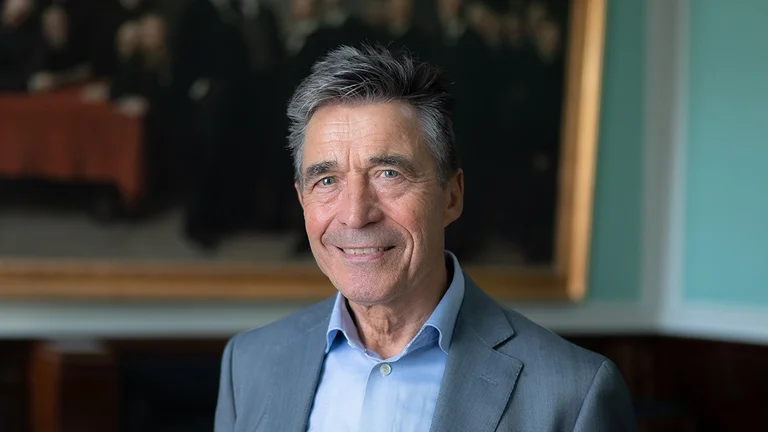
(a year ago)Former Secretary-General of the North Atlantic Treaty Organisation (NATO), Anders Fogh Rasmussen, told Radio Free Europe that preparations for a European force that would be deployed in Ukraine after a ceasefire or peace agreement “are moving very slowly” and that the entire European security model was “at a turning point”. [...]
<x0)
Since then, there have been a number of meetings at different levels. However, key questions about the mission's mandate, rules of engagement and which countries will send troops have yet to receive public answers, submits Periscope.
“in principle, in Europe, we spend a lot of time discussing and speaking, and efforts for action are slim”, Rasmussen said.
“Anyway, I hope the attack of [Russian president Vladimir] Putin towards Ukraine and [Donald's] election. Trump [President in the United States] to serve as a wake-up call to show Europeans that we must act quickly”, he added.
Rasmussen spoke in a broad interview on military issues, economic security and repeated comments by US President Trump about taking Greenland from Denmark.
He was prime minister of Denmark before serving as secretary general NATO, from 2009 to 2014.
It is shameful to threaten Denmark, a close ally, with military means to invade Greenland”, Rasmussen said.
I don't think that's gonna happen. But clearly, there is the potential to create a division within NATO when threatening an ally”, he said.
Since leaving NATO's role, Rasmussen has created the non-profit Alliance for Democracy organisation, which aims to challenge what it describes as the global rise of “aucrats and dictators”.
Last week, the group announced a five-point plan for European defence that includes a call for increased defence budgets to four percent of the Bruto (PBB) domestic production by 2028.
This follows the movements of the European Union and the major military powers of Europe Britain, France and Germany to increase defence spending in the coming years, but goes beyond the plans announced so far.
Russia's “Investation in defence is now greater than the combined defence investment in the rest of Europe. So we have to speed up. We have to double at least European defence investment”, Rasmussen told Radio Free Europe.
For a long time, we have supported a model that no longer functions a combination of free energy from Russia, cheap goods from China and free security from the US”, he added.
The topic of both security and economic issues was the main topic at a conference Rasmussen hosted last week in Copenhagen, where the five-point plan was discussed.
72-year-old policy and diplomacy veteran singles out global administration Trump tariffs as a new risk that has created the need for a type of “Economic NATO”.
The Trump administration declared a trade war against the whole world, except for Russia and North Korea”, he said.
I would suggest creating what we call D7, the seven democracies of the world: The European Union, the United Kingdom, Canada, Australia, South Korea, Japan and New Zealand. And, I think the backbone of this would be what we would call a 5-economic article. We would consider an attack or tightening on one of those seven countries as an attack on everyone, and we would reply collectively”, he added.
It is surprising to hear a former NATO chief exclude the United States from a global democracy list.
“Yes, but the United States has chosen isolation... I don't see an American willingness to exercise global leadership in the free world. So, for this reason, the US has been excluded from this D7”, Rasmussen said.
Governments around the world are facing the challenge of responding to Trump's tariffs. The closest co-operation and trade with other partners are, of course, part of their calculations.
But as with defence expenses, Rasmussen's proposals far beyond what is being considered in most capitals.
For example, the very controversial European Union free trade agreement with four South American states in the Merchur group has been cited as part of the EU's collective response to a new environment, but France is still very careful to ratify it.
Meanwhile, the EU and individual countries have reacted separately to US tariffs, seeking to negotiate with Washington instead of forming a common front.
Rasmussen does not offer simple answers to resolving the complex network of interests that make it difficult for many countries to create new global structures. But, he says this is the challenge that must be overcome.
For the 19th year in a row, we have seen a decline in global freedom and democracy. So now is the time to create stronger co-operation”, he said.
“E knows from experience with Putin and other autocrats that they respect only strength, unity and a firm attitude... If we act together, if we act together, then we can challenge the authorities that are advancing”, he concluded. /REL/