8 hours ago
Over 100 thousand less employed in Kosovo for only the first three months of the year
Periskopi(a year ago)
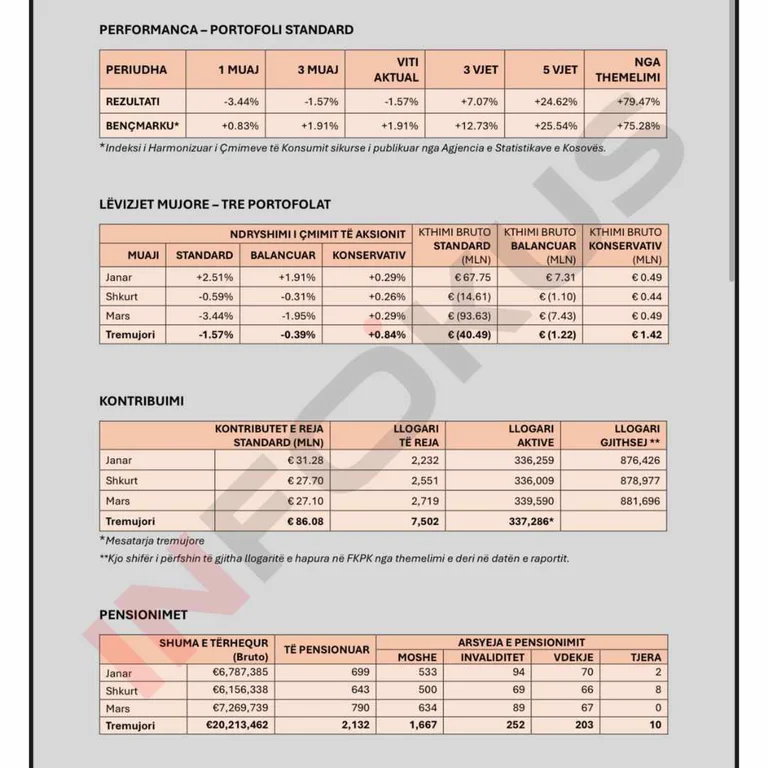
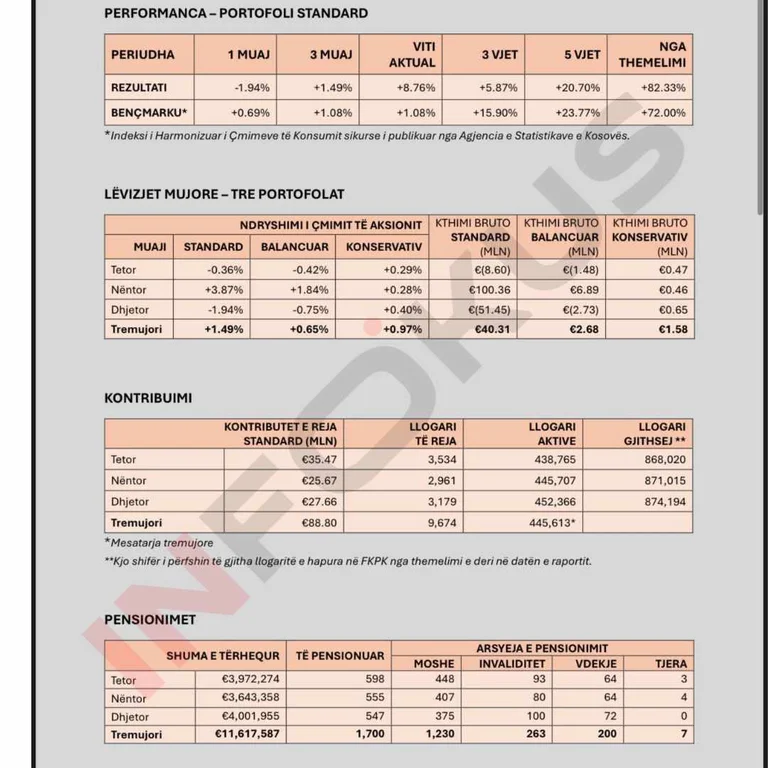
(a year ago)From January to March of this year, more than 100,000 employees in Kosovo are estimated to be less employed. Exactly according to official statistics provided Infocus, in January alone, February and March of this year, there are 106 and 23 less contributors to the pension system, compared to the end quarter of 2024. This drop [...]
Exactly according to official statistics provided Infocus, in January alone, February and March of this year, there are 106 and 23 less contributors to the pension system, compared to the end quarter of 2024.
This alarming decline is an actual reflection of the real situation in the labour market. There is no more room for interpretation or statistical pattern, but it is completely unclear how within three months it can be marked with such alarming numbers and an unprecedented shift of workers outside the formal system.
The data is official and comes from the Kosovo Pension Savings Fund, through two three-month reports.
According to these data, during the January 2025 (TM1) period, the average number of active accounts was 337,286, while in October 2024 (TM4), this number was 445,613. The difference is dramatic: 108,327 active contributors less. In practical translation, this means over 100,000 less citizens with labor contracts, less secured, less protected.
This is the clearest indicator of the deepening employment crisis in the country. In an economy where formal employment is the foundation of any stability, such a sharp decline within three months is a direct signal that something is going wrong very badly.
Other figures reinforce this view:
- New Accounts Open at TM1: 7,502
- New accounts open at TM4: 9,674
- New euro contributions to TM1: $86.08m
- New euro contributions to TM4: $88.80m
Thus, not only are fewer active employees but there are fewer new workers getting into the system. A double impact: on one side mass exit from the labour market, on the other side of the new generation's circulation within it. And so do some 2.8 million with little accumulated or spilled on Trust funds.
This reality is not reflected in political speeches or official declarations of institutions. They speak of “economic growth”, for “records in export” and for “the high trust of citizens”. But these documents from the Trust are more than numbers are evidence. Evidence of unemployment, evidence of leaving the insurance scheme, testimony to the state silence.
How were 100,000 jobs extinguished in 3 months?
When over 100 thousand contributors disappear from the system within a year, questions are not too much questions. Where are these people? Are they in migration, in informal employment, or simply abandoned by institutions? And more importantly, why doesn't anyone give a responsibility?
Instead of empty rhetoric, this is when institutions must face the truth a truth that is already written, signed and sealed in the official documents of the Kosovo Trust. And no one can say “anymore we didn't know”. /Periscope/