9 hours ago
<x0); catastrophic”: 907 % most expensive has cost transportation of energy imported by KESCO in 2024
Periskopi(a year ago)
(a year ago)Stock Failure ALEPEX and suspicious agreements between KESCO and energy trading companies allegedly increased electricity import prices to the world's 2024-KSCO levels, which Kosovo consumer “has requested to carry over. It costs 907 percent more. [...]
Stock Failure ALEPEX and suspicious agreements between KESCO and energy trading companies allegedly increased electricity import prices to the world's 2024-KSCO levels, which Kosovo consumer “has requested to carry over.
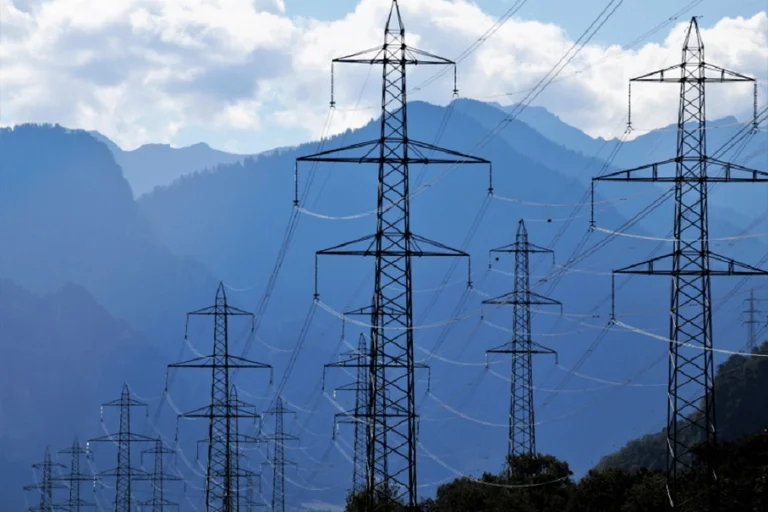
A total of 907 percent more expensive has cost Kosovo only electricity transport in 2024 by the Kosovo power supply company KESCO, writes Bulletin Economik. Periscope.
This rare “nomanomali” in the history of electricity purchases from KESCO, where power transport in cases results in multiple costs than the purchase of electricity itself, has been found even in public documents that have handed over to the Energy Resign Office ( ZREE).
The Economic Bulletin to draw the price gap between 2023-2024 for energy transport costs, analyses ECCO's report delivered to ZRE for application for maximum access and Report ZRE consultant, out of which came the 15 percent electricity expensive proposal.
What is noted in the Report ECCO's costs for energy transport are also highlighted for the first time, asking the ZRE to be included in the new electricity tariffs under consideration.
According to the ECCO report, during 2024, energy transport costs reached 9.06m euros, of only 0.9m euros, as they were in 2023.
“in 2024, K ESCO for cross-border capacities has paid an average price of 30 perm/M, with a total of 9.06m, while in 2017 we have paid an average of $5.0/M with a total of 0.9 million, so it is necessary during the determining of the import price to calculate the expected costs for cross-border capacity”, says the ECSCO requirement, directed by ZRE.

K E SCO mentions “contacts of transport” of energy in another case in the report, when it speaks of “the average import of electricity for 2025”.
“FSHU forecasts for electricity purchases from import under draft electricity balance for 2025 are 318 Gwh at an average import price projected by 158.12 $/Mwh, according to recent projections on international markets, including the costs of capacity needed for bringing electricity to the country”, it says.
ALPEX colossal failure ZRGE and KESCO with “a phase”
This increase of 907 percent in energy transport costs by 2024 has produced two explanations -- one from KESCO and the other from ZRE. Both elaborations are almost in “the same”.
Cost risks for energy transport, KESCO attributes “to punishment”, according to them, to the common energy market between Albania and Kosovo, respectively to the functioning of the stock exchange between Kosovo and Albania (ALPEX).
“ Notification The Ministry of Economy, when the Joint Energy Stock Project was launched. Officially A Stock Exchange The LEPEX was operational in early 2024.
But KESCO, a year later, in the ZRE report, complains that, except there was no exchange for energy during the winter through this stock, Kosovo's access to foreign markets was also blocked through “austrate” with Albania. Another factor is cited in blocking the transmission lines with Serbia.
“One of the main factors preventing the full exploitation of options that ALPEX offers is the request for high collateral. The lack of sufficient access to loans in considerable value, due to restrictions on assets that can be used as guarantees, makes it difficult to active participation in the FSHU on this scholarship. Even commercial trade restrictions on the border with Serbia limit the FSHU's ability to diversify supply sources and provide electricity with more favourable conditions, making it dependent on imports only through two other border-border routes with limited capacity, such as northern Macedonia and Montenegro”.
Kosovo has transmission lines with Albania, northern Macedonia, Montenegro and Serbia, which are managed by COST for the part of Kosovo.
From COSTT, no answers to these claims have been returned.
Meanwhile, similar explanations, but in more general terms, ZRE also provides ZRE in the consultative report.
“During 2024 there was an increase in prices in European energy stock exchanges compared to forecasts for price stabilisation. Moreover, because most countries in the region are net-importers, cross-border networks are often loaded. This brings up rising prices for the use of cross-border lines for import of electricity.
The other side of the coin
K E SCO is the company licensed by ZRE for electricity supply to Kosovo citizens. In cases where there is a shortage of production by KEK thermal power plants what the demand is, KESCO buys electricity abroad through international stock exchanges. The current, KESCO buys it directly through the announcement that stock exchange auctions, or through negotiations with other energy trading companies.
Usually in cases where KESCO buys energy with <x0-intermediation” -- that is, through another company that is registered on the stock market -- then import costs increase, especially energy transport costs. The only condition is that the company which KESCO co-operates with should also have license from ZRE. T license There are about 20 companies in Kosovo for electricity trading.
The Economic Bulletin learns from reliable sources that this was the case with imports during 2024. The current has been imported mainly through Montenegro, through companies licensed by ZRR, which have increased transport costs beyond any forecast.
These sources say there are doubts of unfavourable agreements between KESCO and designated companies, with the only “intended to increase profits”.
The Economic Bulletin has demanded from ZRE the names of all companies with which it has co-operated K ESCO during 2024, for purchasing electricity in the stock exchanges, but until now, they have not returned. Same, no answers have been given by KESCO either.
“
Another suspicious aspect is the lack of monitoring electricity purchases by ZRE. About 20 companies dealing with electricity trading with ZRE licenses are not monitored in cases where they make unfavourable deals with each other, with the aim of energy profits in “the competition” of consumers.
Report The latest monitoring energy purchases published on the ZRE website is 2021. The Economic Bulletin through demand for access to public documents has asked ZRE for similar reports of 2022, 2023, and 2024.
In a written answer, however, ZRE says the report, which includes 2021, is the latest, since the ZRE reportedly monitors only when there are doubts.
They have mentioned that several investigations “are under way”, but without specifying cases.
“As to the ongoing monitoring and investigation, they will be published only after the process is completed and approval by the ZERE Board”.
No monitoring has been conducted in terms of KED capital investments. The latest report on this, published on the ZRE website, is from 2018.
There is already official reaction. Economy Minister Artane Rizvanolli after articles published in Bulletin have invited ZRE's chairman to an emergency meeting.
In the media report, Minister Rizvanolli has reportedly requested clarification by ZRE leaders in particular on the issue of carrying electricity via international lines, which in cases exceeds the electricity import price.
The minister requested additional information on some of the factors that have led to the increased cost of supply, such as the price of transmission capacities, and requested that these issues be addressed in detail by ZRE and if it is found that some of the costs have been sustainable, they are not delivered to consumers but held responsible to operators”, the statement said.
Whether this request will be established by ZRE to decide on a 15 percent priced electricity proposal, when the fact that there is already suspicion of possible misuses in electricity trade over the past few years, is unknown )The cost of which the consumers can carry.