7 hours ago
Trump envoy to meet Putin in Russia

Periskopi(a year ago)
(a year ago)A senior US president's deputy, Donald Trump, has arrived in Russia amid a diplomatic storm over the war in Ukraine, including US-Ukrainian talks in Washington and a meeting led by Britain and Germany in Brussels. Kremlin spokesman Dmitry Peskov told Russian state media that the special envoy of [...]
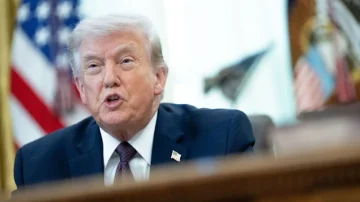
A senior US president's deputy, Donald Trump, has arrived in Russia amid a diplomatic storm over the war in Ukraine, including US-Ukrainian talks in Washington and a meeting led by Britain and Germany in Brussels.
Kremlin spokesman Dmitry Peskov told Russian state media that US special envoy Steve Whitoff had arrived on April 11th. He stopped at St Petersburg on his way to high-level talks with Tehran on the Iranian nuclear programme. Talks between the US and Iran are scheduled to be held in Oman on 12 April.
Peskov, according to state media, said Trump's envoy will meet with Russian President Vladimir Putin to discuss aspects of the peace talks in Ukraine. He did not say whether Iran or any other subject will be discussed at this meeting.
Russian state agency TASS reported that Witkoff, on arrival in Russia, met with Kiril Dmitriev, a figure with strong links to the Kremlin and head of the Russian Direct Investment Fund. Last week, the two officials met in Washington, where they discussed strengthening bilateral relations.
Witkoff's visit takes place a day after American and Russian officials met in Istanbul to discuss the normalisation of diplomatic relations, which could lead to the return of embassy staff who have been expelled since Ukraine's Russian holiday began in 2022.
This is Witkoff's third visit to Russia since Trump took office in January, promising improved relations with Moscow.
Last month, his meeting with Putin paved the way for a call between the two presidents. He also visited Russia in February and was part of US-Russia talks in Riyadh.
Who's Steve Whitcoff?
Witkoff is a property developer from New York and a friend of Trump, without previous diplomatic experience. This has raised concerns in some areas about his leadership role in such sensitive talks.
The fact that he does not have the context and history of how the Russians negotiate with the Americans is, in my opinion, problematic”, said David Kramer, who has held a senior position in the State Department during George W. Bush.
“Putin says beautiful words, gives a portrait of the president, speaks of going to church and praying for his friend [Trump]”, said Kramer, broadcast Periscope.
“These are old KGB tactics. And I think Witkoff doesn't have enough awareness to figure out what's going on there”.
Trump praised Witkoff. In January, he called it “an excellent negotiator... a great person for the” deal.
The purpose of Witkoff's visit is to push ahead with blocked US efforts to mediate a ceasefire between Russia and Ukraine. Trump has recently expressed disappointment with both sides over the lack of progress.
Trump criticised Russia for intensifying its air campaign to Ukraine and said Ukrainian President Voldymyr Zelensky, but “is trying to withdraw” from an agreement providing Washington access to the deposits of rare minerals in Ukraine.
A Ukrainian delegation is expected to hold talks on this agreement in Washington later on April 11th.
Turkey promises Black Sea mission
Meanwhile, in Brussels, progress has been made in forming a European-led military force to deploy it to Ukraine in the event of a ceasefire or peace agreement.
Two European diplomatic sources told Free Europe Radio that Turkey has expressed its readiness to “take responsibility for the maritime dimension of the mission”.
This was done during a meeting of “Willy coalition” on 10 April.
So far, only Britain and France have publicly given pledges to send troops, though other countries have expressed openness depending on the circumstances of the delocation.
On April 11th, Britain and Germany chaired a meeting of the Ukraine Protection Contact Group in Brussels, which co-ordinates military aid to Ukraine.
This group was established in 2022 and headed by former US Defence Secretary Lloyd Austin. His successor, Pete Hegseth, has remained more in shadow and participated in this meeting through video-connection.
German Defence Minister Boris Pistorius said Hegseth gave “interesting and accurate assessments” in his speech.
Before the meetings, European countries had pledged new support for Ukraine for the months and years ahead.
Britain and Norway announced a joint package for military intimidation, radar systems and anti-tank mines.
Germany and the Netherlands announced they will provide additional air and missile defence systems.
This will have an impact on the battlefield this year”, said Pistorius. / REL