7 hours ago
The trial of former KLA leaders in The Hague towards the end: What now?
Periskopi(a year ago)
(a year ago)In two years, over 125 witnesses invited by the Specialised Prosecutor have delivered their testimony over charges weighing on former KLA leaders. Now that the prosecution is running out of time to prove its accusations, the future of the trial is uncertain. In October 2020 the indictment was confirmed for [...]
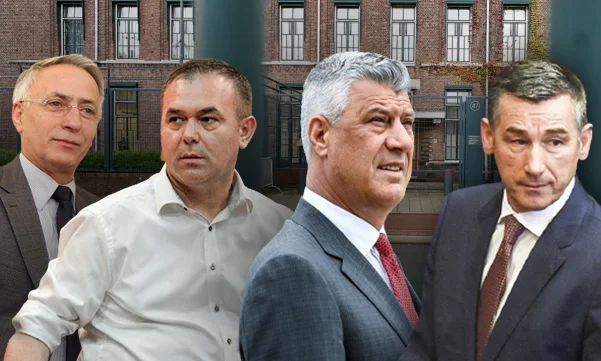
In October 2020, the indictment for war crimes and crimes against humanity was confirmed against four former Kosovo Liberation Army leaders (UÇK).
Hashim Thaci, Kadri Veselini, Rex Selimi and Jakup Krasniqi are accused of having been part of a “joint criminal enterprise” targeting those whom he considered “colaborationists” and “tranderer” to gain power “during and after the last war in Kosovo, writes REL Transmitt Periscope.
The defendants' lawyers have dismissed all charges weighing their clients, arguing that the KLA did not have an efficient command structure.
At the time of the establishment of the indictment, Thaci had been president of Kosovo; Wessel, chairman of the Democratic Party of Kosovo (PDK); Selimi, MP and leader of the Vetevendosje Movement parliamentary group (LVV); and Krasniqi, former head of the Kosovo Assembly.
The four held high positions, according to the Prosecutor, even during the time covering the indictment.
But, as of November 4th and 5th 2020, the four are in custody at The Hague, where Kosovo Specialised Chambers are located.
What are Kosovo Specialised Chambers?
Specialised Chambers and the Specialised Prosecutor's Office, widely known as the Special Court, were founded in 2015 by the Assembly of Kosovo and are part of Kosovo's judicial system, but operate international personnel in the Netherlands.
The Special Court investigates the alleged crimes of KLA members committed against ethnic minorities and political rivals from January 1998 to December 2000.
All four accused have been acquitted of charges weighing on them.
Now, after interviewing 125 witnesses, the prosecution will close its case on 15 April. Topi now moves to the side of the defence teams, which will try to prove that the prosecution's claims do not stand.
While lawyers from Selimi's defence teams, Veselin and Krasniqi have not answered the questions of Radio Free Europe, Thaci's lawyer, Luka Misetiq, has only said it is still too early to discuss how defence will be organised.
Earlier, on November 13th last year, Misethic had told REL that Thaci's defence team has not yet decided whether to call any witnesses.
If we did, there would be more than ten witnesses”, Misethic said.
Misethic has experience in such trials. Earlier, he had defended former Croatian General Ante Gotovina before The Hague Tribunal, who was charged with crimes against Serbs during the Croatian military-police operation “Storm” in 1995.
Gotovina was originally sentenced to 24 years in prison, but after appealing the decision by Misetic, the verdict was overturned and Gotovina was acquitted.
Why aren't more witnesses expected to be invited from defense?
Ehat Miftaraj, director of the Kosovo Institute for Justice (IKD), believes the Specialised Prosecutor has failed to testify for himself what he claimed in the indictment.
Two pieces of the indictment that were serious, said to have had joint criminal enterprise or even chain of command... In this part we can say that the prosecution, over the years, has not been able to prove, on the basis of our analysis, that such a thing has existed in practice”, Miftaraj tells Radio Free Europe.
Even immediately after the opening statements of this trial two years ago, two international justice experts -- Mathias Holvoet and Aida Hehir -- had said it would be difficult to prove that former KLA leaders are guilty of alleged crimes.
As an example of how difficult it is to prove such a connection, they were referring to The Hague Tribunal's judgments in cases against former KLA superiors Ramush Haradinaj and Fatmir Limaj, who were acquitted of counts of war crimes and crimes against humanity.
What can we expect now?
Now that the ball has crossed into the defence team's field, it all depends on the strategy that judges' defence teams decide on.
According to Miftaraj, the first option is the defence request to reject the indictment.
If the court estimates that the trial should continue, then it depends on the protection of how many witnesses it will invite, how long it takes to prepare their witnesses. Then the last phase, which is questioning by the victims' defenders, can also take their time to question their witness”, Miftaraj says.
However, he expects the entire process to be closed within this year or, later, until next spring.
The Specialised Prosecutor's Office and Thaci's defence have wanted to comment on the duration of the process.
But one thing that has been mentioned several times as an option is the release of indictees from custody in The Hague after the prosecution's interview of witnesses ended.
In November last year, Kosovo Specialised Chambers Speaker Ekaterina Trendafilova had said it was up to judges to decide whether to release the accused's detention after the Specialised Prosecutor wraps up her case.
Miftaraj says one would have to happen now, since the main reason for their detention was the fear that if they remained on freedom, they could influence witnesses invited by the prosecution.
The possibilities for defendants to influence prosecution witnesses are now zero because they are finished. Thus, if European Court of Human Rights principles were applied and given the fact that they have been in custody for years, it would be legitimate for the same to be released to be tried in freedom”, Miftaraj says.
But the end of the Court may come in a different way - even without completing the judicial process.
Can the Special Court be dissolved now?
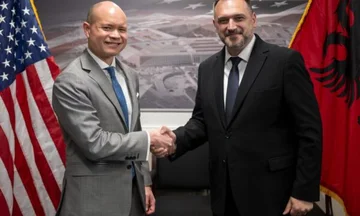
The US envoy for special operations, Richard Green, has made several calls for closure of the Special Court.
On April 13th, he demanded a suspension of funding for the Special, arguing that “everything is policy” and that <x2milliards have been wasted”.
On the anniversary of Kosovo's independence this year, he called “Great injustice” Thaci's position in The Hague.
Kosovo's “even state institutions, due to politics, have failed to take necessary legal action to end this” injustice, Yerenelli declared at X.
Thaci had interrupted a planned visit to Washington in June 2020 ʹ in the first mandate of US President Donald Trump to the White House after the Specialised Prosecutor's Office had sent the Specialised Chambers to The Hague with ten points of review, in which Thaci's name was mentioned in a series of crimes.
The indictment was filed by prosecutor Jack Smith, who later resigned to investigate President Trump's attempts to overturn the outcome of the 2020 presidential election.
He has resigned from the US Department of Justice, as well as investigations into Trump have ceased after his victory in the 2024 elections.
Attempts to Distract Court in The Hague
In December 2017 a group of over 40 Kosovo Assembly deputies had launched an initiative to abolish the Special Court.
This initiative was criticised by the international community. The then US and EU ambassadors, Greg Delawi and Ruair O'Connell, had called this attempt “backhand” and the most dangerous “night for Kosovo since the post-war”.
Without sufficient support in the Kosovo Assembly, the effort had failed.
But if the U.S. were to change its stance now and go to line with Yerenelli's request for the closure of the Special Court, it could seriously damage the process, Miftaraj says.
“The ability of the US to withdraw judges and prosecutors appointed at The Hague would undoubtedly make it difficult for the tribunal to prevent the continuation of the process, so it would somehow block it”, Miftaraj says.
However, he believes it would be in the interest of all sponsors for the “this process to be completed as a trial process” and adds that the chances for the Court to be closed through a political decision “are small”.
Although the Special Court is part of Kosovo's judicial system, it is financed mainly by the European Union, with additional contributions from several other states, such as the United States, Canada, Norway, Switzerland and Turkey.
The US contribution is mainly focused on funding employees appointed by US state authorities.
According to the latest annual Court report, for 2023, the U.S. is ranked second, after Holland the host state of the court headquarters. Thirty of the approximately 280 employees there are from the United States.
Among the American employees are specialised judges and prosecutors. The deputy head of the court is the American, Charles L. Smith III, meanwhile, is the chief prosecutor of America, Kimberly West, who took office in 2023.
Judge Smith is also the chief judge in the tribunal's greatest case, the judge against former KLA leaders.
Specialised rooms and Prosecution currently have a budget of 97.1m euros, including the period from June 15th 2023 to June 14th 2025.
Why was the Special Court formed?
For war crimes and crimes against humanity, it had been talked about for a long time before an act was filed. Since 2010, former Swiss Senator Dick Marty had made a report to the Council of Europe, in which he had condemned alleged KLA crimes, including “the trafficking of human organs”.
These claims were investigated by US prosecutor Clinton Williams, who in 2014 had indicated that his team's findings include, not evidence based on organ trafficking, but other war crimes.
This, in 2015, had led to the formation of Kosovo's Specialised Chambers.
The Special Court formation had come after pressure from the international community, which believed the court's deployment outside Kosovo would ensure an impartial and reliable trial to handle serious charges.
Another reason was said to be witness protection. However, problems have been faced, even though the Court has been placed in The Hague.
What else are Kosovo Specialised Chambers investigating?
So far, this court has pronounced war crimes judgments as well as obstruction of justice.
Former Kosovo Liberation Army Commander Salih Mustafa has been sentenced to 15 years in prison for war crimes, including arbitrary detention, torture and murder. On similar charges, former member of KLA, Peter Shala, was sentenced to 18 years in prison.
While the former heads of the KLA Veterans' Organisation, Hysni Gucati and Nasim Haradinaj, were sentenced to 4 years and 3 months in prison for obstructing justice administration, including revealing confidential information and the identity of witnesses. Then they were released on parole.
In February of this year, the Special Court has also found Haxhi Shala, Sabit Januzin and Ismet Bahitari guilty of obstructing justice, more specifically, witness intimidation, following a plea agreement reached by the two sides. Shala has been sentenced to three years in prison, meanwhile Bahitari and Januzi to two years in prison.
On December 6, 2024, Thaci has also been confirmed with a new indictment for illegal attempts to influence witness testimony in the main court case.
Besides Thaci, the second indictment included the names of former Justice Minister Hajredin Kuci, former head of the Kosovo Intelligence Agency, the Smajt Union, the former head of Malisheva, Isni Kilajt, and Fadil Fazlius.
How is the Special Court in Kosovo expected?
On August 3rd 2015, the Special Court received enough votes for establishment, following the failure of June 26th that year.
The Democratic Party of Kosovo (PDK), the Democratic League of Kosovo (LDK), Alliance for the Future of Kosovo (AAK), MPs to non-communal communities and some deputies from NISMA had voted for, securing 82 votes. The foundation required 80 out of 120 votes in the Assembly.
The Vetevendosje party that has been in power in the last term and which won parliamentary elections on February 9th had strongly opposed the establishment of the court, calling it unfair to the KLA's liberation war.
The judgment has run into numerous objections in Kosovo, on the grounds that this process is unilateral, as crimes committed by Serbs on Kosovo territory are not involved.
Since then, banners and large plaques have been placed around Kosovo with the message “Liberty has a name” and photographs of former KLA leaders being charged in The Hague.
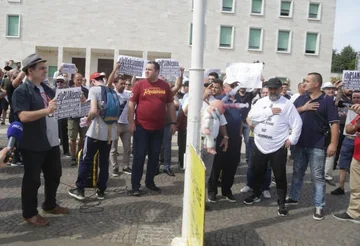
Shortly before the trial was launched in The Hague, protests against this process were held in The Hague and Pristina.
Thousands of citizens had participated in the “March for Justice”, organised on April 2nd of 2023 in Pristina, in support of Thaci, Veselin, Selimi and Krasniqi.
Our “History cannot be rewritten”, “we assign for justice” and “Unpolitical directory”, were some of the banners that protesters held in their hands.