7 hours ago
Rashit: Kosovo being crushed by political crises
Periskopi(a year ago)
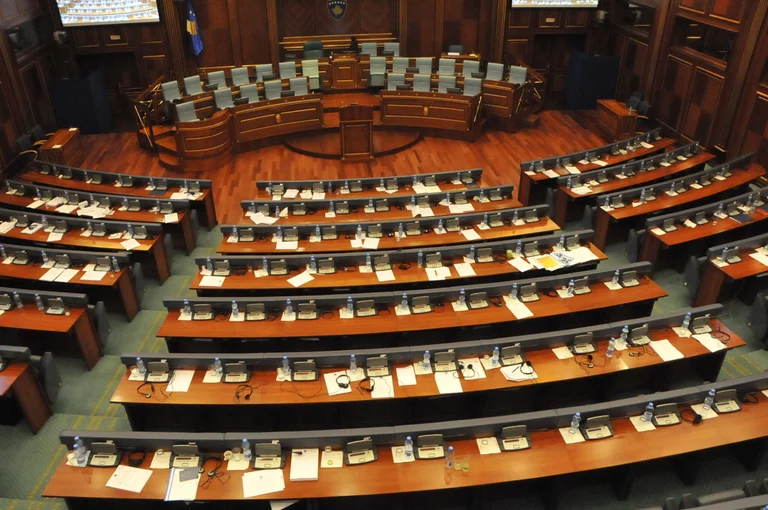
(a year ago)For the sixth time in a row, MPs have failed to constitute the Parliament, highlighting not only the lack of political consensus but also the lack of will to respect the institutional responsibilities resulting from the election itself. That is what the director of [...]
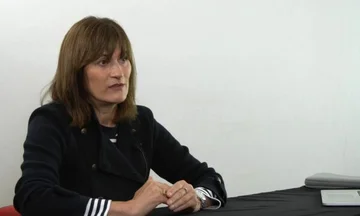
So it says in an interview for Radio Free Europe, Naim Rashit, director of the Balkan Policy Group in Pristina.
He says the institutional stalemate, which has included the Kosovo Parliament after the last elections, is being extended dangerously, deepening the political crisis and putting the country on a path to constitutional uncertainty.
Kosovo's Assembly, for the sixth time in a row, is failing to be binding. In your opinion, where are the obstacles?
Naim Rashit: Nothing new is what has happened in the past -- not even 17 years after the declaration of independence -- democracy in Kosovo does not reveal lessons, does not mature, continues in similar behaviour, despite an election process and a very good day of voting, despite the Constitutional Court's decisions and the precise procedures of the Constitutional Court.
Political subjects and political explorers use maneuvers to prevent the constitution and I believe we will be in a situation that will continue with much uncertainty, until we may have a new process of the Constitutional Court. Kosovo Assembly deputies should also care about this.
As in the past, 2014-2017, the responsibility for the constitutionalisation of the Parliament is for the winning party, even then, even now the winning party has the obligation to find an acceptable candidate for more MPs, because the Speaker of the Assembly has a representative role of the Parliament and has a different role which is also responsible for the president's office, which must be a more consensual figure. Even past governments in the past have not done so, but we have thought that after many years politics has slightly matured and should do so. Until that happens, or a winning party deal with the smaller parties, we will not have the constitution.
How'd you get out of here?
Will political parties be able to reach any agreement to resolve this issue?
This is the case with the Constitutional Court's mandate and decision, that political parties are obliged to find a consensus on forming and constitutionalising the Assembly. [Now] they are not doing it and will not always, as in the past, the winning party responsible and hosting of this process prevents this process until vote is secured for Government.
Should the Vetevendosje Movement insist with its candidate, when it does not have the necessary votes?
Naim Rashit: Of course not, the winning party should have a candidate who provides broader support. Of course it is from their proposal, their rank and to be a candidate, which offers the wider representation of the Parliament.
The parties in the past have done likewise, so it has been in 2014 and 2017, and the same logic is continuing with Vetevendosje Movement as the winner of these elections.
Is the name proposed only for the chairman of the Assembly, or do you think it is something else in this situation?
Naim RashitI believe that by the Constitutional Court's decisions, everyone knows, every subject knows the order and constitutional responsibility for forming institutions. All subjects know the responsibility and exclusive right of Vetevendosje Movement as the winning party. Therefore, I do not see that other opposition parties, in principle, may not vote on the winning party's candidates, but by then it is the responsibility of the winning party to propose candidates who are more acceptable to the opposition, if you need their vote.
And we haven't witnessed that. I am convinced that, if there are other candidates, opposition parties would vote on them or, if not, they would be exposed that they are blockors of the Parliament's constitutionalised. In international practices, the winning party would decide three acceptable names and would be elected as one who would get more votes. So it would have to happen or there would be consultations from a list of three names, or five names, or two names.
What danger is there for Kosovo, institutionally and politically, if this situation continues?
See, Kosovo is already plagued by political crises, poor relations with international factors, lack of development, some form of institutional and developmental stagnation. From continuing crises, from tensions with Serbia, from lack of dialogue with the EU and from EU sanctions. And from rapid international developments that are endangering stability to other countries, not only Kosovo.
There would have to be a completely different institutional political action of Kosovo, to be Kosovo very prepared for new situations, but here the political scene is continuing with the old avaz of hypocrisy and it is hard to understand exactly what the purposes of certain political subjects are.
How do you see the solution to this situation, should the Presidency include any intercessors?
Naim RashitNo, it doesn't. Parliamentary political subjects must find the way for the constitution to be formed, then the formula and process for forming the Government is very clear.
The best solution is for the Vetevendosje Movement to come up with three names for the Speaker of the Parliament, and one of them would necessarily have to be voted on by the opposition.
Is there real potential for new elections in this case, would those be solutions or deepening political divisions?
Naim Rashit: We will crush Kosovo with new elections, given that we will have elections even in October, local elections. The biggest paradox is that at this stage of institution formation, everyone says these institutions will have a mandate less than a year and if we have new elections in the coming months, we will crush the Republic, crush institutions. There would be a lack or decline in the efficiency of institutions, the economy, and so on, and of course, the public trust, citizens' trust in institutions, including participation in elections, would be greatly reduced.
Did you mention citizens, or does this concern the trust of citizens in democratic institutions, have any consequences?
Naim Rashit: There are enzymes of trust in institutions, but polarising the political scene has a stability or a consolidation of civic views in relation to one subject or another. And in some form, polarization is being served to preserve political subjects, to keep blind support in some form for them, but of course it does not translate into institutional support and translate into degradation of institutions, because the leaders of subjects are placed in the background of this support and this public migration.
How does the international community perceive these developments, can any pressure or diplomatic interference be expected to unblock the situation?
Naim Rashit: No, the international factor, the US and the EU, are very busy with other international agendas and I don't believe we will have any international engagement or factor in Kosovo, unless some serious security crisis occurs. But otherwise, I don't see that we're going to have any direct interventions in the formation process, institution-restitution.
How much could this internal crisis harm Kosovo internationally?
Naim Rashit: Kosovo is damaged on the international level as well, and trust in Kosovo and in the ability of institutions to engage any international agenda is very weak. Kosovo lost the chance of membership in the Council of Europe again.
Kosovo is not finding the way to dialogue with the EU on removing measures, is not taking action to persuade them to remove the measures. Kosovo has no real international agenda at this time, and they are all in expectation of a formation of a stable government. Even so, the international factor will not believe any minority government as it is, in view of what I said, all expect electoral cycles will prevent the formation of any real and short-term Kosovo policy. /Periscope/