8 hours ago
Putin approaches quietly, Europe raises the alarm: After Ukraine, Finland is next
Periskopi(a year ago)
(a year ago)The Russian Army is expanding in silence. It is the alarm that has set up three border sites with the Russian state, Finland, Estonia and Latvia. The information comes in detail from American prestige “Wall Street Journal”. Some European leaders, although not publicly expressed, feel alarmed at what the Russian military has done along the border [...]
The information comes in detail from American prestige “Wall Street Journal”. Some European leaders, although not publicly expressed, feel alarmed at what the Russian military has done along its border with Europe.
About 100 miles east of its border with Finland, in the Russian town of Petrozavodsk, military engineers are expanding the military bases where the Kremlin plans to create a new army headquarters to oversee tens of thousands of troops over the next few years. These soldiers, many of whom serve on the front line in Ukraine, are intended to be the backbone of a Russian army preparing to face the North Atlantic Treaty organisation, according to military and Western intelligence officials.
The Kremlin is expanding military recruiting, strengthening weapons production and improving railway lines in border areas, follows Periscope.
Finland, which was forced to hand over territories to the Soviet Union in 1940, has spent decades trying to avoid confrontation with Moscow. Now, after joining NATO after the invasion of Ukraine, it is strengthening its border with electronic protection and wire fences.
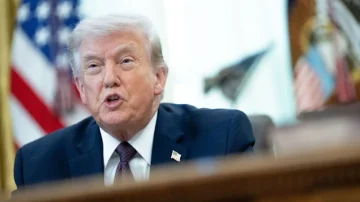
Trump, who has pressured Ukraine to accept a ceasefire agreement while trying to rebuild US ties with the Kremlin, has said concerns that Russia has any ambitions beyond Ukraine are excessive. Asked in February about Ukrainian President Volodymyr Zelensky's warning that Russia could wage war against NATO if the US reduces support for the Alliance, Trump said: “I disagree, not at all”.
Military experts within Russia characterise activity along the Finnish border as part of the Kremlin's preparation for possible conflict with NATO.
When troops return [from Ukraine], they will look beyond the border to a country they consider anti-x1>, said Ruslan Pukhov, director of the Centre for Strategy and Technological Analysis, a Moscow-based defence institute. “The logic of the last decade shows that we are expecting a conflict with NATO”.
Russian officials have sent various signals. At a defence ministry meeting late last year, Russian Defence Minister Andrey Belousov said the Russian Army should be ready for a conflict with NATO. At the same meeting, President Vladimir Putin said the West was alarming its population, suggesting Russia was ready to attack and that the current tensions were making NATO.
As Russia prepares to increase its military presence along NATO's eastern wing, Putin has ordered the army to expand its ranks to up to 1.5 million troops, down from about a million prior to Ukraine's invasion. Russia has increased military spending to more than 6% of GDP this year, up from 3.6% before the war. By comparison, the US spent 3.4% of its GDP on its military last year and EU countries, on average, spent 2.1%. (A2 Television)