7 hours ago
Will Pope Francis' successor be a Hungarian?
Periskopi(a year ago)
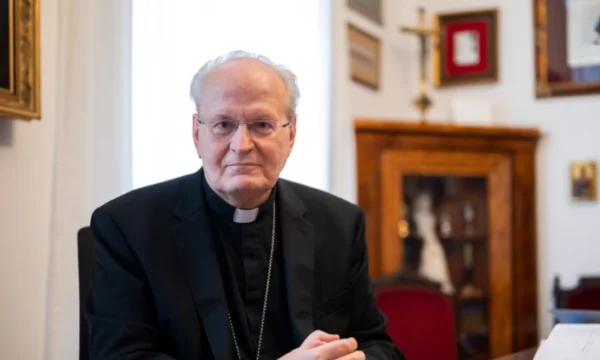
(a year ago)After Papa Francescu's separate life on April 21st, speculations about his successor at the helm of the Holy See have begun. One of the main candidates is Peter Erdo, Archbishop of Esztergom-Budapist. The 72-year-old Hungarian Cardinal has held important positions in the Catholic Church in recent decades and was mentioned as potential candidate even [...]
The 72-year-old Hungarian Cardinal has held important positions in the Catholic Church in recent decades and was named as a potential candidate even in 2013, when Pope Francis was eventually elected.
Is there any chance Erdo will follow the Argentinean? And, perhaps more intriguing, what is his relationship with Hungary's increasingly authoritarian prime minister, Victor Orban?
Who's Peter Erdo?
Erdo is widely considered to be “patible” a term used for potential real candidates to become popes.
Theoretically, every baptized Catholic male is acceptable to the papacy, but since the 14th century, only cardinals have been elected. There are currently 252 cardinals, but only 135 of them have voting rights, as only those under the age of 80 can participate in the agreement.
Erdo could manage to secure two-thirds of the votes in the papal Convention, which is expected to begin in early May (no earlier than 16 days after the pope's life-freeness, according to current rules).
His credentials are powerful: From 2006 to 2016, he has been leading the Council of European Olympic Conferences an important organisation representing Catholic Archbishops in Europe.
This is weighty, as European cardinals continue to make up the largest voter bloc. But Erdo has not built ties only in Europe. Through his work at the council, he has established regular contact with representatives of the Church from Africa, Asia and Latin America, regions that are gaining ever greater influence in the Catholic Church.
He speaks fluent Italian and Latin ʹ key languages in the Vatican hierarchy ʹ and is a well - known expert on canonical law regulating the internal function of the Church.
One of his greatest achievements is the conduct of the International Eucharistic Congress in Budapest in 2021 a major event that gathered clergymen and believers from around the world, including the pope.
This activity gave Erdo a powerful platform for increasing visibility and building important networks both in the Vatican and in Catholic parishes throughout the globe.
But perhaps his strongest weapon is pragmatism.
Though considered conservative for example, he opposes giving Holy Kungum to divorced Catholics, Erdo has collaborated with Pope Francis and has avoided public criticism of him, unlike many traditional-wing figures.
Pope Francis had even included Erdo in organising special Vatican meetings for family affairs, and visited Hungary twice during his mandate.
Does Erdo have anything to do with Victor Orban?
But what about Erdo's connections to Victor Orban's government and the ruling party, Fidesz, which is self-identified as defender of Jewish-Christian values and often faces European Union institutions?
The Hungarian state finances the Catholic Church and other religious communities known through support for religious education, compensation for properties confiscated by the communist regime, and the organisation of events like the Eukarist Congress.
During the refugee crisis in 2015, Erdo compared the admission of immigrants to helping human trafficking a stance that was more compatible with the rhetoric of Orban than with Pope Francis's more tolerant attitude.
However, he later warned against the clash of religions and questioned whether a continent could truly be called <x0] Christian”, indirectly opposing the rhetoric against the “ilamisation of Europe” on the part of Orban.
Erdo seems to follow the same pragmatic approach to the Hungarian government as to factions within the Catholic Church. He has not publicly supported the ruling party, however, many priests in Hungary have called on believers to vote for Fidesz.
He has carefully chosen his battles with Budapest. It has remained silent to some controversial laws, but it is open to others. For example, he did not criticize the detention of homeless people in 2018 a move contrary to Pope Francis's teachings. But, when the government took the step to statehood (IVF) Fertilisation clinics a year later, Erdo did not spare criticism.
Although many Vatican observers think that the first African or Asian pope can be elected, a compromise candidate to stabilise the Church after Francisco's progressive and challenging years may be Hungary's very primatious. / REL/Periscopi/