8 hours ago
Is it too late for talks on the new government?
Periskopi(a year ago)
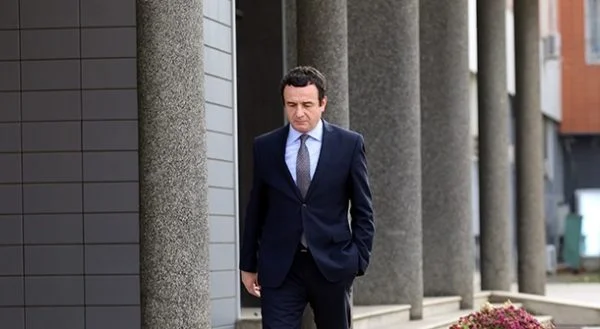
(a year ago)Albin Kurti's Vetevendosje movement has acknowledged that it cannot form Kosovo's new Government without the involvement of an Albanian party which it previously ruled out, saying it preferred an executive only with non-Serb minorities. However, connoisseurs say Kurt's party has been delayed in launching talks [...]
The winner of the February 9th elections, the Vetevendosje Movement, will not be able to form the government without a coalition with Albanian parties. This subject does not have the full support of non-party parties, but even if it does, it would not be enough to form the executive.
That fact has been acknowledged on Tuesday by LVV deputy chairman Glauk Konjufca, who said the formation of the new government can be done without Albanian parties joining a coalition government.
According to him, there are currently two scenarios -- voting a new government until the election of new president April 2026 -- or voting of a long-term executive.
61 MPs' votes are required for both scenarios, writes Radio Free Europe.
The incumbent Prime Minister Albin Kurti's LVV has won 48 seats in the Assembly, the Democratic Party of Kosovo, 24, the Democratic League of Kosovo 20 and the Alliance for the Future of Kosovo coalition with the Social Democrat Initiative has eight MPs.
Kurti invited the LDK led by Lumir Abdixhiku for talks, but the bid was rejected. During the campaign, Kurti has not spared words for this party, and the LDK seems to have not forgotten that. Likewise, the LVV has said it prefers a government only with non-Serb minorities.
Was LVV delayed with consultations on the new executive?
Politologist Dritero Arifi estimates that LVV has <x0 waste time”, as it had to start talks with other parliamentary parties to form the new government immediately after parliamentary elections.
“From my point of view, it has had to begin negotiations with parliamentary parties on February 10th to see which points are agreed on by the programming aspect. But LVV has done the opposite”, he says.
He believes a larger Albanian coalition “is needed to create “a good moment to cope with the major geopolitical changes that are taking place, but also reforms that are important to the welfare of citizen”.
Emir Abrashi from the non-governmental organisation Democracy Plus stresses that a new government could be formed with the support of non-Serb minority communities, only if Fatmir Limaj's Initiative also becomes part of the ruling coalition.
Co-operation with Albanian parties, “necessary”
Unlike other Albanian parties that the past legislature was in opposition, Limaj has said there are no red lines for any party. Neither the PDK has red lines, but has indicated it prefers an executive without LVV.
However, Abrashi points out that such a government would not be stable and would face difficulties in adopting the laws in the Parliament.
The first major question to face it would be the president's election next year,” he says, recalling that 80 votes of APU deputies are required for the election of the president in the first two places, and then only 61 are required.
The support of one of the biggest opposition parties will be necessary, otherwise extraordinary elections will be announced. However, Kurti's past rhetoric leaves little room for deal”, Abrashi points out.
Non-communities
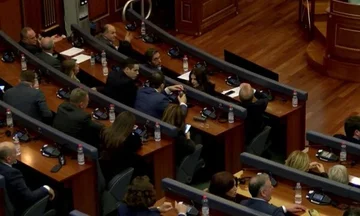
In the Kosovo Assembly, out of 120 seats, 20 are reserved for non-partisan communities -- 10 for the Serb community and 10 for other communities.
Not all 10 votes of the non-Serb communities, which have traditionally backed the ruling coalition, Kurti Sey, are safe, though most have said they would vote on an executive led by him.
The nine votes that Serbian List has are not considered. This party, since its founding in 2013, has been part of each government, as it has always won all seats reserved for Serbs.
This time, there is a legal basis for the Serbian List to be excluded from the government, after an MP has won the Serbian Party for Freedom, Justice and Survival of Nenad Rashiqi.
Abrashi estimates that the Serbian List will not play an important role in forming the new government, and as a reason mentions the direct involvement of its former deputy leader, Milan Radojic, in the armed attack on Banjska.
He adds that the Serbian List is not a reliable partner because it has boycotted Kosovo institutions for more than two years.
It is imperative that the Serb community find a way for healthier representation in Kosovo institutions so that it avoids a scenario where any major political party in Kosovo thinks no kind of co-operation with their representatives” is possible, he points out.
According to the Kosovo Constitution, one ministerial post in Government is reserved for the Serb community and another for other non-Serb communities. If the executive more than 12 ministries are appointed, then another minister is appointed among the non-communal communities.
The election of these ministers takes place in consultation with parliamentary parties. If one is appointed outside parliamentary parties, then the majority of MPs from the community belonging to the minister are required.
If LVV s'arrin tosi secure 61 votes, then it is up to President Vjosa Osmani to mandate the party, which ensures it has the votes for the executive. The PDK has said it is ready for this responsibility, if it is next. But even if the second mandate fails, then Kosovars will again turn to the ballot boxes.
But prior to the government's election, let us first wait for the election of Kosovo Assembly Speaker and Vice Presidents. / REL/Periscopi/