7 hours ago
Kosovo, Serbia exchange charges at UN Security Council
Periskopi(a year ago)
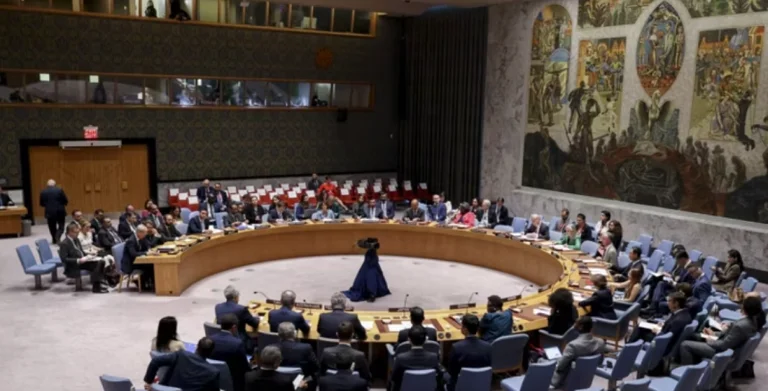
(a year ago)Kosovo and Serbia's top diplomats have exchanged charges against each other at the UN Security Council meeting, where they discussed UN Secretary General Antonio Guterres's six-month report on the UN mission in Kosovo late Tuesday. Kosovo Minister of Foreign Affairs Donika Grovalla said [...]
Kosovo and Serbia's top diplomats have exchanged charges against each other at the UN Security Council meeting, where they discussed UN Secretary General Antonio Guterres's six-month report on the UN mission in Kosovo late Tuesday.
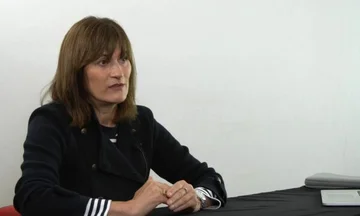
Kosovo's acting Foreign Minister, Donika Grovalla, said Serbia “has not changed” and that it is continuing efforts to destabilise Kosovo's democracy, “not only through rhetoric, but through concrete and violent actions that endanger peace and security in the region”.
Serbia's Foreign Minister, Marko Djuric, complained that the situation of Serbs in Kosovo “is deteriorating” and “Serbs are paying the price”.
Gervailla said that “in September 2023 Kosovo was the target of an armed invasion by a paramilitary group backed by Serbia and led by Milan Radojevich”.
“Banjska was a paramilitary act from one state to another state, Iber-Lepenci was an attack on the military degree from one state on the critical infrastructure of another country”, Gervalla said.
A policeman was killed and three attackers attacked in September 2023 when Kosovo police were attacked by a group of armed Serbs in northern Kosovo. Milan Radojic, former deputy chairman of the Serbian List, the Kosovo Serb party that has Belgrade's backing, claimed responsibility for the attack.
Kosovo accuses Serbia of standing behind the attack in Banjska and following the explosion that damaged the water channel in the north at the end of 2024. Serbia has denied the accusations.
Gervala again demanded that Serbia extradite Radociqi, against whom Kosovo authorities have filed charges.
Djuric, meanwhile, said he is unable to re-list all unilateral actions by Prime Minister Albin Kurti”'s Government.
The “in recent months Pristina has escalated the campaign to systematically dismantle Serbian institutions throughout Kosovo and Metohija. These are not symbolic gestures, they have direct consequences for humans. Salaries, pensions and social assistance for thousands of Serbian families have been cut off. The means of survival for many of our fellow countrymen have been put at risk”, Djuric said.
Kosovo authorities have closed down most of the institutions operating within the Serbian system over the past year, with the argument that their work is illegal, but official Belgrade has continued to pay them.
Members of the Serb community in Kosovo receive different revenues from Serbia's budget, such as salaries, pensions, social assistance, additions to children, parents, and similar ones.
Djuric claimed Serbs are leaving Kosovo and that the attacks on them have marked growth without providing any evidence.
“Since Kurti came to power, 20 per cent of Serbs have fled Kosovo. The attacks on Serbs have increased by 15 percent. Let's not forget that more than 200,000 Serbs have been displaced since 1999, and only 2 percent have returned”, he said.
The top diplomat also asked Kosovo to establish the Association of Serb-run municipalities as a solution to the trouble of Serbs in Kosovo, writes REL.
When will the Association of Serb-run municipalities be established? Kurt's actions clearly show that there is no will for this”, he said.
He added that <x0log remains the only sustainable road ahead, but it must be built on trust”./Periscopi/