7 hours ago
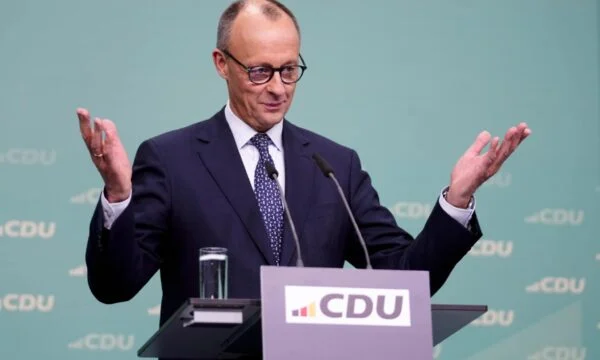
Who is Friedrich Merz, Germany's next Chancellor?
Periskopi(a year ago)
(a year ago)Friedrich Merz, chairman of the conservative Christian Democratic Union (CDU), is set to become Germany's next Chancellor and will likely take the oath in early May. The 69-year-old will be the oldest Chancellor since Konrad Adenauer, the first Chancellor of Germany's new Federal Republic, who received [...]
Friedrich Merz, chairman of the conservative Christian Democratic Union (CDU), is set to become Germany's next Chancellor and will likely take the oath in early May.
The 69-year-old will be the oldest Chancellor since Konrad Adenauer, the first Chancellor of Germany's new Federal Republic, who took office in 1949 at the age of 73.
Merz, whose CDU alliance The CSU won the February elections, garnering 28.5% of the vote, will lead a coalition government with the Social Democratic Party (SPD) at the centre-left.
He hopes to revive Europe's main economy quickly in the face of a trade war launched by US President Donald Trump.
However, Merz's popularity estimates are very low following his change to public debt. After his victory in the election, he caused the outgoing Bundestag to quickly pave the way for unpredicted loans of nearly a trillion euros, easing Germany's strict debt regulations, DW broadcasts Periscope.
This maneuver has exposed it to criticisms and domestic party accusations not only from the far-right German Alternatives party (AFD) that it has broken campaign promises and turned over to the main requirements of the SPPS.
In the two months since the election, the Merz bloc CDU/ CSU has lost four points, while the AFD has increased in opinion polls: Both are now 24%.
Keeping distance with the AfD?
Compared to former cadre Angela Merkel, which was seen as a quiet and accounting tactic, Merz is seen as a very different politician, much more willing to take political risks. He did so recently weeks before the elections, triggering a political storm when he tried to pass a tough immigration bill through parliament with the help of the AfD. The move triggered shocking waves across the country, with protesters condemning co-operation as an unprecedented violation of the postwar taboo for co-operation with the extreme right. However, Merz apparently viewed his move as a gambling intended to curb AfD's success against immigration.
Merz and Merkel
Merz was often considered an enemy of Angela Merkel. As she rose to power, Merz gradually left the political arena and returned to his job as a lawyer. In 2009, he was no longer a candidate for Bundestag.
Merz comes from Sauerland a region of low mountains in western Germany and is both Catholic and lawyer, like his father before him. He still lives not far from where he was born. In 1989, at the age of 33, he became a member of the European Parliament for COU. Five years later, he crossed into Bundestag and soon made a name as a keen speaker. What he said in the parliamentary group gained weight.
Merzi's exit from politics was followed by his establishment in the private sector. From 2005 to 2021, it was part of an international legal firm and took high positions on supervisory and administrative boards. From 2016 to 2020, he was chairman of the board of overseers of BlackRock, the world's largest asset manager, Germany.
But when Merkel announced that she would leave politics in 2021, Merz returned and gradually rose to rank again. The CDU elected that party chairman in 2022 in his third attempt. He had a reputation as a liberal economic representative of the CDU conservative wing.
Discussed Declarations
Merz voted against liberalising abortion laws and against genetic diagnosis prior to implantation in the 1990s. He also voted notoriously against criminalising marital rape in 1997.
It was always in favour of nuclear energy and promoted a more liberal economic policy and a reduction of bureaucracy. Almost 25 years ago, he complained about the effects of German migration policy, spoke of “problems with foreigners”, and insisted there should be a “governing dominant culture” in Germany.
Merz stands for a CDU that has become much more conservative, even though its attitudes have changed slightly in the past 20 years.
Surprisingly, during the election campaign, leaders of the centre-left Social Democratic Party launched personal attacks on Merzi.