7 hours ago
Fetah for a drive in the country: There are two migrations, political compromise or assembly speaker from another party.
Periskopi(a year ago)
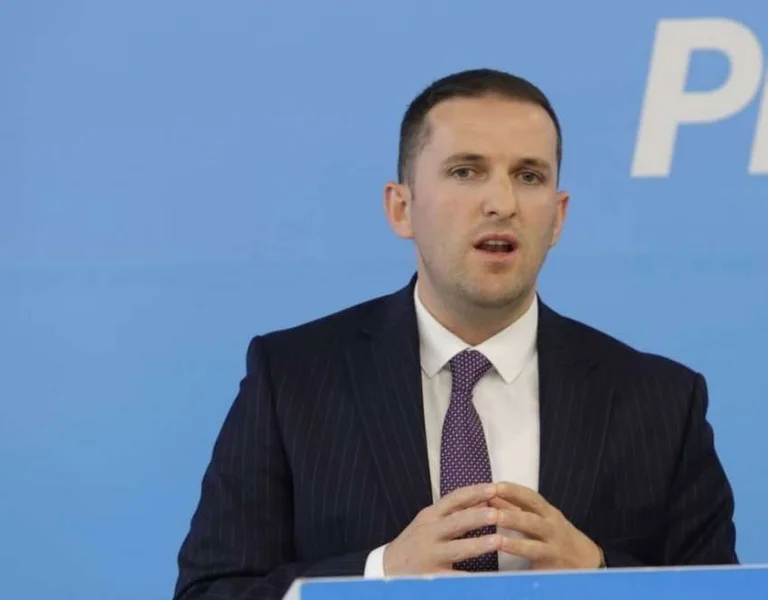
(a year ago)Lawyer Faton Fetah has said the opposition is relieved of the obligation to vote on the candidate proposed by the largest parliamentary group, in this case Vetevendosje. “Blocking the constitution and establishment of institutions is the exclusive responsibility of its Vetevendosje and Coalition Movement, so parties <x1 subpositionary”>, constitutionally, [...]
“Blocking of the constitution's constitution and establishment of institutions is the exclusive responsibility of its Vetevendosje and coalition Movement, so parties <x1 subpositor”, constitutionally, are set free from the obligation to vote under the candidacy/enlisted by the largest parliamentary group, which fails to secure 61 MPs, leads, without any right, to other parliamentary groups. ”
Fetah said that after any failure, the VV is mentioning the Constitutional Act in August 2014, but according to him, the parallels that are being withdrawn are inaccurate. He revealed his reasons.
Worse off, as after every episode of failure to elect their candidate, even today, the experts of the winning party or coalition, in desperate efforts to justify their failure groundless and non-professionally, they continue to refer to the verdict of the August 2014 Constitutional Court (recognised in public as the bias in the VLAN case), from which, according to them, their right to <x1 Constitutional>” to elect the Speaker of the Parliament. In this regard, even in the ARB debate on TV Arbera, where I was invited at the beginning of the week, I highlighted the differences that exist between these two situations, because some of the parallels that are being drawn to them are incorrect for these reasons: First, V The then LAN claimed to be the largest “parliamentary group to which the PDK's GP was eligible for election. While, in the current case, the political groups of “opposite” have never contested the right of the first party to propose the candidate for the Parliament's chairman; The second, this act has clearly determined that the largest parliamentary group to come up on the basis of the election result is entitled to propose the chairman, but not the right to choose him, as is deliberately misinterpreted in the current right situation for “proposing”, with the right to <x9 select “ ” Speaker; Third, this indictment, nowhere, determines any obligation for <x11 subposition” or other parliamentary groups to vote on the proposed candidate of the largest parliamentary group. On the contrary, it has underlined that MPs are free to vote according to their belief, and that conviction could not be any other than declaring their will with voter turnout, voting “for”, “against” or “abstenim”. And in the current case, all MPs are participating in the vote and expressing their free will and stance. The fourth, this bias, in an experimental way, stipulates that failure to register the Assembly does not lead the country into elections. Because that, of course, does not allow the Constitution. While, in the current case, the first party has taken the constitution's constitutionalisation hostage with the claim "in the form of political blackmail" that, either their candidate will be elected or the country will go to new parliamentary elections; The fifth, like this act, but also the 2020 act of judgment (in the case of Mr. Avdullah Hoti for prime minister had determined that the constitutional right to the proposal cannot be transformed into a deadlock mechanism for establishing institutions. Therefore, in light of these judgments, the LVV is blocking the establishment of institutions of government, from which Kosovo citizens expect their service. ”
He said there is a constitutional asymmetry.
“in view of these judgments, I consider there is a constitutional asymmetry. Because, since the indictment in the Hoti case recognises the constitutional right to form both the party or the non-profit coalition, the bias in the VLAN case recognises the right of the Parliament Speaker's proposal only to the party or coalition that has won the elections. ”
According to Fetah, the created situation has two migrations: political compromise or the effective decision of the assembly to elect a leader from other political groups rather than VV.
Therefore, the current situation has two reasons: The political compromise or the effective decision of the Parliament to elect for chairman the Parliament candidate from other political groups and not LVV, decision-making that could end up in the Constitutional Court, and then let me assess whether this block from the LVV is constitutional or not, and whether its right to the proposal has been transformed into a system of institutional deadlock. ”/Periscope