8 hours ago
EU boosts military assistance for Moldova
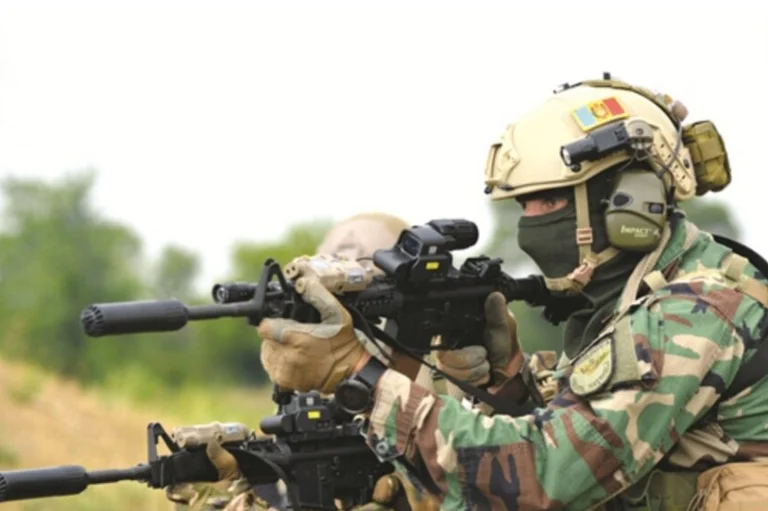
Periskopi(a year ago)
(a year ago)European Union ambassadors (BE) will give the green light on April 9th for the largest package to date of the bloc's deadly military aid to Moldova, worth 20m euros. This decision is important because Moldova is a neutral country with the constitution and in the past the EU has given [...]
This decision is important because Moldova is a neutral country with the constitution, and in the past, the EU has given only the assistance that was named <x0) nonlethal”, such as military vehicles, air surveillance and cyber security reinforcement equipment.
This changed last year, when Brussels offered 9m euros for short-range missiles for air defence systems, writes REL, broadcast Periscope.
Now, the EU is doubling that amount. This is a reflection of what EU diplomats told me: the sensitive situation Moldova is in, because of an increasingly threatening and active Russia that is putting pressure on countries that want to get closer to the West.
According to the first proposal by Radio Free Europe (REL), the money will include “the short-range air defence systems, which consist of approximately eight launchers and about 24 rockets”.
The document emphasises that implementation of this move will be carried out by the Estonian Centre for Defence Investment, which has also supplied Chisin with equipment last year.
The proposal stresses that Moldova's proposed “assistance measures will improve the operational performance and effectiveness of the Moldova Armed Forces, replacing old Soviet-era equipment and/or creating new capabilities”.
Will Moldova join the EU?
Moldova aims to join the EU within this decade, and membership talks are expected to officially begin in the following months.
The document notes that the measures also aim to draw Chisin closer to the EU, adding that the actions are undertaken “aimed at strengthening the capacities of the Republic of Moldova to participate in EU security and defence policy missions and operations, as well as accelerating compliance and interoperability with the standards of the bloc”.
The adoption of these measures comes only a week after the same EU ambassadors approved another financial aid package to complete this first.
The other package, worth 40m euros, is what the bloc calls nonlethal military assistance. Of this amount, half will be used to purchase about 33 highly mobile tactical vehicles to replace old Soviet vehicles.
While the other 20m euros are for a short-range tactical integration system of air defence, which will essentially enable the smooth functioning of the launchers and missiles offered in the <x0) lethal package”.
The total amount of 60m euros is the largest annual support given to the small Eastern European republic since Brussels began this kind of assistance in 2021.
The total figure since then will now reach 197m euros, all under the framework of the European Peace Mechanism (EPF), a mechanism outside the EU budget that has also enabled the EU to provide billions of euros in lethal aid to Ukraine since its full invasion by Russia more than three years ago.
Is the U.S. distanced from Moldova?
Another interesting aspect of the proposal is that it mentions the possibility that the United States, under Trump's new administration, could be drawn from the active role in Moldova's defence sector.
The document says that “in the past, the United States has been a major contributor to the defence field in Moldova, both in training and in support of equipment. Decisions by the new US administration for future support are still pending”.
However, it adds that “according to a preliminary reaction from Moldova's Ministry of Defence, a possible reduction of US support in training would not affect equipment provided under EPF assistance measures”.
Interestingly, EPF's approval of Moldova has gone smoothly, while discussions among EU working groups have continued without major obstacles.
This contrasts sharply with the EPF's demands for Ukraine, which have been blocked by Hungary for nearly two years, as well as a new proposal for Armenia for which Budapest has also had objections. Hungary postponed its first ever approval of EPF funds for Yerevan, worth 11m euros, for several months before it approved it last year and is now repeating the same deadlock tactic.
The new package, the first by REL, contains 20m euros intended primarily for medical equipment for the Armene Armed Forces. As last year, EU diplomats tell me Budapest is delaying approval by arguing that Azerbaijan, which has close relations with the Fidesz-led Hungarian government, should also benefit from similar assistance. /Periscope/