8 hours ago
10 per cent US fees on Kosovo, Rafuna: Much Influence on the Land
Periskopi(a year ago)
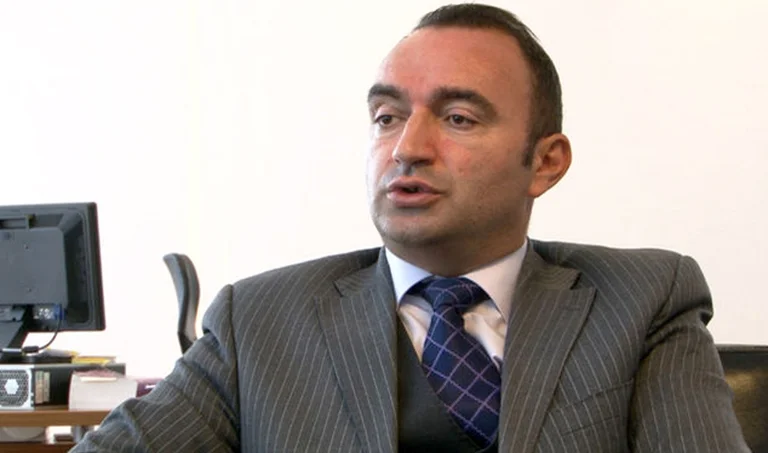
(a year ago)The 10 per cent tax imposed by the United States on Kosovo will cost Kosovo products exported to the US, and, as a result, the demand could fall, Kosovo Economic Ode Chairman Lulzim Rafuna said in an interview for Radio Free Europe. He appealed to Kosovo institutions [...]
The 10 per cent tax imposed by the United States on Kosovo will cost Kosovo products exported to the US, and, as a result, the demand could fall, Kosovo Economic Ode Chairman Lulzim Rafuna said in an interview for Radio Free Europe.
He called on Kosovo institutions to use all possible channels to request the suspension of even provisional equife, but also eliminate the existing fee on US products.
Rafuna also said that even the 20 per cent US-set tariff on the European Union could have indirect effects on Kosovo, especially local producers supplied with goods from the EU, which are actually imported by the US.
United States President Donald Trump announced on Wednesday that the US will impose a 10 per cent basic fee on imports from all countries of the world, including from Kosovo and other Western Balkan countries.
Radio Free Europe: Mr. Rafuna, Kosovo is now subject to a 10 percent fee in the United States. What impact could this have on Kosovo's exports to the American market?
Lulzim Rafuna: Yes, the impact will be great because we will have an additional 10 per cent fee for Kosovo goods exported to the United States market. Even though we have a lower fee imposed on us than on some countries in the region surrounding Kosovo, it still costs the product of origin from Kosovo, which will appear on the US market more expensive than it has been until now.
Radio Free Europe: Which products are exported mostly from Kosovo to the American market, and what is their value?
Lulzim Rafuna: If we look at the data from the Kosovo Statistics Agency and the Kosovo Customs, we see that about 50 percent of exports consist mainly of items related to furniture beds, mattresses, pillows. Some 30 percent are textiles and textile articles. Then, 9 percent consist of basic metals and their products, as well as prepared foods, and a very small percentage consists of plastic or rubber products.
This is the structure of goods we've exported to the US market. And if we look at it from a value point of view, unfortunately since 2022, it has started a decline in export value, and this has yet to happen without this fee being imposed.
In 2021 we had exports worth 122 million euros, but in 2022 this was 136 million, and in 2023 it dropped to 106 million. In 2024 we had only about 40 million.
It is known that over the years Kosovo has benefited from Preferences for a large set of allowed articles, which has helped develop businesses and export them to the US market.
Radio Free Europe: With the tax entry in effect, does this also mean withdrawing from the trade programme called the General Preferences System, on which Kosovo has exported 3,500 products to the US without subjecting itself to customs taxes?
Lulzim Rafuna: According to the data that we have so far, it doesn't turn out that a group of articles that were involved in the General Preferences System has been excluded. The information we have is that all goods exported from Kosovo to the US market will be paid taxes. This means there will no longer be a preferential system for a certain set of articles, given that a tax has been imposed on all goods exported from the Republic of Kosovo.
Radio Free Europe: Mr. Rafuna, implementation of this fee can it affect the decline in revenues to businesses that are export-oriented to the U.S. and therefore the reduction of new jobs?
Lulzim RafunaYes, indeed. If our product comes out more expensive in the United States market, and it's definitely going to be more expensive, because now an additional customs fee is paid, then the demand for Kosovo products will be reduced. When demand falls, production falls. Businesses will try to find new markets, but this takes time, commitment and investment. It's not something that happens overnight, it's not easy to reoritrate immediately in a new market.
This is certainly not good news. What our institutions have to do is use all available channels to request suspension, even temporary, of this fee. We had similar cases earlier, for example, during the administration of President Trump, a customs duty to Canada was suspended for a period of two months. So that's possible.
Once again, I say that our institutions should work to find an opportunity either to suspend this fee or better get rid of it completely.
Radio Free Europe: Mr Rafuna, the United States has also set a 20 - percent fee for goods coming from the European Union. Since Kosovo has trade exchanges with the EU, how can this affect Kosovo's domestic market, or what can be the effects of this move?
Lulzim Rafuna: This can indirectly affect. We saw today the reaction of EU institutions, which have warned responses to the US administration with the introduction of new tariffs for goods coming from the United States.
So far we have had a free trade system, whose purpose has been that Goods to circulate at cheaper and quality prices for consumers.
If European companies import raw or semi-productive materials from the US and now face additional customs duties, then when our companies buy that commodity from European companies after our primary market has the European market, they will buy the first most expensive material, and therefore the product that will be produced in Kosovo will be more expensive.
It indirectly affects how much it remains to be seen.
But it is not good news. As for our fee that has been set for exports from the United States, as well as setting tariffs from the EU market for goods coming from the US.
We've always been for the open market. I take the opportunity to appeal to our institutions to eliminate customs duties on the US by 10 percent.
Radio Free Europe: Does this mean that there will be a new wave of price expensive in Kosovo, since most products are from EU countries?
Lulzim Rafuna: We had a meeting today with businesses in the Economic Ode where they discussed the challenges they are facing, because new challenges are coming to us almost every two weeks, and we are not having relief or releases for business. Rather, they are facing new burdens.
We were discussing the issue of electricity prices and the exit of businesses to the open market, which is a new challenge and an additional burden to business. Add to here the sanctions we have from the European Union and the poor image of attracting foreign investors to Kosovo as a result of these sanctions, but also of the created situations and the messages that have come from the leaders of our institutions, which speak of war these are all making the investor hesitate to invest in Kosovo.
And it is now added to the tax, the new fee imposed by the United States administration for goods from Kosovo.
Business shipments are growing. Definitely, it will be a very, very challenging year for businesses, because of these burdens and difficulties to increase production, or even to launch any new production under these circumstances. I pray that we have a government that takes into account all these challenges that business is facing.
You see, the 10 percent customs fee for exports to the United States if we had a government that is really business-oriented, would have found ways and ways to help business not to feel this fee so it would not affect the cost of the product.
There are over 100 ways to help.
Radio Free Europe: What is the concrete way?
Lulzim Rafuna: The concrete way is, for example, an internal subvention or a relief in the fiscal policies of the first subject with which that product is produced. This would automatically balance the effect of putting the fee on our product so that the product doesn't become more expensive. Rather, it would come up with a price similar to what has been there until today, even though the fee has been set.
Radio Free Europe: Can the escalation of these tariffs affect Kosovo's ability to attract investors from the United States or from the European Union?
Lulzim Rafuna: Yes, it can. Kosovo should exploit this moment, because any such decision, any burden, does not only bring negative consequences, can also bring positive effects. For this reason I have recommended that our institutions eliminate customs taxes on goods from the US because this would make Kosovo more attractive to American investors, investors who may come to produce in Kosovo for the European market.
We have fiscal policies among the lowest in the region, we have very modern road infrastructure and labor power. We have a Stabilisation and Association Agreement with the European Union that enables us export and import without customs duties, and we are also part of CEFTA, which allows us to export and import without customs in the region. So Kosovo, no doubt, is in a very favourable position to attract investments and produce here, and export to the European market. / REL/Periscopi/