12 minutes ago
26 years from Kosovo's Kosovo Albanian escort
Periskopi(a year ago)
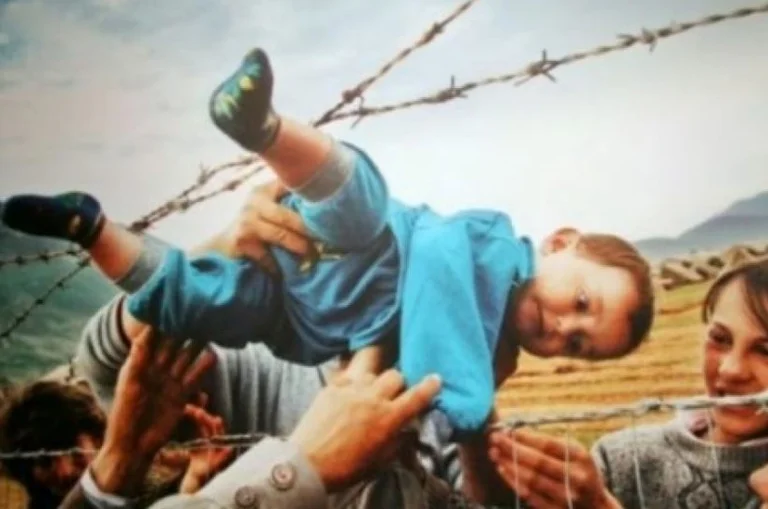
(a year ago)Today it is marked by the 26th anniversary of the Kosovo Albanian exhibition, when during the 1998-1999 war, about one million Albanians were forced by Serb paramilitary forces to migrate to Albania and Macedonia. In addition to the displaced in these two countries, thousands of Albanians crossed the border with Montenegro, while hundreds of thousands had moved from their homes [...]
In addition to the displaced in these two states, thousands of Albanians crossed the border with Montenegro, while hundreds of thousands had moved from their homes to find refuge in the Kosovo mountains.
They were children, women and older, raped, tortured, and massacred. On every anniversary of the 1999 Bible - based ecstasy in Kukes is commemorated, and in the last two years, symbolicly from pandemic, this drama of the most terrible suffering experienced by the people of this earth.
Exodus, or expulsion of Albanians with violence from their centres, peaked after the start of NATO bombings against former Yugoslavia's military and police provisions (Serbia and Montenegro), writes Kosovo Transmitt Periscope.
On March 27th, at 1:20 p.m., 187 refugees from Kosovo entered the customs crossing, where the majority were children and women, who were in miserable physical and mental condition and injured with strong tools such as rifle jars, rubber sticks, and so on. Prompt measures were made to transport them by means of civilian transport and military transport by the Kukes Prefectal Leaders. They were mostly residents of Prizren villages, the Great Krusha and Zym. To begin with, these refugees were sheltered in the cultural palace “Hasan Pristina”.
By 24: 00 p.m., 1999 in Kukes arrived 12,721 Kosovars. The first food aid came from the Ministry of Agriculture, where, on March 27th in Kukes, food contingents were sent (vea, flour, sugar, pasta, rice, soap, and so forth) for 2,500 people a month.
On March 28th, the influx of Kosovars, forcibly expelled from their lands by Serb invaders continued. Their number was 13,000. Kosovar refugees had entered from Morin's crossing, where they had been violated, tortured, massacred and stripped of Serbian police, taking away their money, jewelry and everything they had.
Their temporary destination was the Palace of Culture “Hasan Pristina”. Then local government in Kukes opened the doors of several school facilities, nests, gardens, warehouses, and shelters for the outcasts. Other refugees took refuge in the Kukesian family, where they were welcomed. On average, every family in the city of Kukes had about 14 Kosovars. They slept in every part of the house.
Early in the week, the second convoy of outcasts arrived with about 70,000 Kosovars. Of these 40,000 were accommodated near civic families, 10,000 in different public areas of the city, 6,000 in the municipalities of Bicaj, Kolsh, Torth, and Stilch, 12,000 in the city of Kruma, and 300 in the municipality of Golaj. 16 vehicles arrived in Kukes to evacuate a portion of Kosovars to other cities. Day-day the number of outcasts increased. Despite housing in the homes of Cuban residents, a large number of Kosovars were accommodated in camps
April 16th is the date when Exodus Day is marked in Kukes as a sign of thanks and respect for all who open their doors to receive their Albanian brothers from Kosovo.
On this day, Kosovo Albanians march from Morina's crossing point and approach the town of Kukes. Before the pandemic, various festive events were organised each year in Kukes, where artists from all over Albania gather in Kukes performing.
One of the main symbols of April 16 is Obeliscu. The tower was built as a sign of thanks to the Albanian people. It is built at the site where the tents were housed by the Kosovo population. The tower is 23.5m long and it's filled with pictures that present the events of that time. The tower is one of the most visited tourist attractions in Kukes. During April 16, the tower is the often visited item.
Days earlier, to commemorate the days of the most violent deportation of Albanians from their homes and their suffering from the Serbian regime at the Serbian Memorial Centre “Blaca ão99” in Han, Elezi, was inaugurated the “Memory Framework, as well as the “Hasan Pristina<x> park.
The “Memorial Map” is a mosaic that symbolizes the sacrifice of the Albanian mother, along with the names of some of the world's prominent personalities that contributed to Kosovo's liberation -- a work this artistic-monumental one that best expresses memory and respect for all those who brought the long-awaited freedom and independence. /Periscope/