7 hours ago
Over 180 thousand empty dwellings in Kosovo, so their prices behave
Periskopi(a year ago)
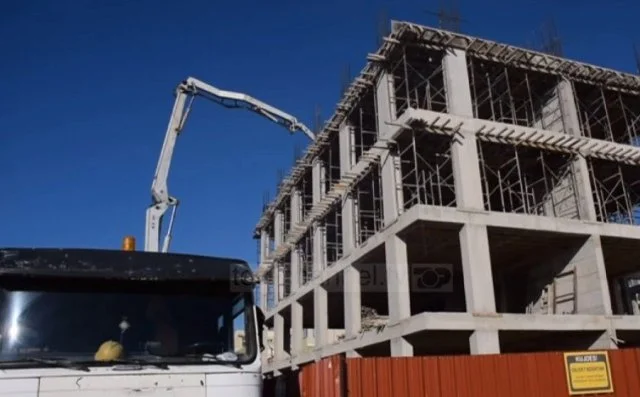
(a year ago)Kosovo is being built at a fast pace, but behind this boom is also a paradox: thousands of dwellings remain empty. Investments from the diaspora have revived the market, but, apparently, no real impact on the economy. For 13 years, between 2011 and 2024 ], the number of homes and homes in Kosovo has increased by 43 [...]
For 13 years, between 2011 and 2024 ) the number of Kosovo residences and homes has increased by 43 percent, reports Radio Free Europe.
Kosovo's Statistics Agency data shows that the country, with about 1.6 million inhabitants, has 590 thousand residential residences or houses.
This means that, on average, every third resident has “culm on his head”, reports Periscope.
The data released by the census last year also shows that over 96 percent of households are homeowners.
Observers of this trend say the citizens' mentality is that investing in residential objects provides long-term solutions to the family's welfare.
The latest “Cohs, young couples secure their residence even earlier, and the number of family members is smaller than in the past”, says Naser Kabashi, professor at the Faculty of Construction and Architecture at Pristina University for Radio Free Europe.
But one figure he considers disturbing is that of empty dwellings.
According to the AKS, there are more than 182 thousand in Kosovo, which includes residences still under construction, purchased and destined for sale.
Representatives of real estate agencies and owners of construction companies say a large percentage of uninhabited residences are diaspora property.
These claims are also supported by data from the Central Bank of Kosovo, according to which the diaspora takes first place in foreign investments that are made mainly in real estate.
Of over 856m euros in foreign investment last year, over 647m were invested in the real estate sector.
For Kabashi, residences purchased mainly by the diaspora are “a dead, untapped property”, which brings no results in economic development.
The chairman of the Kosovo Economic Chamber (OEK), Lulzim Rafuna, who says such investments help the construction sector, but adds that when these properties remain untapped for most of the year, they do not make any direct contributions to economic development.
“It's good that the diaspora has bought houses and residences, but as an investment it's not properly oriented”, Rafuna tells Radio Free Europe.
He adds that if these vehicles were to be invested in the production industry, they would be the buyers themselves but also other citizens of the country.
If production were to grow, exiles would benefit from distribution [v.j. The distribution of profits from a corporation for its shareholders]”, Rafuna says.
Kosovo would then expand production capacities, increase export and lower import. That way, social welfare would improve and decrease the unemployment rate”, the OEK chairman explains.
The unemployment rate in Kosovo is over 10 percent, while among young people between 15 and 24 is almost 20 percent.
Kosovo remains extremely dependent on imports of goods, but also on remittances, whose value amounts to over 1 billion euros annually.
How much is the apartment?
Home prices in Kosovo began to rise in 2021 as a result of disorders on international markets that caused the pandemic COVID-19.
This trend continued during 2022, following Russia's invasion of Ukraine.
As construction materials increased in prices, more than 20 percent were expensive.
Burim Halili, owner of a real estate agency in Pristina, shows that the price of a square meter of housing in Pristina, currently, is behaved from 1,000 to 2,500 euros depending on the neighbourhood and construction company.
In smaller municipalities, meanwhile, it totals up to 800 euros.
Unfortunately, we have no discounts. On the contrary, we're up every day”, Halili says.
Radio Free Europe has brought several times Statements of Citizens who can't afford to buy a home in the municipality where they live.
Brahim Selimaj, from the Kosovo Construction Association, expects prices to start falling, since, as it says, constructions are also on the decline.
“is going in that direction so that the price is as low as possible for sale, due to lack of demand. The shopping demand is on the decline and the builder has no choice but to lower the” price, says Selimaj, who is also owner of a construction company.
AKS data also shows, for less housing sales.
According to the Bank Property Awards Index, in the first six months of 2023, only 1,628 residences have been sold throughout Kosovo.
That number was evidently lower compared to 4,967 that were sold throughout 2022 and 6,561 in 2021.
The worst - hit municipality in Gjilan was that of over 90 thousand people, where in the first six months of 2023, only six homes had been sold.
For the second half of 2023 and 2024, The AKS gave no figures for the number of houses sold, despite Radio Free Europe's interest.
In Kosovo, the average salary is around 570 euros a month.
AKS data shows that much of the domestic budget in the country is shared for the purchase of food items.
Most family economies even have trouble coping with one Unexpected Explore Over 200 euros.