8 hours ago
Trump meeting éensy, REL draws four conclusions: US-Europe Division Can Deepen
Periskopi(a year ago)
(a year ago)It could hardly have been worse. The visit of Ukraine's president, Volodymyr Zelensky, to the White House had many potential. She could have produced an agreement on mineral resources that would have brought Ukraine and the United States together at least on paper and promoted the president more [...]
It could hardly have been worse.
The visit of Ukraine's president, Volodymyr Zelensky, to the White House had many potential.
It could have produced an agreement on mineral resources that would have brought Ukraine and the United States together at least on paper and pushed US President Donald Trump more to support Kiev in protecting him against the Russian occupation.
It could also have brought some clarity about what kind of security guarantees if there were any such ones that Washington Kiev offered in case of a ceasefire or a peace agreement with Russia.
And if nothing else, Zelensky and Trump could have calmed the blood, after exchanging criticism, last week.
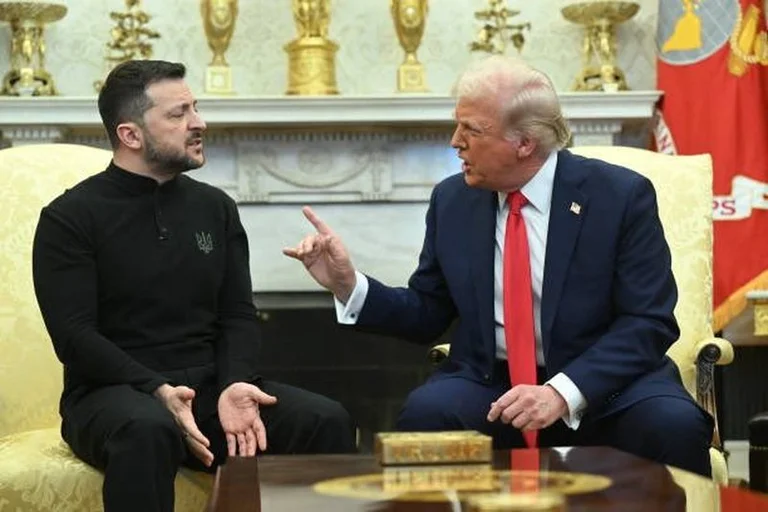
But the blood was reheated more than ever. Zelensky left the White House earlier after being reproved by Trump and vice president JD Vance in Oval Office.
The mineral agreement remained unsigned, and the joint press conference was cancelled.
The extraordinary exchange did not only raise doubts about the fate of the natural resources pact. He also added uncertainty about the future of American aid to Ukraine and the prospects for any agreement that would halt or end Russia's war in Ukraine.
The Harm Could Be Great
The Mine deal Trump and Zelensky had to sign was only a framework agreement, and analysts estimated that at this point, its value would be largely symbolic: a chance for both presidents to claim they have achieved diplomatic victories and a way for the Trump administration to justify the adjacent and perhaps future aid to Ukraine, as it raised questions about whether it should continue or not.
Trump welcomed the draft agreement as an important step in what is deemed a difficult road to peace in Ukraine.
So whenever signed, it would give Kiev and Washington a chance to work together for a possible ceasefire or peace agreement with Russia.
Beyond the mineral deal, the question now is whether the United States will turn their backs on Ukraine, disrupting or limiting the ongoing military assistance, or continuing their efforts to agree with Russia to a ceasefire or a peace plan with Ukraine, but abandoning Kiev.
Parting can last, or maybe not.
The tense meeting at the Oval Office was another low point of difficult relations between Zelensky's Trump, which were turbulent since the election of his president in 2019.
But it may not be the end of the journey. It happened just when it seemed as if the damage caused by some earlier criticism... during which Trump called Zelensky “dictator” and Zelensky said Trump was involved in Russian President Vladimir Putin's propaganda.
Asked on the eve of Zelensky's visit regarding his description as “dicator”, Trump replied: “Did I say that? I can't believe I told you that.
For Zelensky, the desire to provide further assistance from the US and the hope of security agreements, supported by US power, is unlikely to disappear, despite a difficult visit to the White House. So, even after the dramatic meeting, there's a small chance that relations will improve.
US-European Division Can Deepen
Ties between the United States and most of the European Union are tense since Trump returned to office for the second term on January 20th. The differences concern policies towards Ukraine and Russia, as well as a host of other issues between trade and liberal values.
Tensions surfaced when Vance criticised Europe during his speech at the Munich Security Conference on February 14th, saying its internal processes pose a greater threat than Russia, China or any other external factor, to its well-being.
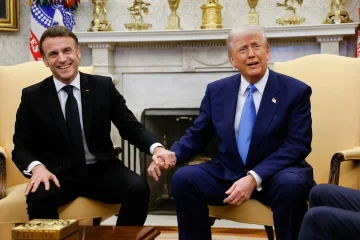
French President Emmanuel Macron and British Prime Minister Keir Starmer were visiting the White House this week in an effort to overcome differences, especially on what should be done for Russian aggression and war in Ukraine.
If Zelensky's visit went well, it could bring even greater unity between the US and Europe.
But the opposite could happen, especially after the dispute in the Oval Office, which revived transatlantic tensions, while many European leaders expressed solidarity with Ukraine.
In an X post in Ukrainian, the president of the European Commission, Ursula von der Leensky, told Zelensky: strong “, be bold, be fearless” and assured her that “will never be only”.
“We will continue to work with you for a fair and lasting peace”, von der Leen said.
Case kick for right “”
When Zelensky and European leaders speak of “fair and stable”, they imply a peace that does not favour Russia and weaken Ukraine, leaving it under Moscow control or vulnerable to future Russian attacks.
When Trump called Putin on February 12th and sent senior officials to meet with their Russian counterparts in Riyadh six days later, thus overturning the efforts of his predecessor's administration, Joe Biden, to isolate Moscow because of Ukraine's invasion, he caused fears in Kiev and in Brussels for negotiating a wrong deal for Ukraine.
If the Zelensky-Trump meeting went well, he could have helped reduce these concerns.
Ukrainian president said it was important that Trump meet him before meeting Putin.
However, meeting in the Oval Office did not go well, and these concerns will likely grow again. / REL/