8 hours ago
Trump letter to Iran's leader to negotiate a nuclear agreement
Periskopi(a year ago)
(a year ago)United States President Donald Trump said he wants to negotiate a nuclear agreement with Iran and sent a letter to the leaders of the Islamic Republic this week, suggesting talks with Tehran. The West thinks Iran is rapidly developing the skills to produce atomic weapons. I said I hope they negotiate, [...]
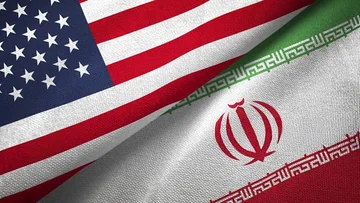
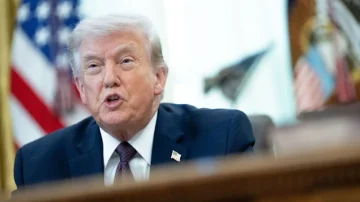
United States President Donald Trump said he wants to negotiate a nuclear agreement with Iran and sent a letter to the leaders of the Islamic Republic this week, suggesting talks with Tehran. The West thinks Iran is rapidly developing the skills to produce atomic weapons.
I said I hope they negotiate, because it would be much better for Iran,” said Mr. Trump in an interview with the Fox Business channel, broadcast Friday.
I think they'll appreciate that letter. The other option is for us to do something because we can't afford another nuclear weapon. ”
Iran has not yet received the letter, the mission of Iran to the United Nations in New York said Friday. The foreign ministry has not yet responded to a request for response to President Trump's comments.
Iran's Media “Nour News”, linked to the country's highest security body, did not pay much attention to the letter, calling it a recurrent “gosal from Washington.
Asked whether he had sent the letter to Ayatolah Ali Khamene, Iran's supreme anti-Western leader, Mr. Trump said: “Po”
There are two ways Iran can be treated: militarily, or make a deal,” said Mr. Trump. I'd rather make a deal because I'm not trying to hurt Iran. They're great people. ”
In his interview Thursday, Trump said he sent the letter “ ”, Wednesday.
Western officials fear an Iran armed with nuclear weapons could threaten Israel, Arab Gulf oil producers and trigger a regional arms race. Iran denies it intends to have nuclear weapons.
O FERTA RUSE FOR REVIVING
President Trump has changed US foreign policy after taking office in January, taking a more open stance on Russia, which has been troubling Western allies as he tries to mediate to end Moscow's three-year war in Ukraine.
In 2018, a year after receiving his first mandate at the White House, Mr. Trump withdrew from Iran's nuclear agreement, an international agreement to prevent the development of nuclear weapons by Iran.
Last month, Mr. Trump returned his “maximum expectations against Iran, which includes efforts to reduce its oil exports to zero. However, he also said he would like to make an agreement with Tehran.
It is unclear how Mr. Trump's proposal to Iran would be expected by US ally Israel, a strong opponent of Tehran. Iran and Israel carried out military attacks against each other in April and last October.
The Israeli prime minister's office has not yet responded to a request for comment concerning Mr. Trump's letter to Iran.
A source aware of the discussions told Reuters that Russia has offered to mediate between the United States and Iran after the Kremlin pledged to do everything possible to ease a peaceful resolution of tensions on Tehran's nuclear programme. Russian Deputy Foreign Minister Sergei Ryabkov spoke on international efforts to resolve Iran's nuclear programme issue with Iranian Ambassador Kazem Jalali, the Russian Foreign Ministry said on Friday.
Meanwhile, senior Russian missile specialists have visited Iran over the past year, while the Islamic Republic has deepened defence co-operation with Moscow, according to an analysis the Reuters agency has made travel and employment data.
SANXIONET AND DISLOMACIA
After Mr. Trump withdrew from the nuclear agreement in 2018, Iran began to ignore nuclear commitments under the 2015 agreement between Iran and the major world powers, which lifted sanctions against Iran in exchange for restrictions on its nuclear programme.
Britain, France and Germany told the UN Security Council in December that they are willing if necessary to promote the restoration of all international sanctions to prevent Iran from having nuclear weapons.
It is not the first time a US president has communicated with Iranian leaders. Under Iranian law, the Supreme Leader, not the president, has the final say on key state issues such as Iran's foreign policy and the nuclear programme.
When President Barack Obama took office in 2009, he offered Khamene a direct commitment provided Iran showed that it was serious to respond to Western concerns about his nuclear programme. Mr. Obama twice directly wrote to Khamene in 2009 and again in 2012.
Iranian officials admitted in 2014 that Tehran had responded to previous letters from President Obama, though it was not clear who had responded concretely. Iran confirmed in 2013 that President Hassan Rouhan had exchanged letters with Mr Obama, confirming a rare contact between the leaders of the two countries.
The United States and Iran cut off diplomatic relations in 1980, after students and Islamic militants attacked the American Embassy in Tehran and took American diplomats hostage. / VOA