8 hours ago
What were the successes and failures of the government “Kurti” for four years in power?
Periskopi(a year ago)
(a year ago)It's been four years since Government “Kurti” came to power. These years mark a period of great challenges, partial successes, but also widespread criticism over it. The government has entered a mandate with strong promises of almost radical changes in statehood, economic development and improved living conditions for citizens. [...]
It has been criticised for failing in the fields of education, diplomacy, health, investment and economy, where there has been difficulties in fulfilling promises and creating opportunities for boosting economic prosperity
In diplomacy, the government has faced sharp criticism, especially in terms of the dialogue process with Serbia, but also in reports with allies. After an intensified period of international engagement and expectations for reaching stable agreements, Kosovo has failed to ensure international recognition, rather, there have been clashes with several important states that have drawn recognition of Kosovo's independence. The latest knowledge came yesterday from Kenya, which was brought by former Kosovo diplomatic chief Behgjet Pacolli.
Economically, the government has been criticised for slow performance and lack of foreign direct investments. The private sector has reported inadequate business conditions and has had a slight increase in employment opportunities, especially for young people. Although some measures have been taken to boost infrastructure investments and support small businesses, there have been difficulties in creating a more stable economic environment. Failure to create a clear plan for economic development and improve the employment opportunities situation has remained one of the biggest critics towards this government.
Failure to provide a better quality health service and ensure better conditions for health workers has been one of the most significant failures of this government. The health system has also suffered from the lack of specialists, where many citizens have been forced to seek services abroad for treatment that should be offered in the interior of Kosovo.
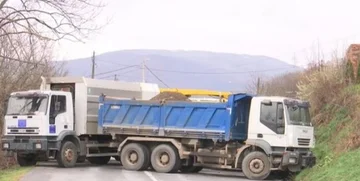
However, one of the aspects that has received positive assessments is the commitment of Kurti Government to strengthening Kosovo's sovereignty, especially in the north. During its mandate, according to pro-government supporters, the government has made significant steps in consolidating state control in areas that have been difficult for Government. This includes implementing the law and establishing state administration in regions that were filled with challenges and objections from specific groups.
Idrovci i PDK: These are Kurt's three failures, and this is his only success
The chairman of Drenas and former Kosovo Ambassador to Albania Ramiz Ladrovci has spoken about the four-year work of Kurti Government in diplomatic and local terms.
For Ludrovcin, the failure of Kurti Government is diplomacy, contracts one stem and political employment.
Over four years of this government, I see them in diplomacy, single-source contracts, and political employment.
Meanwhile, at the local level, the Government's failure is to halt implementation of government-initiated projects and not finalise them during this mandate.
At a local level, the failure of this Government I see to halt the implementation of emerging capital projects of the previous government and not finalise during a mandate, implementing collective contract for education and health by seriously damaging capital investment projects, the lack of new projects that make the lives of citizens better, water-powerable and lack of local governance in the north, and the <x0cep concept far away, he told the FrontOline.
As the successes of Kurti Government, Ladrovci sees the motivation for legalizing jobs.
At the central level, I see the motivation for legalisation of jobs, plans for sports investments, and increased defence budgets was expressed.
Bajrami cites the government's three failures “Kurti”: Current price doubling, deepening trade deficit, high inflation
Former Minister of Trade and Industry, as well as former Finance Minister, now LDK deputy Hykmete Bajrami for FrontOnline, has spoken of the four-year job of Kurti Government, in the field of economy, counting the failures of this Government in an economic light.
According to Bajrami, the Kurti Government in the economy has only failed to list three of them.
There are only failures in the economy, but since you're looking for three in particular I'm mentioning: doubling the price of electricity, the return of the trade deficit and high inflation. Overall, the socioeconomic situation has never been the most serious; during this mandate Kosovo has experienced the largest price increase since its declaration of independence, the price of electricity has increased twice and growth has now been under way for the third time.
Bajrami continues with criticism of the government, for not raising wages, for not developing and for lack of reform policies.
No wages have been raised, they have been raised only for political staff, while for others, growth has been almost unsavory. There has been no development, no reform policy to improve the business environment, for more than most institutions called to serve businesses have been dysfunctional almost during the entire mandate: OSHP, KPM, AK, KNSH, etc.
According to her, even capital investments have been the lowest in post-war history, claiming that no capital project has been completed and there are those left at half.
Central-level capital investments have been the lowest in post-war history, if we take into account the inflation that has occurred. No capital project has been completed, nor those since the beginning of the mandate were in half: the Mitrovica road, the Pec road, the route to Podujevo, the road to Gjilan, the Doll-Gjakov street, etc. The cost of living citizens has doubled, and the number of families living in poverty has increased. The minimum wage law is not being implemented. The case of women who have worked on maintenance of the Parliament building has been disfigured by the inability of this government that even within institutions can implement Bajrami's laws for FrontOnline, broadcast Periscope.
The LDK MP also says that all foreign investments have been in housing purchases, deepening the trade deficit.
Foreign investment is all about buying housing on our own. The trade deficit has deepened. Kosovo has closed 2024 with 5.4 billion euros of trade deficit, and that deficit is deepening further in 2025. Kosovo, due to EU-set sanctions, Kosovo has lost hundreds of millions of euros in donations. This government is noted for corruption scandals. In less than one term, 2,123 single-source contracts have been signed.
Former Economy Minister Hykmete Bajrami has also mentioned economic scandals that have erupted during the government mandate.
The KEK tenders, where people without a position decide for tenders millions then the case of Nagip Krasniqi, Martin Berishaj case, the case of Naser Hafizi, the case of subsidies in the MBZHR, the case of subsidies to the MKRS, the case of the Ministry of Local Power subsidies, in the Ministry of Communities and Kttim, and dozens of other cases are phenomena that have conveyed this four-year mandate.
Analyst Pozhar: Actions in the north, extensions and subsidies have been among the strengths of this government
Political analyst Jevdet Pozhari has spoken of the four-year work of Kurti Government, stressing that extending legitimacy to the country's north has been like its main success.
If we briefly address the governance of Prime Minister Albin Kurti, over four years the main concentration has been the security situation in Kosovo, the extent of legitimacy in the north, and the strengthening of sovereignty in content, not only apparently. The increase in defence budgets is also noteworthy on this level, says Pozhar.
According to him, the situation with Kosovo's north, as well as additions and subsidies, has been the strengths of Kurti Government.
As far as inflation is concerned, this government has chosen additions for the most affected categories, as well as increased the budget for subsidies aimed at strengthening local production. So, in short: actions in the north, extensions and subsidies have been among the strengths of this Government, which I think have largely affected the outcome of the elections.
Pozhar, says the rise in prices in the country is referring to Kurti Government as its failure.
While, the main headquartered as a failure on this Government has been (and continues to be) rising prices of various products, increasing the cost of living in general, which is in circulation with incomes in Kosovo, including the expensive current that is subsequently manifested in price increases in all products and life segments. This also diverts criticism of the country's growth and lack of perspective, especially for the poor and middle class.
Former Minister Lekaj: Government Kurti has failed infrastructure, these are top three failures
Former infrastructure minister Paul Lekaj has spoken about the government's work, Kurti, separately in infrastructure equipment.
According to Lekaj, in the field of infrastructure, Kurti Government has more failures than successes.
If we analyze Kurti's four years of infrastructure governance, we see more failures than success.
Lekaj, has isolated the government's three failures in infrastructure.
I am isolating three of them: 1. Blocking and delays in key projects, the Gjilan Highway is a concrete example where this government has delayed works, damaging citizens and businesses in the region. The same situation has happened to the Pristina-Peje road, Gjakova-Dolc, projects in Dukagjin. 2. Failure to maintain road maintenance and road safety has not had adequate investments in maintenance, especially in national and regional roads, lack of lighting and poor signaling have negatively affected the safety of citizens. 3. Politisation and lack of vision for public transportation and modern infrastructure we haven't seen any important projects for urban and interranean transport, no new mile of railway was built, and the idea of any modern form of transportation for the capital states,
The former infrastructure minister sees as missing these years for Kosovo.
Yet, in general, these four years have been lost for Kosovo's infrastructure, and citizens are feeling the consequences of this disability. Lekaj concluded for FrontOnline.
Former Minister Recica criticises government social policies: Measures are ineffective and without strategy. I mention that success.
Former Labour and Social Management Minister Skender Recica, for FrontOnline, has sharply criticised the actions taken by the government Kurti in the area of social affairs over the four years of governance, stressing that many of the measures have remained at a deklarative level and that no sustainable results have been achieved.
The actions taken in the field of social affairs during the four years of Kurti government, unfortunately, have remained largely on declarative level. Instead of building a functional, sustainable and comprehensive social protection system, we have witnessed fragmented measures, ad hoc decisions and the lack of a clear strategic vision that would guarantee equality and social well-being for all citizens, he says.
He described the failure to build a stable and comprehensive social protection system.
The most pronounced work and social well-being failures include: First, the lack of reforms warned at the Social Assistance Centre. Despite public commitments, a new model that effectively addresses extreme poverty has not been designed. The current scheme does not reflect the country's socioeconomic reality and continues to be unattended for most families living in grave social conditions.
Recica listed some of the most pronounced failures in the field of labour and social welfare during this period:
Second, neglect to the private sector in terms of protection of workers. Workers in this sector continue to be exposed to abuses, working without contracts, no health insurance and non-dignitious salaries. Meanwhile, the government's focus has been almost exclusively on the public sector, deepening social inequality and fragmentation. Third, inefficient access to active employment policies. Programs like “Superwork” has had demonic character and have not brought lasting impact on the labour market. An integrated strategy for developing labour force capacities through professional training has been lacking, as has a genuine partnership with the private sector for creating new jobs.
Former labour and social welfare minister Recica acknowledged the minimum wage increase as a necessary step, but called it a delay and a partial one.
In terms of successes, the growth of the minimum wage may be considered a necessary and long-awaited step towards improving citizens' living standards, but this step came late and partially declared FrontOnline.
He also raised concerns about the exclusion of war veterans relief from the benefits of this policy.
The disturbing fact is that this policy left out one of the most collected layers and with irreplaceable contribution to state building, liberation war veterans. Those who once gave everything for the country's freedom and independence today feel neglected and forgotten by a government that promised social justice, but is spreading selective injustice in practice, Recica said.
Recica said that this has been a government that has spoken a lot about social justice, but in practice has failed to address the real needs of ordinary citizens, especially those who survive with social aid, without employment contracts, no insurance and no decision-making.
To close it, this has been a government that has spoken a lot about social justice, but in practice has failed to address the real needs of ordinary citizens, especially those who survive with social aid, without employment contracts, no insurance and no voice in decision making.
He ended up stressing that promises of change have remained unfulfilled, while the social reality in the country remains unchanged for the most vulnerable layers.
The promises of change remain unfulfilled, while the social reality in the country remains unchanged for the most vulnerable layers) concluded Recica.
Bedri Elez: Kosovo facing major security risk, urgent action needed
Security affairs acquaintance Bedri Elez has sharply criticised the Kosovo government and security institutions for their performance over the past four years, viewing the security situation as very problematic.
He has declared that the <x0) public security situation in the Republic of Kosovo has been very seriously degraded,” and has added that the last “we have had many cases that have concerned citizens. ”
The public security situation in the Republic of Kosovo has been very seriously degraded, even in recent days we have had many cases that citizens have really been worried about.
For Elez, this is a mirror of the poor performance of the security and justice institutions, which have contributed to “the availability of public security” and have caused a climate of continued uncertainty.
The weak performance of security and justice institutions is the very violation of public security in Kosovo's republic. We are witnessing that the sentences are very low, there are also doubts that freedom can be bought in Kosovo, and so many citizens who have considered the possibility of purchasing freedom have taken action to commit criminal acts is expressed.
Another important point he stresses is the low sentence pronounced for crimes and suspicions that freedom” can be rendered in Kosovo, a phenomenon that, according to him, has encouraged individuals designated to commit criminal acts.
Also highlighted is the fact that many with criminal precedents have been set free and also pose a serious threat to public safety. The large number of possession of weapons without permission from incompetent persons remains a serious public security problem.
He also criticised Prime Minister Albin Kurti for the fact that he “has not responded to the state prosecution --” -- a move Elesi considers a failure of justice institutions and an incentive for citizens to disrespect the authority of the law.
Kosovo republic Prime Minister Albin Kurti has not responded to the state prosecution, this case has greatly influenced public security, because many citizens have been encouraged not to respond to the rights institutions. Competent institutions, they must urgently take concrete operational action to ensure a safe environment for all citizens. /Periscope/