8 hours ago
What plan does Trump have for the Western Balkans?
Periskopi(a year ago)
(a year ago)Recent weeks have shown how quickly situations under US President Donald Trump can change. What can this mean for the Western Balkans? The three wars of Yugoslavia of the 1990s ʹ in Croatia (1991-95), Bosnia and Herzegovina (1992-95) and Kosovo (1999) eventually ended under US leadership. Since then two [...]
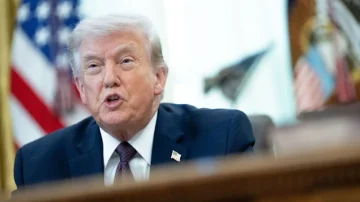
Recent weeks have shown how quickly situations under US President Donald Trump can change.
What can this mean for the Western Balkans?
The three wars of Yugoslavia of the 1990s ʹ in Croatia (1991-95), Bosnia and Herzegovina (1992-95) and Kosovo (1999) eventually ended under US leadership. Since then, two EU and NATO-led military missions guarantee peace in these former war zones. But for more than two years, the situation in the Western Balkans is constantly irritated.
The spirit of violence began in December 2022. After representatives of the Serb minority in the Republic of Kosovo under the orientation of Serbia's capital, Belgrade, they left the Kosovo state institutions of the judiciary, police and administration, Serbian President Aleksandar Vucic began a collection of troops at the northern border of the neighbouring country.
Former German diplomat Wolfgang Ischinger accused Vucic of wanting to “fight the role of a small Putin”. I find “unimaginable, how Vucic and the Serbian leadership are causing trouble here. I give the blame for this scale exclusively to Belgrade. ”
Vucic, on the other hand, stressed that Serbia's army would protect the Serb minority in Serbia's “southern province”, as leadership in Belgrade still calls Kosovo, which has not been under Serbian control since 1999. During 2023 the situation escalated: In riots in May violent Serbs hit and injured 90 NATO soldiers from Kosovo peace troops, KFOR.
Kosovo situation almost escalated
In September 2023, there was fighting between Serb paramilitaries and Kosovo police near the Serbian Orthodox monastery Banjska in northern Kosovo. Four people lost their lives and dozens of Serb paramilitaries led by a Vucic believer managed to flee to Serbia. They left behind a modern military arsenal worth millions of Serbian Army reserves, which could have equipped more than 100 fighters.
A larger military operation was apparently planned here, possibly aimed at occupying four northern Kosovo municipalities, where the Serb minority constitutes the majority of the population in the predominantly Albanian country. In October 2023 Vucic then ordered the tanks to head towards Kosovo, which was stopped only by diplomatic interventions by Washington and NATO.
In April 2024 US General Christopher Cavoli, NATO's Supreme Commander for Europe, warned the US Congress of Belgrade's intentions, saying the increase of Serbian troops after the attack in Banjska was “the greatest threat of interstate violence” for 25 years.
Threats Against Bosnia
Meanwhile, Serbia's Deputy Prime Minister Aleksandar Vulin threatened another neighbouring country during a visit to the Russian capital Moscow: “Bosnja has never been so close to its end”. Earlier, Milorad Dodik, separatist president of “entity” dominated by Serbs in Bosnia and Herzegovina, Republika Srpska (RS), was sentenced by Bosnia's Supreme Court to a year in prison and six years' ban on duty.
Just a few days earlier, Dodik had threatened that a guilty verdict against him could give a fatal “fatal hit” Bosnia. The RS president was charged with ignoring High Representative Christian Schmidt's decisions. The High Representative is the international community's top institution in Bosnia, which ensures peace in the country since the end of the 1992-95 war. Following his sentence, Dodik went further and initiated the adoption of laws in the RS Parliament, which are in force of the official state security notebook.
“Serbe traitor”
Following his conviction Dodik took the initiative in the Republika Srpska Parliament (RS) for adopting a set of laws banning Bosnian security and justice organs from operating in RS. These laws went into effect Friday (6.03.2025) but have not been implemented by all authorities. Workers in Bosnia's central quartier, the Bosnian State Police Authority, State Investigation and Security Agency (SIPA), continue their work, their colleagues at regional representations in the RS capital, Banja Luka, otherwise have left their jobs.
RS President Dodik has warned: All, who stand in the institutions of the Bosnian state, will be treated as the traitor Serb “ ”. During a meeting with Serbia's president, Vucic in Belgrade on March 6th Dodik even claimed, “Bosniaks from Sarajevo want an armed conflict in Bosnia”, for “revenge on Serbs”.
Schmidt: “exceeded red line”
High Representative Schmidt reacted on March 8th. On German national radio Deutschlandfunnk he said that with Dodik's “attack on Bosnia and Herzegovina's sovereignty and territorial integrity” is “exceeded the red line”. Schmidt urged the international community to devote more fully to the crisis in Bosnia.
For the first time, the High Representative criticised as opposed to Dodik, even the Serbian government, which “should be clearly shown the borders”. / DW