8 hours ago
Today marks March 7, Teacher Day
Periskopi(a year ago)
(a year ago)March 7 is known as the Teacher's Festival in Albania, and is celebrated in all schools and universities. It is a symbolic day to remember and appreciate teachers ' dedication in teaching and in preparing future generations. Genesis of this day coincides with the opening of the first Albanian teacher, who was [...]
March 7 is known as the Teacher's Festival in Albania, and is celebrated in all schools and universities.
It is a symbolic day to remember and appreciate teachers ' dedication in teaching and in preparing future generations.
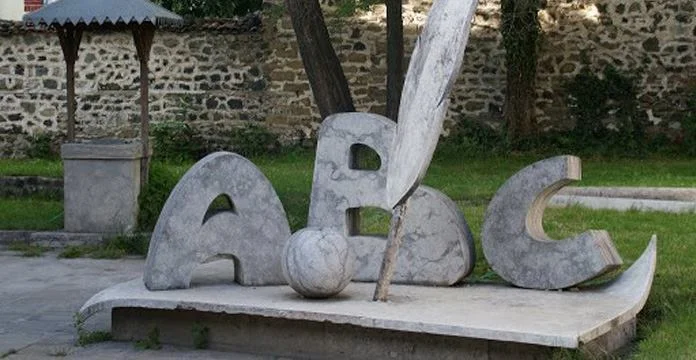
Genesis on this day coincides with the opening of the first Albanian educator, which opened in March 1887 in Korca, just when Albanians were secretly teaching in their homes because of Ottoman rule.
Corca's teacher has been open for at least 20 years, and its leaders were prominent figures of the Albanian Renaissance such as Pandeli Sotir, Petro Nini Lurasi, Nuci Naci, Thoma Avrami, and others.
The March 7 festival was strengthened more during the communist era. That was the best day for teachers. It was a fine tradition when students chose their best representatives to visit the teacher's home. The teacher received them with all the goods, sweets, and fruit, while the students ' gifts were very symbolic - flowers or books.
Today this tradition has changed. The teacher's party is organised at school, with concerts and various activities. Gifts are also more varied, not just flowers.
Until the early 1990 ' s in Albania to promote the teaching of a superior quality, the most distinguished teachers were rewarded with the high decorations of the Merit Teacher and the Teacher of the People.
The Story of the First Albanian Learning
In 1885, Naim Frasher, as office officer at the Ministry of Education in Istanbul, with his brother Sami Frasher and other influential Albanians of “The Printer's Society, Shqip”, managed to obtain permission from Sultan Abdelhamid II for opening an Albanian boys' school in Korca. Financial support was also enabled by Romania's exile, members of the Bucharest Society “Drita”, while Istanbul Albanians decided that the school principal would be Pandeli Sotir. The environment where the school was established was the home donated by Diamond Terpo. Like “The Oppression Society Albanian”, as well as society “Drita”, had agreed in advance not to anttagonize locals influenced by Greek culture by opening Albanian schools. Istanbul's Patrickana refused to give the Albanian language in the existing Greek schools of the Korca Orthodox community. Sotor was sent to Korca and started school on March 7, 1887.
School texts enabled the Naim brothers and Sami Frasher and many other Albanians. [8] During 1887, Sotiri had to leave Korca, and school management passed to Petro nini Lawaras and Thanas Sina. Ottoman authorities gave only Albanian Christians permission to attend the school, but Albanians disobeyed the permit and allowed Muslim children to attend. In the first few years, about 200 students of Muslim and Christian faith were enrolled in school. In 1888 the school had 100 Christian students and 60 Muslims.
Pandeli Sotir started teaching 35 students first. The opening of this school for character had democratic traits, as it taught children from all walks of life, poor and rich. This school had a training class as well as four regular classes. The subjects were writing, singing, grammar of the Albanian language, history, geography, arithmetics, natural wisdom, and physical education.
While under difficult conditions, when learning the Albanian language was strictly forbidden because of conditions under Ottoman rule, Corca's teacher remained open for 15 years; closed in 1902 for requencing in 1908. It was again closed in 1912 and opened after five years in 1917. Her supporters were prominent figures of Albanian Renaissance, such as: Nam Nach, Thoma Avrami, the Kyriz family, etc.
On October 15, 1891, Gjerasim Kyriazzi, along with his sister Sevasti Kyriazi, also opened the sister's teacher of girls, whose base was also Albanian and national culture.
The great contribution these natives and prominent activists gave to the nation is demonstrated by the longing they had to spread knowledge to the people. With their options, they became the initiators of creating the first recorded textbooks. They devoted great importance to providing with the right teaching tools, to further their distribution to the students. Educated and with the high spirit of patriotism, these students would be made in the future and followers of the ideology of their teachers and devoted warriors for the struggle for freedom and independence.
In honor, respect, and memory of the contribution of Corca's teacher and teacher, March 7 has been designated Day of Albanian Teachers and Schools. The building where this school opened today is the national education museum.