8 hours ago
Will Kosovo remain on Europe's radar?
Periskopi(a year ago)
(a year ago)In recent weeks, the idea of a European mission to Ukraine has gained momentum. If done, we can redefine security priorities in Europe, the Periscope broadcasts. But how would NATO's presence in Kosovo affect Kosovo? Less attention, more danger, some analysts predict. As Europe examines sending troops to Ukraine, it also enters [...]
In recent weeks, the idea of a European mission to Ukraine has gained momentum. If accomplished, we can redefine security priorities in Europe, broadcast Periscope.
But how would NATO's presence in Kosovo affect Kosovo?
Less attention, more danger, some analysts predict. As Europe examines sending troops to Ukraine, another throne enters the game: Kosovo.
With thousands of European peacekeepers deployed in the country, could the concentration of resources and attention in the east leave Kosovo more vulnerable?
NATO assured him not.
In an Answer Radio Free Europe, an Alliance official says that NATO has long been committed to the security and stability of the Western Balkans, “we will continue to contribute in this direction together with other commitments that Allies can take”.
Peacekeeping Mission NATO has been deployed in Kosovo after the end of the war in 1999.
Currently there are over 4600 troops, the vast majority of them Europeans.
Italy leads by over 1,200. Then come other countries, such as Hungary, Turkey, Germany, Poland or Switzerland, with hundreds of soldiers. In Bosnia and Herzegovina, too, for decades there has been a peacekeeping commission consisting of European forces consisting of 1100 soldiers and 3500 other reserve EUFOR provides support to this country's institutions in preserving peace since 2004, when it replaced NATO forces.
Chief NATO Mark Rutte was in Bosnia and Kosovo just this month, at a meeting with reporters in Pristina on 11 March. He said commitment NATO in the region remains strong to this day.
He said sending the evental of European troops to Ukraine could influence the revision of foreign military presence in the Balkans, but did not say how or when. The “is too early to talk because first a peace agreement should be reached in Ukraine or a truce, before you start preserving it”, he said.
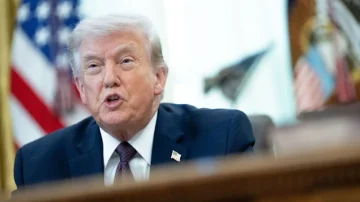
Britain and France are leading efforts to rally a military force to be deployed in Ukraine in case of a ceasefire. This was after US President Donald Trump initiated talks on a peace deal between Russia and Ukraine, three years after the Russian state began full - scale invasion of its neighbours.
The United Kingdom and France are jointly leading security guarantees arrangements for Ukraine. We are doing this together, working closely with partner countries and trying to create a coalition of volunteers from Europe and beyond”. After a meeting of European leaders in Paris on Thursday, France's President Emmanuel Macron said they agreed to consider specific legal issues about any European Security Force for Ukraine and report in three weeks.
British Prime Minister Starmer said earlier that the mission would not be possible without US assistance, but the US was cold at the idea of any military role in Ukraine. Russian Foreign Minister Sergey Lavrov said as well as Russia would be unacceptable to the presence of NATO countries' forces in Ukraine under any circumstances.
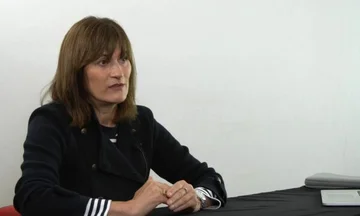
Some observers like Tim Les from Cambridge University's geopolitical centre do not expect this mission to be formed due to just those objections. In such a country, it says that Europe will fortify states that are most concerned by the Russian Baltic threat, Poland, Romania or Moldova.
If you estimate that the Balkans are at the front to confront Russia, then I think we will see greater militarism, especially of Kosovo and Bosnia. But, if the first scenario occurs, it would require a kind of re-absorption of resources away from the Balkans, towards those other countries, in that case Serbia would be sent the message clearly that it would not face opposition if it puts its own political goals”
Hikmet Karciq, research associate at the University of Sarajevo and author of the book Torture ʹ humiliation-killing within the Bosnian Serb camp system.
The spotlight can create gaps in security according to him.
Any violence occurring in the region has the potential to spread from one country to another in Bosnia, Kosovo, Montenegro, Serbia, northern Macedonia. We've seen this in the past, but in recent years it's been the focus of west. NATO, which has protected the region. In Kosovo, for example, the presence of foreign troops is the main reason why Serbia has not made efforts just about two years ago in Banjska to physically attack it”, he has declared. Loshaj life, researcher at the Kosovar Centre for Security Studies, expects the Balkan region to remain on Europe's radar and to take place in each plan for protection it makes.
The chief's visit is also witnessed by her NATO in Kosovo, and in Bosnia.
Here.
We don't know if such forces can be deployed in Ukraine, but if such a decision is made by itself, then Europe already has invested in military forces and investments that are ba, which we have without 800 billion, I think there would be space for Kosovo”, she said. Loshaj suggests to Kosovo institutions to remain in close communication with international allies, whether with NATO as a whole or with its states separately, it particularly values the initiative for military co-operation that was undertaken late by Kosovo, Albania and Croatia.
“submits a message of readiness for Kosovo to find ways indirectly to strengthen its capacities, but to reflect on geopolitical situations”.
Kosovo Prime Minister Albin Kurti, who aims at a new government mandate, promised this week over a billion-euro budget for the country's Security Force. And reiterated that Kosovo would build its ammunition and military fears factory.
Tim Les from Cambridge University believes Kosovo should take two key steps to keep the attention of its allies.
“One is active lobby in the West, promoting the idea that Serbia is a threat to it and should be contained and under two, invest in its security by building its army, building its weapons reserves and so forth in the event it has to face Serbia directly and without help from outside”, he has declared.
Karcic agrees that co-ordinated diplomatic and military strategies will be crucial to balancing these simultaneous security challenges.
According to him, the West would have to help Kosovo strengthen its military and security capacities, including boosting cyber security to be able to protect against possible threats.
Bosnia says it should encourage it to overcome its political divisions and take steps to strengthen its security institutions and capacities. On the contrary, Karcic says Russia would meet any possible vacuum that would be born west.
“Russia, along with its supporters in Serbia and Montenegro, would eventually try to prevent NATO's expansion into this area, as well as its integration into the European Union. It would also make efforts to destabilise NATO states in the Balkans, such as Montenegro. We have seen these efforts even in past years, especially with Montenegro and North Macedonia”, he added.
And with an American administration signaling less involvement in European affairs, the Kremlin can feel less pressure on its actions, either in Ukraine or in the Balkans, says Professor Lles.
Donald Trump's inauguration on January 20th was a kind of bomb that exploded in international relations. Almost everywhere you look, you see a kind of impact of Trump. In this uncertain climate, challenges for Kosovo and the Western Balkans generally appear clear. Stay on the radar or risk being excluded from geopolitical play, analysts say.
But this requires a careful balance between domestic and international interests, something that is never easy, especially in a region like the Balkans.