8 hours ago
Kosovo- Albania-Croatia, Ving: Kosovo has recently been exposed to terrorist activities
Periskopi(a year ago)
(a year ago)On Tuesday, a military alliance between Kosovo, Albania and Croatia was signed in Tirana. The move, in the neighbouring state, Serbia, was interpreted as a threat to them. The host of yesterday's meeting, where the agreement was finalised, has said this alliance has nothing to do with Serbia's groundless claims. In an interview for [...]
On Tuesday, a military alliance between Kosovo, Albania and Croatia was signed in Tirana.
The move, in the neighbouring state, Serbia, was interpreted as a threat to them.
The host of yesterday's meeting, where the agreement was finalised, has said this alliance has nothing to do with Serbia's groundless claims.
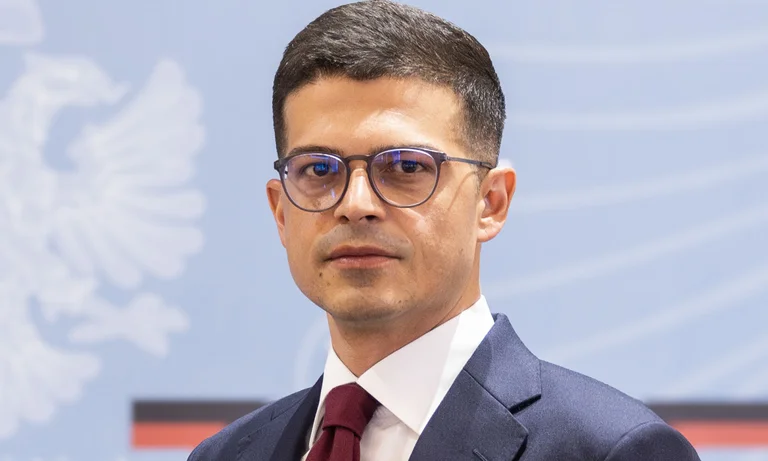
In an interview for “Euronews Albania”, Albania's Defence Minister Pirro Veng said this agreement has three components, and the last concerns Kosovo's support.
The third “component concerns the firm support of Albania and Croatia for Kosovo to EU and NATO membership. It was a very important element that we looked forward to, and Croatian colleagues embraced it as an approach and this agreement was successfully concluded”, Ving said.
He said an essential element of this agreement is attention for Albania and Croatia to have in relation to the security of Kosovo and throughout the region.
“Albania and Kosovo see threats and risks in the region in a genuine way. We have the same reading for threats coming from third parties outside NATO and the EU. The agreement is a natural alliance between Albanians and Croats”, the Albanian minister said.
Asked whether Kosovo is threatened militarily by Serbia, will Albania and Croatia bring additional troops, Vangu said KFOR is the main security force in Kosovo.
Croatia's “Albania has been the countries that have supported the growth of KFOR troops in Kosovo, as we have done with increasing our controls in Bosnia. Kosovo's second security guarantee comes through unblocking political dialogue between Kosovo and Serbia and Kosovo membership on all regional security platforms, such as the Adriatic Charter and others leading to NATO membership, as well as the negotiation process that applies to the part of EU membership”.
This is not an agreement that envisions an aggressive approach to someone in the region. I have heard reactions, often even the reactions of the region's media that perceive it as a threat to Serbia or anyone else in the region. Even my counterpart, Minister Macedonia, has specified yesterday that we are not an alliance built against someone, but an alliance for defence and co-operation in the field so that these countries can increase their defence capacities by taking advantage of Croatian expertise in some cases and Albanian in other cases, and give Kosovo all the chances of being integrated politically and militarily into all regional mechanisms”, the Albanian Defence Minister opened up.
.
Veng also spoke of Kosovo security threats on Serbia's part. He said that Albania's assessments from the point of Kosovo security threats are apparent “necessarily in recent years”.
Kosovo in this period, he said that “has been exposed to terrorist activities, destabilizing and activities aimed at cutting off its critical infrastructure to create destabilising situations”.
“We have listed these threats, we have condemned these facts even on NATO tables, and we always have to understand that as a NATO member when it comes to Kosovo, we have two hats: we have the member country hat that has taken troops to KFOR, and we have a collective approach to Kosovo where the first guarantee is NATO and KFOR, and we have our home hat. After all, Albania and Tirana in their formal and diplomatic sense see Kosovo even in a domestic outlook. As we view Montenegro's Albanians, the Valley of Northern Macedonia, in the same way, and at times a dyvergence as small as Tirana and Pristina may have when it comes to seeing the future of stability and security in the region. Albania has an even broader constitutional responsibility. We make sure that we protect the interests of all Albanians in the region, not only of Kosovo”.
Our assessment and all the Allied structures is that several attempts have been made in the border area to create destabilising situations and situations that violate order and security. We need to be alert and vigilant to prevent these situations, so we have repeatedly called for greater vigilance for KFOR to have bigger and more operational instruments, even tools and systems available on the ground, because threats can also be of hybrid natures and sabotages of”.
“As we always requested that the Kosovo government reconcile all its actions with KFOR, especially for activities in border areas. We find that there is no better solution than a co-ordination of KFOR forces and the Kosovo Security Forces for any activities taking place in border areas. That is to the benefit of the KSF's legitimacy in all territory, it is to the best and what KFOR requires to have co-ordination, not uniform actions”, said Minister Weng. /Periscopi/