7 hours ago
The way to form new institutions is clear. What's the next step?
Periskopi(a year ago)
(a year ago)The Central Election Commission (KQZ) has certified the results of the February 9th parliamentary elections Thursday, thus paving the way for the formation of new Kosovo institutions. Immediately after the certificate of election results, the first step is to constitute the new parliamentary composition and then the formation of the new government. According to [...]
Immediately after the certificate of election results, the first step is to constitute the new parliamentary composition and then the formation of the new government.
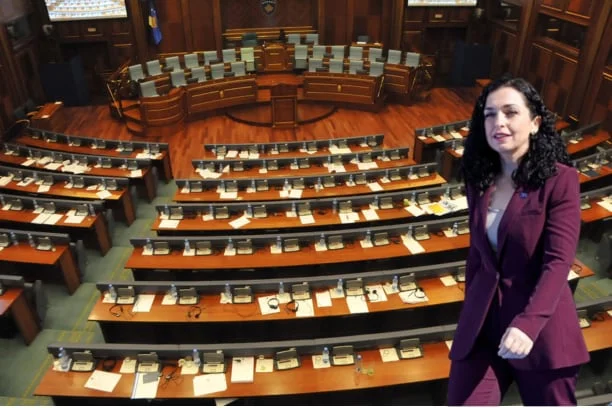
According to the Constitution and the Framework Order, after the certificate of election results Kosovo President Vjosa Osmani is due to call the Parliament's Constituent session within 30 days Periscope.
During this session, the new MPs take the oath and then elect the mayors and vice heads.
The speaker of the Parliament's post belongs to the first party in the election, in this case, LVV. Meanwhile, the largest political parties propose a candidate for deputy chairmanship, but even MPs from the Serb community and those of non-party communities should propose by an MP for the deputy chairmanship.
The mayor and vice-presidents are elected by majority of votes. Constitutive hearing, according to the House Order, ends with their choice.
“Cuts during the constitutional session cannot be longer than 48 hours”, says Article 12, 5th of the Parliament Rule.
Limitation of current executive competencies
With the Parliament's consisting, the way for the formation of the new executive opens. But in this intermediate period, that is, from the institution of the new parliamentary composition to the formation of the new executive current government is limited to competence.
These restrictions are laid out in Article 31 of the Law on Government.
In this article it says that the Government has no right to adopt initiatives or to sign international agreements, for which the ratification of the Parliament is required, cannot adopt laws, strategy and concepts, nor can it propose candidates for specific positions, nor can it appoint people to public positions.
New Government
In this period, President Osmani, under the laws, is obliged to nominated the winning party as mandated for forming the new government.
The proposed government cabinet should secure the votes of 61 deputies.
LVV has secured 48 seats in the Kosovo Assembly, The PDK, 24 Sosh, LDK, 20 seats, Serbian List nine seats and the AAK-Nisma coalition, eight seats.
So it turns out that neither party can only form Government, but for the new executive it will have to form coalitions.
As far as coalitions are concerned, the LVV has said it prefers to form Government with non-party parties which have ten seats guaranteed in the Kosovo Assembly.
What will the next Kosovo Assembly look like?
Large Albanian parties have also voiced opposition to co-operation for the new executive with LVV. But Kurti has expressed confidence that he will lead the new government.
However, if the LVV fails to secure the support of 61 deputies, then the president Osmani is obliged to invite political parties to consultations within ten days.
After consultations, it is in its discretion to decide for the new mandate, if he proves he has numbers to form the executive.
The manager then has 15 days to present the composition of the government cabinet.
But if the government does not form even after the second attempt, then President Osmani, according to Article 95 of the Constitution, must announce new elections, which should be held no later than 40 days.
The February 9th elections were the first regular parliamentary elections held in Kosovo since declaring independence. /Radio Europe Free
Finally: CEC Certificates Election Results of February 9th, These Are Final Results