a minute ago
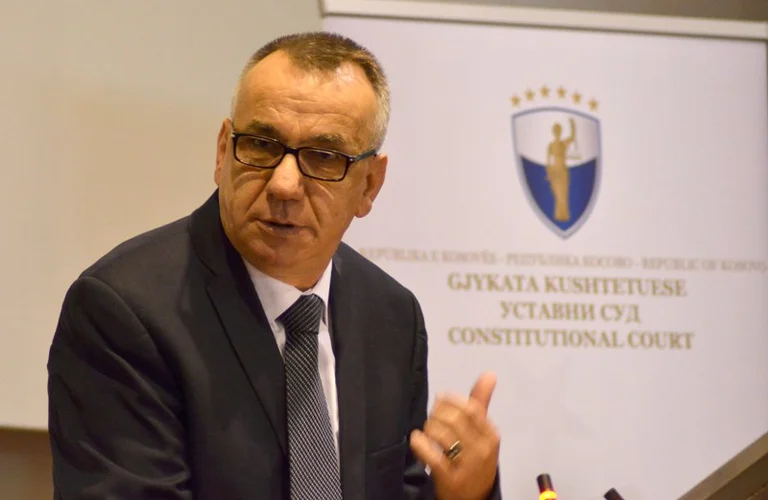
Enver Hasani elaborates three scenarios Kurt can cause him to procrastinate government formation
Periskopi(a year ago)
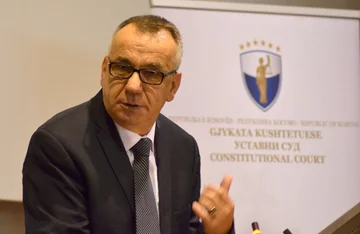
(a year ago)Kurt doesn't propose Government. Kurt doesn't propose head of Parliament. Kurti stalled on forming institutions until the October local elections. There are these three extreme scenarios that are sometimes mentioned, from the end of the February 9th elections so far. For them, says Enver Hasani, former head of the Constitutional Court. For starters, the primary role behind the certificate of results [...]
Kurt doesn't propose Government. Kurt doesn't propose head of Parliament. Kurti stalled on forming institutions until the October local elections. There are these three extreme scenarios that are sometimes mentioned, from the end of the February 9th elections so far. For them, says Enver Hasani, former head of the Constitutional Court.
For starters, the key role behind the certificate of election results lies with the president. From it begins calling for the first party to form institutions, and this happens after the CEC has certified the elections;
Scene 1: Kurt doesn't propose Government.
“It's in the President's disccredition, in the sense of asking him to form it within terms, and if not, then call me the second party.
The first time, at the constitution of the Parliament, one of the causes of distribution is the inability of the government in 60 days. Within the legal terms of certificate is a 60-day maximum.
If the Assembly is not introduced in 60 days, it will take in 30 days”, Hasani says in Rubik.
Scene 2: Kurti doesn't propose head of Parliament
The entire node for forming institutions seems to be at the Speaker of the Parliament. Enver Hasani, has an answer on how the opposition (or opposition deputies) may act in case Kurti's party does not propose president of the Parliament at all (just as it is due from the Constitutional Court Act in case of V LAN).
“Action on V case The LAN, for the Speaker of the Parliament, has only confirmed the clear text as the tear, which says, is proposed so the engineering is proposy, so the largest party and it proposes, and 50+ 1 is also for vice presidents who belong to non-communal communities. Because if that logic is taken away you can never choose two Serbian and non-Albanian vice-presidents because it is majorising”, says Enver Hasani and elaboron in more detail what is thought of by this part that the opposition might try to do to head Parliament”, he says.
How can we understand this approval of the opposition Speaker of the Parliament?
“Speaker of the Parliament, opposition must provoke decision, hold constitutional meetings, as has happened in 2014 and Constitutional Court as it has changed the precedent in the V case. LAN, which I've been against.
Now we have to respect the Court's decision and return to the head of state.
It's now in the President's discretion. But, to explain, discretion is not arbitrary because it is often mixed up. The department differs from arbitrariness because it has a judicial framework, which means that the Constitutional Act has the market that the president has disrepute some efforts, some letters that should be sent to the first party that there is no winner, there is no winner in our system, there is only one first in the election, you send it to the first and you send it to the first and you send a letter of reasoning why it should be formed, it doesn't answer for another time, it sends it another week, but it can't wait a week, because there's no more to expect.
If the court says that the president after the certificate should call me, since it's the coldest reports, you should call the House, that's when they'll find out about the head of Parliament. Just call the first party, tell me what the situation is.
Hypothetically, if the Constitutes comes, but this way it's blocked, it won't go forward, like for the second one, it's 15 days.
Then those MPs who are in the Assembly propose another candidate and become a decision by the Parliament. The ombudsman can challenge him at the Constitutional Court. So other MPs can propose the next chairman of the House and call the session.
The responsibility then falls to other MPs, who are not VV. Then, there is a Parliament decision that can be challenged in the Constitutional Court.
If the opposition has called the Assembly meeting that has tried to elect the Speaker of the Parliament, it has produced a legal effect, then the Constitutional Court assesses the decision of the Parliament in both shape and content (as has happened in the case of Avdullah Hotin).
The question goes to the Constitutional Court for an act that other MPs have made. The Constitutional Court has the authorisation to suspend the deadlines, if there is an excuse, but I believe the Constitutionary would have to answer for a week.
The court then has no logic to say you're right to destroy constitutional order.
Then he owes the first party to propose the Speaker of the Parliament. If you don't, it's a political process I can't comment on.
But I believe the Constitutional Court does not go against the constitutional spirit.
No political subject can block the formation of the Parliament, even the first political subject to have 48 deputies, with the ruling Gjev. Constitutional is continued. The Assembly has two months to produce a Parliament and a Government”, Hasnai says.
Scene 3: Unrecognized scenario
One of the most extreme scenarios mentioned these days is The possibility of procrastinating institution formation by October, When there are local elections.
This scenario, according to Enver Hasani, is impossible.
“It is impossible to postpone the government by October, until local elections, or provoke elections or that is impossible. So either it's going to the elections now, as a result of the inability to form institutions, but you can't push because the president has a key role”, he says.
And in the debate over whether Kurti is now prime minister or prime minister in office, Hasani says the Kosovo Constitution recognises only two terms -- prime minister and prime minister in the resignation. Since Kurt is not resigning, he says he is prime minister. However, it explains that the moment the CEC determines the election outcome, then the prime minister has no one to answer any more, meaning that the legal effect of this is that the prime minister can operate without a constitutional decision.
“While the Constitution has not limited, it is a powerful prime minister, but when the elections are certified, the prime minister must have the Parliament, because there is nowhere to answer.
The key role of the Constitution is, the Road Map is the prosecution of the Constitutional Court”, Hasani says.