8 hours ago
CNN: Europe is waking up from military sleep after “Trump shock”
Periskopi(a year ago)
(a year ago)Europe PAT ETIKEY may at last be waking up from her military sleep, writes CNN. It was a live television ambush that many in Europe hope will stop a war. The public torture that Donald Trump made to the president of Ukraine, Voldymyr Zelensky, at the White House [...]
It was a live television ambush that many in Europe hope will stop a war.
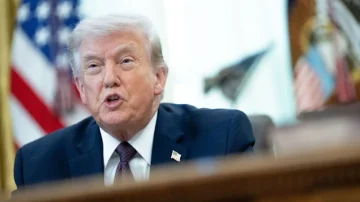
The public torture that Donald Trump did to Ukraine's president, Voldymyr Zelensky, at the White House, was like a lightning bolt for the transatlantic alliance, spreading the remaining illusions in Europe over whether the US will stand at its side in the face of Russian aggression.
Shocked and possibly even frightened, Europe may have finally come to its senses for its defence needs in the era of Trump.
It's as if Roosevelt had welcomed Churchill to the White House and started blowing it<x0...
In a month when US Defence Secretary Pete Hegseth called Europe “PATETICE”, during a conversation with administration officials (in which an accident was included in The Atlantic), the continent has begun to break off dozens of years of taboos in defence matters. Politics that would be unimaginable by a few weeks ago are under discussion.
The biggest change has come from Germany, Europe's largest economy. After federal elections, the pending Chancellor, Friedrich Merz, won a vote in parliament to lift “debt freeness” from the German Constitution a mechanism limiting government borrowing.
In theory, this legal change allows unlimited expenses for protection and security. Experts expect this decision to unblock up to 600 billion euros in Germany over the next decade.
This is a major game change in Europe because Germany was slower especially among the big countries when it was about defence” said Piotr Buras, a senior member of the European Council for Foreign Relations (ECFR), for CNN.
Overcoming its debt fobi, Buras said Germany has finally acted as if Europe actually passed a “Zeitweend” or its “turning points”, as former cascalari Olaf Scholz described in February 2022, only three days after Russia began fighting in Ukraine.
Although the invasion shocked Germany, “just hit Trump caused them to make this really fundamental decision to suspend debt curbing”, Buras said.
“This is the real Zeitung”.
Tabs falling apart
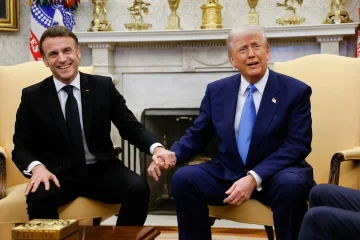
In neighboring France, President Emmanuel Macrono, who has long sought European strategic autonomy from the US, has said he is looking into the possibility of extending French nuclear protection to its allies, who currently rely on American nuclear weapons.
Macron's comments came after the upcoming German Chancellor, Friedrich Merz, suggested talks with France and Great Britain, Europe's two nuclear powers, to expand their nuclear defence. Polish Prime Minister Donald Tusk supported the idea and even proposed that Poland examine the seizure of nuclear weapons itself.
CNN writes that even mandatory military service is returning to the continent and that even the traditionally neutral countries are reconsidering their positions.
European Unity
Although Europe seems to have understood the message, a united approach is premature.
When European Commission President Ursula von der Leyeen presented a plan for billion defence expenses, originally called “ReArm Europe”, Spain and Italy rejected. The plan has now been renamed “Review 2030”.
CNN cites divisions in Europe regarding common strategy in joint actions.
While this geographical division could deepen divisions, Buras from ECFR said complete European unity has always been an illusion.
“What really matters is what the main countries --” do, he said, citing Germany, France, Great Britain and Poland. “I want to be careful optimistic, but I think we're now on the right track”.
Asked whether March would be remembered as the month Europe woke up, Buras replied:
Yeah, we're awake, but now we're gonna have to put on”.