8 hours ago
Sylejmani Director: Kosovo cannot build a stable future in cinematography with only applause
Periskopi(a year ago)
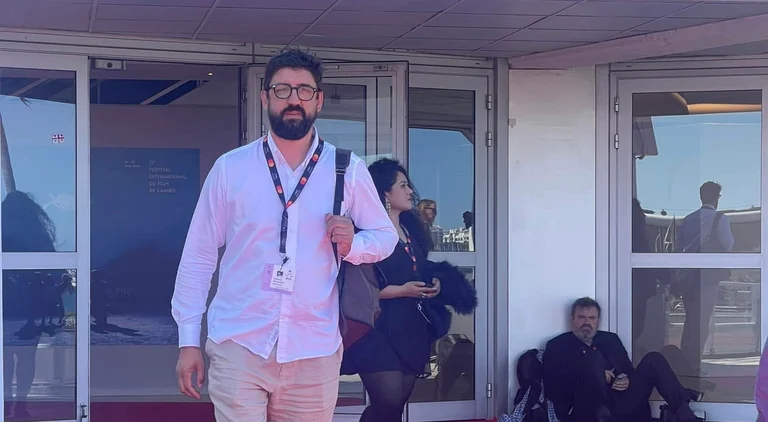
(a year ago)Kosovo director Shzen Sylejmani has expressed disappointment with the state's treatment of cinema. He says that despite successful cinema routes, state support and financing are still under guard. Sylejmani says Kosovo cinema is leading people to success, and to continue this way, he says there is not enough empty words. [...]
Kosovo director Shzen Sylejmani has expressed disappointment with the state's treatment of cinema.
He says that despite successful cinema routes, state support and financing are still under guard.
Sylejmani says Kosovo cinema is leading people to success, and to continue this way, he says there is not enough empty words.
Full Posting:
Kosovo's kinomatography requires caution.
In a small country, with a big history, cinema has managed to become one of the most powerful voices of cultural identity. Kosovo, despite numerous challenges, has infiltrated the international film scene, participating in the most prestigious festivals and being praised for its authentic confessions. This success is not random. It's the result of a spirit-speaking art, of a cinema that doesn't imitate, but it creates, and of a generation of filmmakers who have built a particular film style.
Kosovo's film is bold, rich on topics and inspired by real experiences. It is not a false reflection of reality but a real mirror of the soul of the people. On his journey, this art was born with pain, formed by history, and found its visual language, a style that distinguishes and places it in a special category. At this cinematography, there are lions and lionesses who have built an industry that cannot be ignored. They have not expected success, they have built it, making the film a living legacy that opens Kosovo new doors in the world.
But on this successful path, the paradox remains: why do the state, politics and institutions that should be the pillar of support still view the film as a margin of culture and not as a real national power? How is it that an industry that promotes the country more than any diplomatic campaign continues to be neglected by those who have to finance and support it?
The film institutions "The Academy of Arts and the Cinematographic Centre " have done a tremendous job in creating a new generation of filmmakers and shaping a scene that has already won its place in the world. They have built this success without expecting gratitude, often working with limited means but with a clear vision. They have seen the film, not as a luxury, but as an identity and empowerment tool. And for that, they deserve deep gratitude.
But thanks is not enough. Kosovo cannot build a stable future in cinematography only with applause after international successes. We cannot celebrate the nominations for higher film prices, while directors and producers struggle for financial support. We can't look for more successful films when politics has not yet realised the film is the best ambassador of a state in the world.
Kosovo cinema is on track. It is leading Kosovo to success as a people, placing it on the map of world art and culture. To remain on that road, however, empty words and promises are not enough. It takes concrete support, clear strategies and a sincere commitment to make film a stable industry, and not just a random success explosion.
Time of ignoring and empty promises has passed. Kosovo's cinema has witnessed itself. Now it's the order of state structures to prove their commitment. Otherwise, history will remember as those who had the opportunity to support a golden era, but chose to remain spectators instead of supporters.
St. S