9 hours ago
Mission KiE: Kosovo held peaceful elections, but representation of women remains low
Periskopi(a year ago)
(a year ago)The observation mission of the Parliamentary Assembly of the Council of Europe (PACE) has praised the February 9th parliamentary elections in Kosovo as inclusive and peaceful, though it said women's representation in the elections is still low. Petra Bayr, chief of the PACE delegation who observed Sunday's elections in Kosovo, said to [...]
The observation mission of the Parliamentary Assembly of the Council of Europe (PACE) has praised the February 9th parliamentary elections in Kosovo as inclusive and peaceful, though it said women's representation in the elections is still low.
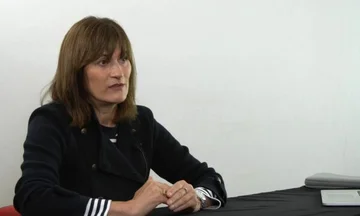
Petra Bayr, chief of the PACE delegation that monitored Sunday's elections in Kosovo, said during a news conference in Pristina that “the entire election process was very qualitative”.
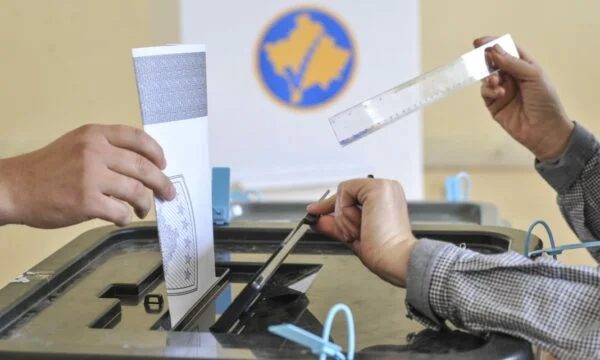
Kosovo's “Voters have demonstrated their commitment to democracy by peacefully and without tension during February 9th 2025 for parliamentary elections. These elections have shown a political relief in which both the majority and minority communities are represented. For more, the participation of Kosovo Serbs who have had a broader range of political choice has enabled even more democratic” process, Bayr said.
Many parties from minority communities, out of six parties from the Serb minority, including the Serbian List, participated in the February 9th elections, which had boycotted Kosovo institutions by 2022.
But Bayr said the representation of women in the campaign in these elections did not mark growth.
“The representation of women remains low. The language of online hatred against women has had an impact on their participation or presentation in these elections”, she said.
Kosovo Central Election Commission still has no record of women's participation in this election, while Bayr said his report PACE will talk about it in more detail after it is published on a date later.
Under the law in Kosovo, 30 per cent of the election list must be with women's MP candidates.
The network of nongovernmental organisations, Democracy in Action (DnV), which has been monitoring the election campaign and voting, said women's participation in the campaign has been quite low.
With over 60 percent of the activities monitored by DnV there have been minimum presence of women who have barely reached 10 percent of the total. As for active participation, women have made up only 1 percent of the talks given, with a total of 70 out of 230 talks that we have managed to monitor”, DnV said during the campaign.
DnV had also reported hate speech against women in comments on social networks.
Meanwhile, the PACE chief also cited some of the irregularities reported during election day, such as non- updating voter lists, suspicions of slight removal of the matrix color, etc.
Report PACE for elections in Kosovo will be discussed at the April session at the Parliamentary Assembly of the Council of Europe, Bayr said.
About 40.59 per cent of over 1.9 million voters rightly voted in Kosovo in the February 9th elections. Similarly, for these elections, diasporas have also voted through mail, but also physically in some of Kosovo's diplomatic representations in the world.
Albin Kurti's Vetevendosje movement is leading by 41.01 per cent, or 322,376 votes won in the February 9th parliamentary elections.
This preliminary result published by the Central Election Commission is based on the count of 93.25 percent of the deployments.
This count does not include conditional votes of persons with special needs and votes from abroad, which will be counted later. / REL/