8 hours ago
Kallas: In March, EU preparations begin for functioning Kosovo dialogue- Serbia
Periskopi(a year ago)
(a year ago)In March, the European Union is expected to take concrete steps to functioning the Kosovo-Serbia dialogue. In this process, the key role will be to have High Representative for Foreign Policy and Security Kaya Kallas, and the new special envoy for the Pristina-Belgrade dialogue, Peter Sorensen, who will determine the way forward. Speaking [...]
In March, the European Union is expected to take concrete steps to functioning the Kosovo-Serbia dialogue.
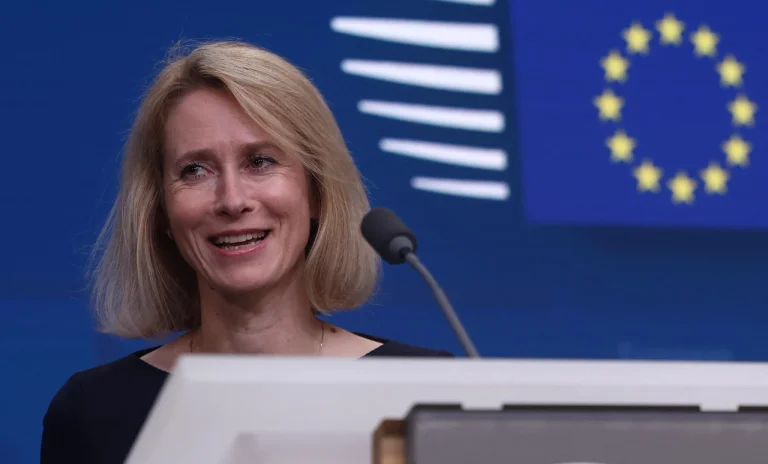
In this process, the key role will be to have High Representative for Foreign Policy and Security Kaya Kallas, and the new special envoy for the Pristina-Belgrade dialogue, Peter Sorensen, who will determine the way forward.
Speaking to reporters in Brussels, the EU diplomatic chief has declared Thursday that she is hearing criticism about the current course of the process, envisioning changes in the current format of Pristina-Belgrade dialogue.
“We have just appointed a special representative for the dialogue between Belgrade and Pristina. And, I'll sit with him in March, see how we'll continue with this. It is clear that normalisation of reports is necessary for both countries”.
I really want to see how we can make the dialogue functional. I have addressed this even with Serbia's Foreign Minister. And, he has told me that he is really willing to invest time in normalisation”, the European top diplomat has stressed it away.
And new proposals for Kosovo and Serbia have warned in late January, even former EU Special Director for Dialogue Miroslav Lajcak, without providing specific details.
In an interview at the end of the mandate, he has announced that the EU is making preparations to resume high-level negotiations after elections in Kosovo.
“We are preparing for the EU to start talks at the highest level following elections in Kosovo. The new High Representative has made it clear that she will be directly involved and that she wants to lead the process. The EU is preparing proposals for both sides”, he underlined in a farewell interview.
Kosovo faces the difficult process of forming the government after the new electoral cycle ends, while Serbia is ahead of an uncertain period, where dramatic developments have challenged the Serbian president's authoritarian powers for the first time.
Pristina and Belgrade have reached a “historic agreement” two years ago, originally in Brussels, then in Ohrid. However, despite the insistence of European diplomats that the Brussels and Ohrid Annex Agreement are legally binding, it has not yet been implemented, while tensions continue to threaten stability.
Otherwise, while the scope of great research for “the resolution framework” is expected to continue in the face of uncertainties surrounding Europe, along with new geopolitical overtones, the EU course in the Kosovo-Serbia dialogue process remains to be seen.