7 hours ago
European Union punitive measures towards Kosovo/ REL Analysis - A Sting With Long Consequences
Periskopi(a year ago)
(a year ago)The European Union's punitive measures have not forced Kosovo government to change its course, but have had influence on the welfare of citizens. Without a clear consensus within the EU on when they can be removed, uncertainty continues to shape the situation. Twenty months after freezing funds for Kosovo and suspending visits [...]
The European Union's punitive measures have not forced Kosovo government to change its course, but have had influence on the welfare of citizens.
Without a clear consensus within the EU on when they can be removed, uncertainty continues to shape the situation.
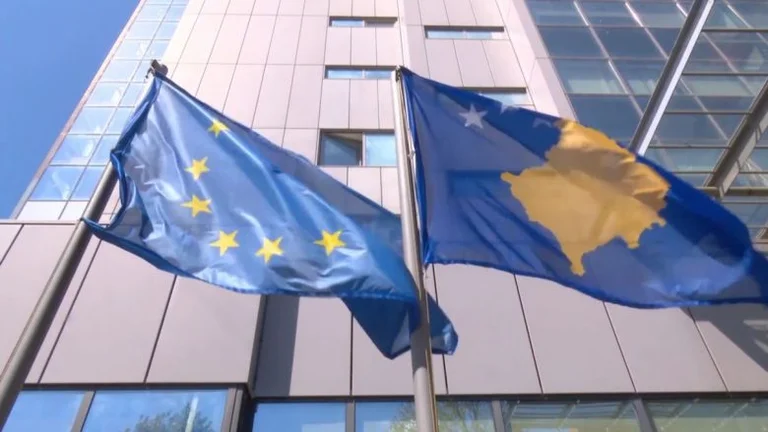
Twenty months after freezing funds for Kosovo and suspending high-level visits, the European Union continues to refuse lifting these measures, despite Pristina's continued demands, but also the European Parliament.
In a response to Radio Free Europe, a bloc spokesman said the EU's temporary “measures are returnable, and the Council has already set conditions for their gradual removal, which are related to taking steps from Kosovo to reduce tensions in the north”.
Klisman Kadiu, from the office of Kosovo's first deputy prime minister, Besnik Bislimi, did not answer Radio Free Europe's question if the country's government has any signal on when EU measures will be removed. Similarly, he did not respond to the extent to which the losses are calculated.
The EU punished Kosovo in June 2023, because, as it estimated, Prime Minister Albin Kurti's role in promoting ethnic tensions in the country's north -- the Serb-run populated area.
Despite the measures, Kurti did not back down, removed the Serbian dinar from use, shut down most of Serbia's institutions and defended that policy as the extent of authority.
In some cases, he described EU measures as unfair, saying he could not compromise with rule of law and the country's constitutionality.
The EU did not reveal which projects are specifically affected by the suspension of funds for Kosovo. But Radio Free Europe sources found that they range from culture to infrastructure and that their value amounts to up to 100m euros.
Genus Osmani, chief executive chief of the City of Pristina “Termokos”, confirms that a company project to double heating capacities in the capital has been suspended, due to freezing a 17.6m-euro grant from the European Union.
These tools, he says, were part of the programme The IPA, which offers financial and technical assistance to countries targeting the EU, but which in Kosovo's case has been blocked.
“EU sanctions have largely damaged Kosovo's economic development. In this case, unfortunately, the City Warmer has also been damaged, and therefore the city of Pristina and its citizens”, Osmani says of Radio Free Europe's Expose programme.
It shows that the total project costs 65m euros, that over 15m euros will be guaranteed by the Pristina Government and Community, while the rest will be secured through loans.
Osmani says the work had to start this year, but that it's not safe now.
It also shows that “Termocos” currently covers over 25,000 families in Pristina and that with the new project, this capacity would double and, therefore, lower electricity consumption and air pollution.
The project envisions expansion in multistory objects. So massive expansion in New Pristina, Calabria part, Mollah of the Mohajare, part of the Arberia... Pristina, practically, would be closed on heating, in the moment the project is finalised”, Osmani says.
From the day this project begins, it will take three years to complete, he points out.
And, for removing EU punitive measures against Kosovo, there is not even a formal deadline, says Augustin Palocaj, a journalist who conducts EU policies in Brussels. This, for the fact that they are not classic sanctions with the set deadline, according to him.
“These measures are a hybrid in the EU company, because there has been no formal firm decision to be abolished. So, it's not classical sanctions. There are measures that have been taken by EU institutions based on a political statement, which now has no reconciliation from all member states for them to be removed”, Palockaj says.
He adds that discussions on them are kept on closed doors, but that from diplomatic sources has learned that against the removal of the measures are countries such as France, Italy, Slovakia and Hungary. They want their removal to be conditioned and done gradually.
Palockaj recalls that decisions in the EU deal with the consensus of the 27 member states and says Kosovo does not have any diplomatic mechanisms to negotiate the removal of the measures.
“They are measures for projects that finance the EU, therefore, are unilateral financing, which are not part of formal agreements with Kosovo. The EU is giving them as grants for projects, but it can stop on its own. Their management is made by the EU and the beneficiary does not have mechanisms to force him to give those instruments”, Palockaj says.
Naim Rashit, director of the Balkan Policy Group in Pristina, says Kosovo has ways to convince the EU to remove measures and count some:
Kosovo must deal with the European agenda process. It must create a guide of action in the north, until it comes into the situation for Serbs to return to institutions, hold free elections there, and start the normal process. That's the condition the EU is expecting.
Rashit says the punitive measures have had no impact on bringing Kosovo institutions and calling “disaster” with long-term consequences.
The first “, the measures have further removed Kosovo from the integration processes, have placed additional barriers, have greatly reduced confidence, and have given arguments to many European officials and bureaucratics, who have looked forward to having something not to put Kosovo's agenda on positive track. That's the worst damage. Then comes the issue of halting projects, investments, programmes and so on”, Rashi says.
Kosovo is the only country in the Western Balkans that is not a candidate for EU membership. It has applied to join the 27-member bloc since December 2022, but has received no response.
Despite this situation, Palocaj says he sees no danger of increasing Euroscepticism in Kosovo, towards the EU, according to him, feels extremely comfortable with its actions.
Kosovo has been discriminated against in many other areas, and this has not contributed to reducing Kosovars' support for the European Union. Kosovo has been kept without visa liberalisation for years, and support for the EU in the country has been the largest in the region and Europe. Punishment measures create despair with the EU, but do not turn into Euroscepticism or in opposition to the EU on the part of citizens”, Palockaj says.
A survey by the International Republican Institute, headquartered in Washington, conducted in the six Western Balkan countries in the February-March period last year, supports this conviction.
According to the results of this study, 87% of respondents in Kosovo want their country to follow the pro-European and pro-Western course, as opposed to Serbia, where only 10% of respondents have given similar answers.
Rashit, however, warns that if EU punitive measures continue for a while, they will adversely affect Kosovo's long-term relations with the EU, especially now when political developments in the world differ from day to day.
“In the days we speak, I don't know how long [EU foreign policy chief Kaya] will have Kallas and [European Commission President Ursula] von der Leyen to deal with the Western Balkans, or specifically with Kosovo. Space is narrowing further. The burdens of difficulties are growing more and they are out of control of Kosovo, but Kosovo has some elements in its hands and must mobilise quickly to get out of this”, Rashi says.
This week, the European Parliament has once again demanded from the EU to lift punitive measures against Kosovo, saying that “ato are inconsistent with Kosovo's commitment to European values and with its compliance with EU policies”.
This same week, EU Office chief in Pristina Aivo Orav has recalled that for the removal of the measures, consensus of the 27 EU states is needed, and has said discussions on the issue are under way.
When and how those talks could end, it is unclear, as often happens when EU policies are at stake. REL