8 minutes ago
Euronews: KSF transition challenges to force with full military capacities
Periskopi(a year ago)
(a year ago)Kosovo Prime Minister Albin Kurti has declared the process of transforming KSF into force with military capacities is expected to be completed in 2028. However, this development has faced strong opposition from Serbia and has sparked discussions within NATO and the EU. In the context of increased tensions in the Balkans and Russia's aggression in [...]
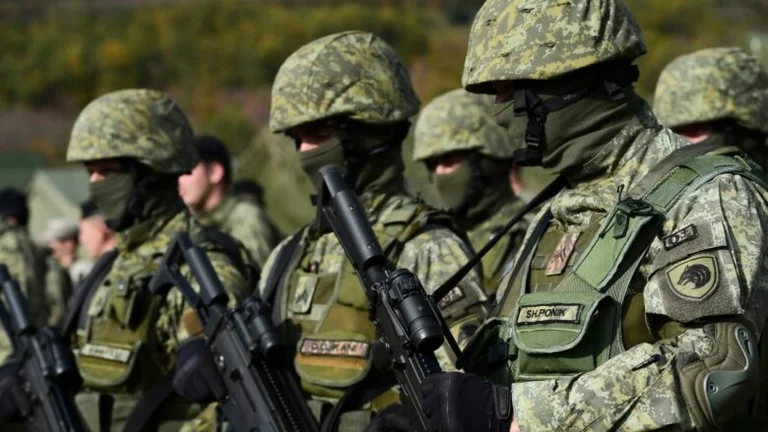
Kosovo Prime Minister Albin Kurti has declared the process of transforming KSF into force with military capacities is expected to be completed in 2028.
However, this development has faced strong opposition from Serbia and has sparked discussions within NATO and the EU.
In the context of increased tensions in the Balkans and Russia's aggression in Ukraine, the Kosovo security issue has received added attention.
Kosovo, as a new state with a population of about 1.6 million, continues to rely on international presence for its protection, including KFOR and EULEX missions, reports Euronews.
The transformation of KSF from a light security force, focused on civil protection and crisis management, to an army of 5,000 active troops and 3,000 reserve by 2028, is a strategic goal for the Kurti government.
To that end, Kosovo has started buying Bayraktar drones from Turkey, US anti-tank Javelin missiles and Black Hawk helicopters.
Also planned is the construction of an ammunition factory and a fallout laboratory.
“One of the pillars of state, besides territory, population and government, is also the military force”, former EU Integration Minister Mimoza Ahmetaj said in an interview for Euronews.
And we're not doing anything else that isn't doing other places. In fact, we are living the reality of our time where countries are competing in militarism”, said Ahmetaj, who also served as Kosovo's ambassador to Brussels among other diplomatic positions.
On the other side, NATO and the European Union have been divided in this process.
A spokesman for NATO told the media that the transformation of KSF into the military should take place in line with international agreements and in co-ordination with allies.
“We understand Kosovo's aspirations to develop an army, but this process should be part of a broader dialogue and take place in line with existing” agreements, a spokesman said. NATO.
On the other hand, some EU countries, such as Germany and Great Britain, have strongly supported Kosovo in the process.
British Ambassador to Pristina Nicholas Abbott said:” A functional defence force is important to the security of any sovereign state. We support Kosovo's efforts to develop an army capable of protection. ”
Meanwhile, five EU nations that do not recognise Kosovo's independence (Spanja, Greece, Romania, Slovakia and Cyprus) have been more sceptical, stressing the need for more dialogue with Serbia.
Former KSF Commander General Kadri Kastrati said Kosovo must have a functional army to ensure its protection.
“We cannot remain dependent on NATO forever. Kosovo must have an army of 5,000 active troops and 3,000 reserves to defend its sovereignty”, Kastrati said.
He added that Kosovo is already building the first ammunition plant and a laboratory for the development of drones to strengthen the local defence industry. /Telegraphy/