8 minutes ago
Ethnicism in Kosovo: A Dangerous Policy - Feeded Narrator
Periskopi(a year ago)
(a year ago)Ethnicism in Kosovo is on the rise, and it is attributed to politicians in both Kosovo and Serbia, who feed turquoise against peace, experts say. As a result, they say, there are deep divisions in society, which can lead to interethnic violence. So, “The international community's biggest commitment” in dialogue has [...]
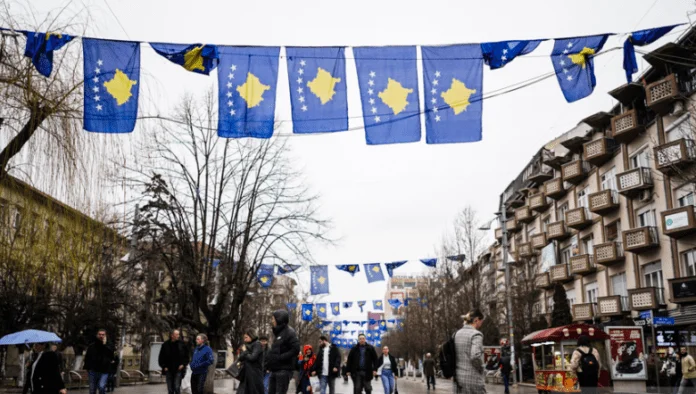
In the evening hours of February 17th, the day Kosovo celebrated the 17th anniversary of its declaration of independence from Serbia, a group of young Albanians, mostly minors, marched through the northern Mitrovica centre of Serb-run majority with Albanian flags.
Encouraged by this movement, local politician Aleksandar Arsenijevic took Serbia's flag and drove through the southern part of Mitrovica, inhabited mainly by Albanians.
Serbia, two days earlier, had marked its citizenship day. And, Arsenijevic said he celebrated it, just as Albanians celebrated their day.
Some of them ended up in the police, where their statements were received but not about the flag.
Gezim Visoka, professor at the Department of Peace Studies and Conflicts at the University College Faculty of Dublin, says isolated interethnic incidents, such as this one, indicate the limited impact of the so-called efforts on the matter”.
In a written statement given to Radio Free Europe, he adds that interethnic incidents are also the result of unresolved citizenship disputes, geopolitical rivalry and the unclear Euro-Atlantic future of Western Balkan countries.
Bodo Weber, senior associate with the Berlin-based Council for Democracy Policy, tells Radio Free Europe that the increased ethnicity in Kosovo is also “overall escalation of the situation between Pristina and Belgrade.
According to him, the deterioration of relations between official Pristina and political structures from the Serb community also affects this phenomenon, as well as worsening relations between Kosovo institutions and members of the Serb community.
Who is responsible for increasing ethnicity?
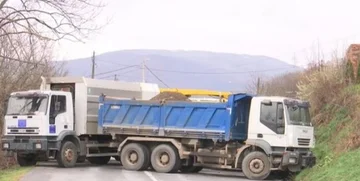
Weber recalls ethnic tensions in Kosovo have increased since Serbs resign From Kosovo institutions in November 2022, in order to prevent the country's government from removing Serbian license plates and replacing them with license plates of the Republic of Kosovo.
As he adds, taking over local powers in the north from the Albanian mayors, the Kosovo Police's actions in this area, closing Serbian institutions “without offering solutions to the damage caused by socioeconomics” all reflected in interethnic relations at the citizen level.
Albanian mayors were placed at the helm of Serb majority municipalities in the north in May 2023, after Serbs boycotted local elections at the invitation of the largest Serbian party in Kosovo, which enjoys Belgrade's support.
Tensions peaked in September 2023, when an armed group of Serbs attacked the Kosovo Police in the village of Banjska in the north and killed a policeman.
Meanwhile, the Kosovo government, led by Albin Kurti, began closing down institutions operating within Serbia's system, with the argument that their work was illegal.
Such moves were rejected by the Serb community and strongly criticised by the US and EU countries.
Visoka says that one of the main factors for increasing ethnonationalism in Kosovo is the fact that political elites foster ravages against peace.
Also, unresolved issues between Kosovo and Serbia “are only undermining the will of the Kosovo leadership to engage in dialogue with local Serbs which hinders the integration of the Serb community into society”, Visoka says.
The “until the issue of recognition is resolved, actors, structures and anti-peace strategies in both Kosovo and Serbia will continue to deepen ethnic divisions and conflicts. In this context, concepts of peace, justice and reconciliation are closely linked to ethnic identity, and the actions formed by governments of both sides”, Visoka points out.
He adds that even organisations that advocate peace lack a strong and unified vision, which, as he says, makes them “vulnerable to pressure from nationalist political elites, media and public opinion”.
“Many Serbian NGOs refuse to recognise Kosovo's independence, documents and symbols, thus creating further obstacles to co-operation with the Government of Kosovo and Albanian NGOs working for reconciliation”, Visoka says.
According to him, the numerous activities of the Serbian and Albanian sector are hidden “from the opinion” and this lack of transparency negatively affects Kosovo's regional and international image.
Police Without Answers
Free Europe Radio requested comments by Kosovo Police on the study of the Serbian civil sector, but received no answers.
Police did not even answer the question of the number of ethnically motivated incidents in Kosovo during 2017 and what it is doing to prevent them.
Kosovo Police data for 2023, provided by Radio Free Europe, showed that there has been an increase in the number of incidents with ethnic motives in Kosovo that year, compared to the previous years.
Visoka believes Kosovo Police can play a key role in promoting greater tolerance among communities, actively engaging in preventing incidents, ensuring fair law enforcement and confidence building among all ethnic communities in Kosovo”.
The fair and impartial work of police, without political manipulation, is essential to preserving public confidence and democratic legitimacy. The engagement with local communities in northern Kosovo in particular is vital for confidence building and addressing dezinforms and political manipulations, which appear to be widespread in the region”, Visoka says.
How can ethnicity be prevented or printed?
Weber does not rule out interethnic violence if further growth of interethnic tensions continues among Kosovo citizens”.
He points out that to combat ethnonationalism, which he describes as a negative and dangerous <x0-treet”, it is necessary to radically overturn political dynamics, so that Western countries “are seriously engaged in political dialogue”.
Admittedly, the Basic and Ohrid Accords are dead, that essentially did not exist and go towards a substantial restoration of political dialogue, towards real negotiations for a final, comprehensive agreement, which would take into account the basic interests and needs of citizens”, says Weber.
In 2023, Kosovo and Serbia accepted the EU proposal for the road to normalisation of relations, which to the public became known as the Basic Agreement and the Ohrid Agreement.
However, almost none of these agreements were implemented on the ground.
Visoka says Kosovo institutions should focus on building a joint peace “” and on “promoting co-operation between communities”, in order to prevent or combat ethnicity.
He adds that strengthening communication and co-operation between government agencies and peace accession organisations would improve co-ordination and provide answers to ethnically motivated incidents.
According to him, a discussion of peace, shared by political narrator, should also be initiated, while organisations promoting peace should be independent of political affiliations.
In addition, reconciliation initiatives must be removed from ethnic divisions and focus on universal values of justice and reconciliation. All these goals can be addressed through the creation of a national council for peace and reconciliation, or a similar body, that would function as an umbrella mechanism for resolving interethnic issues and finding practical and quick solutions to isolated or systematic problems that could affect peace and stability in the country”, Visoka notes.
What's the situation in the region?
At a panel discussion under the far-right conference “in the Western Balkans”, which was held in Pristina in late January, experts said right-wing groups operate in all countries of the region.
According to them, more and more young people have extremist views and embrace right-wing ideology.
Jasmina Lzoviq, from the Heartefact Foundation in Belgrade, said some of these right-wing groups in Serbia are registered as political organisations as well, and as an example, the parties Zavetnici and Dveri cited.
Mirza Bulbashiq, legalist at the Faculty of Criminology and Security Studies at Sarajevo University, said there are many right-wing groups presenting themselves as “humanitarian organisation”, but, in fact, spread extremist views.
A report by former European Council Human Rights Commissioner Dunja Mijatovic, titled “Bazacon with the past for a better future”, published in 1923, noted that hate-painted narrators, who were extremely strong during the wars of the 1990s, are regaining momentum.
This is a threat to reconciliation, even peace, as recent events show. Lack of a Full Face With the Past violent creates devastating consequences for respect for human rights, rule of law and social cohesion in the countries of the region”, the report says.
It also points out that it is the responsibility of Western Balkan countries and their representatives to revive efforts to confront violent past, war crimes trials, search for missing persons and damages.
Promoting interaction among young people from different communities and countries, according to the report, should be a priority. / REL