9 hours ago
Dropping tear gas in the Assembly ? Prosecution calls for Appeals retrial against Glauk Konjufca, defending the prosecution's decision to release
Periskopi(a year ago)
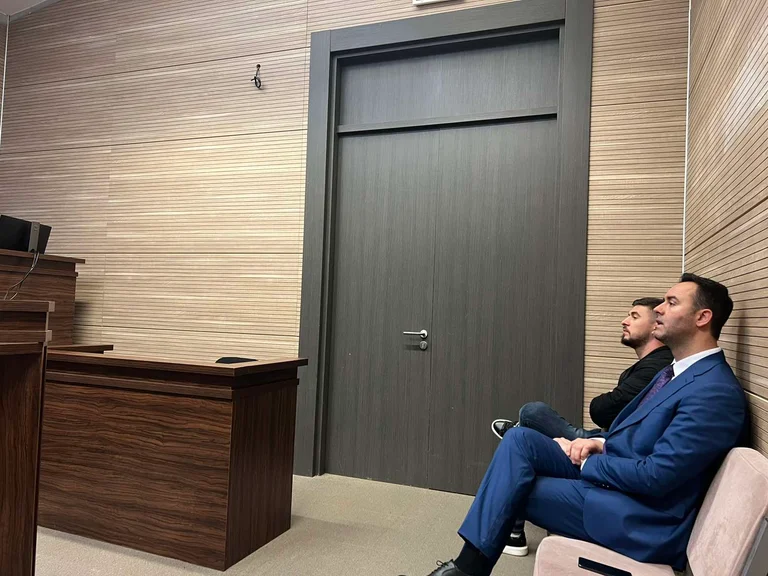
(a year ago)Pristina - At the Court of Appeals on Thursday, the college hearing is held in which Kosovo Parliament Speaker Glauk Konjufca, who was accused of dropping tear gas in the Assembly, has been absent. At this hearing the prosecution demanded that the case be turned into retrial, meanwhile the defender of accused Konjufca, the lawyer [...]
Initially, the chairman of the judges' college, Skender Chocaj, who opened the college session, found accused Konjufca is missing, as well as representatives from the Appeals Prosecutor.
For Konjufca's absence, lawyer Zeqiri said she is notified of the hearing, but that the same one has asked that I defend to go through her as a lawyer because it is not binding presence in court.
On the other hand, the referred criminal court judge Ferit Osmani said the complaint against the Foundation's decision has filed complaints within the legal term Basic Prosecutorship in Pristina.
According to Osmani, the prosecution in the complaint claims that the first degree court has wrongly confirmed the actual situation.
On the other hand, Judge Osmani said the prosecution has demanded that the case be turned into retrial.
Against the prosecution's complaint, Judge Osmani said she has exercised answers to Konjufca's defender, lawyer Arbnor Zeqiri.
According to Judge Osmani, the Appeals Prosecutor has also handed over the parapet through which he has demanded that the prosecution's complaint be approved, while the reply of the lawyer Zeqiri is rejected as unfounded.
Afterwards, lawyer Zeqiri made her response, adding that the prosecution during the trial was required to bring confirmation of the weapons seized and missing.
Zeqiri said it cannot be claimed that in other cases the defendants have been convicted of tear gas, since, according to her, each case has its own specifications.
Otherwise, the October 3rd 2024 hearing in Appeals had failed because the defence of Konjufca had rejected the Constitutional Prosecutor's complaint in Pristina.
On February 26, 2024, Konjufca had been acquitted of having not been proven to have committed the burden of criminal work.
At the 25 October 2023 session, Judge Canta said Konjufca was prescribed to “Pegim the hostage of the official person during the performance of official duties”.
The Constitutional Prosecutor in Pristina, on February 3rd 2017, has filed charges against Glauk Konjufca, which he charged with two criminal acts.
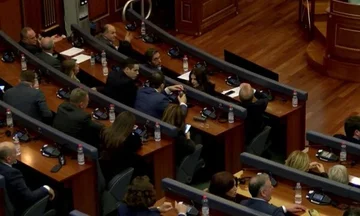
According to the indictment, Konjufca was charged with having a meeting in the Republic of Kosovo Assembly Hall, attended by Parliament Speaker Kadri Veselina, deputies Adem Grabovci, Ismet Beqiri, Sabri Hamiti, Pal Lekaj, Valdete Bajrami and Slobodan Petrovic, the same in the parliamentary quality, has been using weapons, so that during this meeting he has thrown tear gas into the hall, reports Betim for the Justice.
The Actakuza says that as a result, the participants' position has been hampered by smoke that has caused tear gas, and the same have been forced to abandon the hall, with what defendant Konjufca has come down against Article 9.1 of the No.04/12 law enforcement force in the Republic of Kosovo, where weapons use is banned.
With this, Konjufca was accused of committing criminal work “the use of weapons or dangerous tool” from Article 375, paragraph 1 of the Criminal Code, which is sentenced to jail for up to one to eight years.
While, according to the second device of this indictment, by date, at the time and place described as in the first device of this charge, defendant Konjufca during the use of tear gas has prevented officials such as Parliament Speaker Kadri Veseli, MPs Adam Grabovci, Ismet Beqiri, Sabri Hamiti, Pal Lekaj, Valdet Bajrami and Slobodan Petrov on the official duties, cerras of all officials have been forced to interrupt and leave the hall.
For this, Konjufca was accused of committing criminal work “Pinginging the official person during the performance of official duties”, defined by Article 409, paragraph 1 of the Penal Code, which is sentenced to imprisonment of three months to three years.