7 hours ago
New Beach Rent Rules Strike Ulcinj
Periskopi(a year ago)
(a year ago)The new rules of the tender for beach rents, which include three times higher prices, sparked heated debates between local tenants and the Montenegrin government. Disgruntled, several ministers also indicated, warning they might leave the government. The most vocal responses were in Ulcinj city [...]
Disgruntled, several ministers also indicated, warning they might leave the government.
The most vocal reactions were in Ulcinj city in southern Montenegro, inhabited by Albanian majority.
Lower tenants believe that at new prices, it is impossible to do business, as they will make the tourist offer more expensive, reports Radio Free Europe.
Deputy Prime Minister and Minister of Economic Development Nick Gelosaj told Radio Free Europe on February 17th that, due to the Government's decision, ministers from the Albanian Forum will reconsider further participation in Government by the end of the month.
New regulations for renting beaches were approved by Montenegrin Prime Minister Milloko Spajic's Government, despite opposition from coastal municipalities and without consulting economists.
The Minister of Space Planning, Urbanism and State Property, Slaven Radunovic, from the Democratic Front, said the new rules would set order in the sector where decisions were made by “bandits”.
He said the beach rents in Ulcinj, so far, were half as real.
This was followed by a protest of three local tenants on February 14.
Their representatives described the Government's decision as the city's biggest economic blow.
Radunovic was called on to apologise for the description of the entire sector as “criminal”.
They also supported Ulcinj municipality chairman Genc Nimanbegu.
The coastline of about 300km is one of Montenegro's most valuable sources. From renting it, this state expects between 15m and 30m euros this year.
It is managed by the public company “of maritime goods”, which in the tender announced on February 16th, allowed even those to whom legal procedures are under way.
Minister Radunovic said such an action “respects the Constitution and presumption of innocence”.
Radunovic: The Semiphyse Situation
The Montenegrin coast has 563 city beaches, 70 hotel beaches and about 1,500 temporary items in the area of “maritime goods”.
Announcing the tender for their four-year rents, Minister Radunovic said the situation in this sector is “halves”.
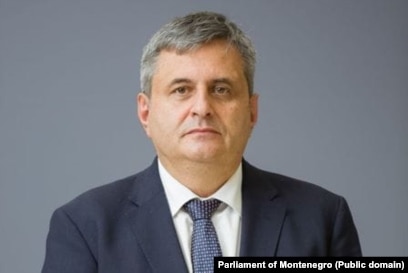
“up until now, 30 per cent [the tenants] have been from criminal circles, but businesses are run by their relatives, sisters, aunts”, Radunovic said on February 12th.
According to him, there have been cases where the contractor paid about 20 thousand euros for the beach and earned a million”, and also cases of redressing the rent.
Radio Free Europe called on Minister Radunovic to explain these claims.
“We have all witnessed 2019 procedures and the pressure exerted on bidders”, he said in response, without providing further details.
That year in power in Montenegro was the Democratic Party of Socialists (DPS).
But, it was dismissed a year later, in 2020, and the parties led by the Democratic Front, from which the minister, Radunovic, is also taking power.
This area, now four years, is under their jurisdiction.
The greatest responsibility for this situation must, of course, be to the ministry's then leadership and naval goods”, Radovovic's cabinet said in response to Radio Free Europe's question about what their responsibility is for the situation in this area.
Radio Free Europe sent the same question to “naval goods”, but received no answers.
Neither did the prosecution comment on the minister's assessment of the impact of criminal structures on renting beaches.
Ullcin case
As the biggest problem, Radunovic mentioned Ulcinj, where, he said, rents were paid half the actual surface of the beaches.
The ministry published this information late, even though geodesian survey was made in the summer of 2023.
The Ministry told Radio Free Europe that they have not reacted at the time to avoid endangering the tourist season and that they have expected the tenants' contracts to expire.
Javid Hodzic of the Ulcinj Landing Owners' Association says the change on the square area was due to different estimates of the landscape's width.
Previously, the width was about 46m, but now it is 76m and includes the free section of the beach, Hodzic explains Radio Free Europe.
This is part of the beach that tenants should let free for those who don't want to use beach furniture.
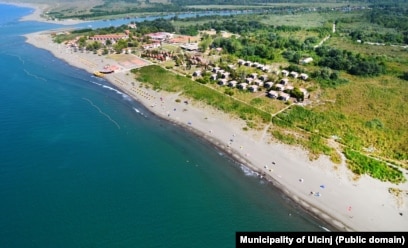
Hodzic says it will be impossible to do business with new rent prices.
For example, he says, the 41,000 euro beach rent last year, with new regulations, has an initial price of about 115 thousand euros.
He points out that this is only part of the investment that should be added to preparations for season, mobilization, municipal services, and others.
The chairman of the Ulcinj Boxers' Association, Prele Shkrela, believes the Government's decision aims at “the death of Ulcini beaches”.
He considers claims that millions of this business can be incorrect.
We have 60-day summer season, if the weather allows. There is no beach that can earn one million euros for two months... the more with low budget guests, as we have mainly”, says Shkrela.
Last year, prices for two Shezllones and service on Ulcinj beaches amounted to 2025 euros.
We are extremely angry and shocked because the minister called us half-a-mafiosis. He insulted the whole Ulcincine”, says Shkrela.
There are family businesses here, people working with their wives, kids... These are honored families, working hard to earn before”, says Hodzic.
Disagreement in Government
The tenants also supported the chairman of the Ulcinj municipality, Genc Nimanbegu, who sent a letter to Prime Minister Spajiq, in which he said Ulcinj “is being robbed by centralist and anti-civilist politics”.
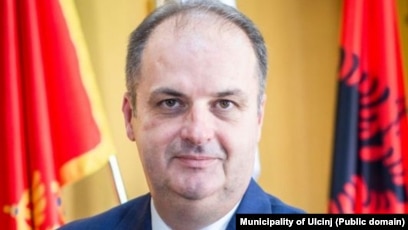
According to him, the government's sudden and hidden decision did not favor coastal municipalities.
Even within the government itself, not all agreed with the decision to tender.
Ministers from among the Democrats did not vote, while against them were Deputy Prime Minister and Economy Minister Nick Gilosha, and Public Administration Minister Maras Dukaj.
Minister for Human and Minority Rights Fatmir Geka did not vote.
Along with tenants were the Chamber of Commerce and the Association of Communists.
Minister against return of competencies to municipalities
Montenegro's government also has conflicting positions on changes to the Law of Marine Goods, currently under way.
With these changes, management of the coast would become the jurisdiction of coastal cities.
Spajic agreed that local leadership would manage with their property, but Radunovic said it would be “catastrophic”.
“A large part of these tenants are people from the semi-grey area, and municipalities would hardly be able to afford the pressure from them”, Radunovic said.

The amendments to the law were initiated in mid-December last year by six coastal municipalities, under whose jurisdiction was management of the coast until 1992, when, on behalf of the state, they obtained “of the maritime goods”.
Montenegro's Assembly must decide for their initiative.