8 hours ago
Baltic States Disconnected From Russian Energy Network
Periskopi(a year ago)
(a year ago)The three Baltic states on February 8th are cut off from Russia's electricity grid and join the European Union network. This is the culmination of a decades-old process that gained urgency after Moscow began its invasion of Ukraine in 2022. Estonia, Latvia, and Lithuania were once Soviet republics and are now members of [...]
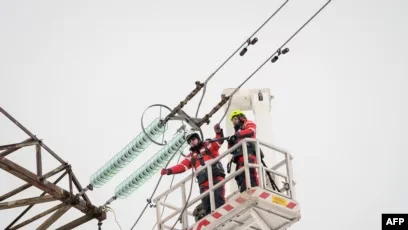
The three Baltic states on February 8th are cut off from Russia's electricity grid and join the European Union network.
This is the culmination of a decades-old process that gained urgency after Moscow began its invasion of Ukraine in 2022.
Estonia, Latvia and Lithuania were once Soviet republics and are now EU and NATO members want to block Russia's capacity for geopolitical blackmail through the electricity system.
“We have removed every theoretical possibility of Russia using power grid control as weapons”, Lithuanian Energy Minister Zygimantas Vicciunas told AFP.
EU diplomacy chief Kaya Kallas ʹ former prime minister of Estonia on Friday named the breakaway of the Baltic states from the Russian network as “beneficiary for European freedom and unity”.
Vaiciunas said the Baltic states have completed the secession process at 09:09 Saturday.
“We have been waiting for this moment for a long time”, Vicciunas said.
The energy system of the Baltic states is finally in our hands. We have it now under control”, he added.
After the breakup, the Baltic states are now operating with “the isolation memorandum”, before being integrated with the European network on Sunday.
Official celebrations for the break from the Russian network will be organised in the three states of Baltic.
Baltic has long been prepared to integrate into the European network, but had faced technological and financial problems.
Disconnection from the Russian power grid became more urgent after Russia began its full-scale invasion of Ukraine in 2022, which sparked fears among the Baltic states that they could be the next target.
After the invasion, they stopped buying Russian gas and energy, but the energy networks of three states continued to be connected to Russia and Belarus, controlled by Moscow.
The EU has generally drastically reduced Russian energy consumption since the war started in Ukraine. / REL