an hour ago
Stealing in the Louvre Museum, DNA revealed the perpetrators of the robbery
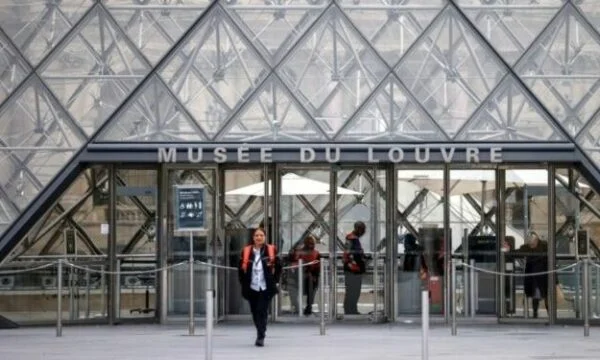
Periskopi(8 months ago)
(8 months ago)A DNA trace was what “blocked” investigations and led to the identification of the perpetrators of the theft occurred at the Louvre Museum, ending with the arrest of two people Saturday evening. According to BFMTV, which cites a source close to the investigation, one of the suspects was identified thanks to a crucial “DNA trace” found in [...]
According to BFMTV, citing a source close to the investigation, one of the suspects was identified thanks to a crucial “DNA track” found at the scene.
That after the “removal of the century”, forensics police have been in search of any possible evidence.
Paris prosecutor Laure Beccau said on Thursday that over 150 DNA samples, fingerprints and other provative elements have been collected from the scene.
The chief of forensics, Perrine Rogiez-Thubert, explained to BFMTV that investigators have worked with traces <x0-> rich”, such as blood, saliva or sperm, but also weak “ ”, left in objects that the authors may have touched.
Several items have been found at the scene that may contain DNA, like a helmet, a hand radio, a yellow vest, and two metal cut wheels.
After the meeting, samples were analysed in the laboratory to build genetic profiles of the persons involved.
The investigation accelerated after one of the suspects attempted to escape.
He was identified during DNA tests and then arrested.
The two men arrested are about 30 years old and residents of Aubervilleiers, a northern suburb of Paris, in the Saint-Denis department, known for its dense and multicultural population.
Their exact role in the robbery has not yet been determined, but they are considered the key “suspects -- ”.
According to the French newspaper “Le Monde”, one of them has French and Algerian citizenship and was arrested at the RoissyCharles de Gaulle Airport as he prepared to travel to Algeria.
The other suspect is a French citizen.
Meanwhile, police are continuing to investigate to discover the kidnapped associates and spoils, which continued to remain unattended.