2 hours ago
Sorensen for Kosovo dialogue Serbia: Progress Making
Periskopi(8 months ago)
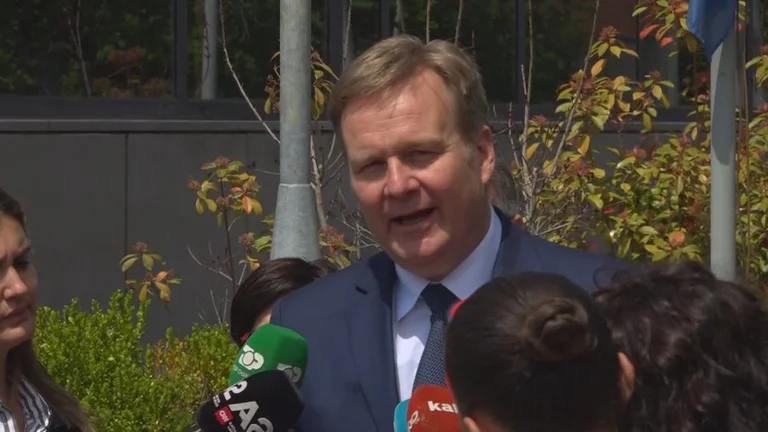
(8 months ago)The European Union's Emisari for the Kosovo dialogue, Serbia, Peter Sorensen, in an interview for “Agenzia Nova” has said normalising relations between the two countries is the process that is achieved with a meeting. Sorensen has said this issue is the ongoing process that is being carried out every day to improve the lives of citizens. Sorensen has said [...]
The European Union's Emisari for Kosovo Dialogue Serbia, Peter Sorensen, in an interview for Kosovo “Agensia Nova” has said normalising relations between the two countries is not a process that is achieved by a meeting.
Sorensen has said this issue is the ongoing process that is being carried out every day to improve the lives of citizens.
Sorensen has said that since receiving the mandate in January, when he replaced Miroslav Lajcak, he has held dozens of official meetings in the region.
“Since taking office, I have held more than 60 official meetings in the region and have been organising two rounds of meetings of chief negotiators in Brussels, where we discussed very concrete issues -- from economic co-operation to the issue of missing persons during the war in Kosovo. The process is not always linear and many of it takes place behind the scenes, but real progress is made every day. Every day people, vehicles and goods move freely between Kosovo and Serbia. This summer alone, over 1.7 million people and approximately 650 thousand vehicles passed the joint border points. Carves with plates issued by Kosovo can now pass through Serbia. People pay for the energy they consume according to agreed terms. This is tangible proof that dialogue is functioning”, Sorensen said.
He has said the dialogue facilitated by the EU is the platform of normalising relations between Kosovo and Serbia, and that the path towards EU integration for both countries depends on it.
He said that through dialogue, Belgrade and Pristina, “are engaged in direct discussions and have reached over 90 agreements involving provisions on daily practical issues”.
“These are results that years of international presence, including a large number of peacekeeping forces, could only reach”, Sorensen said.
The EU emissary added that enlargement remains a key priority for the European Union.
The growth “Plant shows our commitment to the future of the region, setting clear expectations. For Serbia and Kosovo, this means constructive commitment to normalising their” relations, Sorensen said.
Sorensen has also spoken of local elections in Kosovo held on 12 October. He has welcomed their development in peaceful, competitive, and inclusive spirit.
“All communities participated and media coverage was free and fair, contributing to a transparent process. Turnout in Serb majority municipalities averaged over 50 per cent, which is a very positive sign ... Kosovo Serbs participated, and in nine Serb majority municipalities, Serbian parties won both the mayoral seats and the majority in municipal councils. Now we have elected representatives. This is an important step forward, demonstrating that they are an integral part of Kosovo society. And these peaceful elections, and the return of mayors, also pave the way for a broader discussion on the reintegration of Kosovo Serbs who abandoned Kosovo institutions in 2022”, Sorensen said.
The EU emissary also said it expects constructive engagement by leaders in the region.
“Dialog is the very platform in which Kosovo and Serbia can address disputes calmly and constructively. Therefore, we encourage both Kosovo and Serbia to refrain from public exchanges to make full use of this platform and focus on implementing their commitments agreed on in dialogue”, Sorensen said. /Periscope/
KFOR Commander hosts Sorensen, EULEX chief talk security in Kosovo