2 hours ago
As in Roman times: How Russian soldiers who abandon front are punished by commanders
Periskopi(7 months ago)
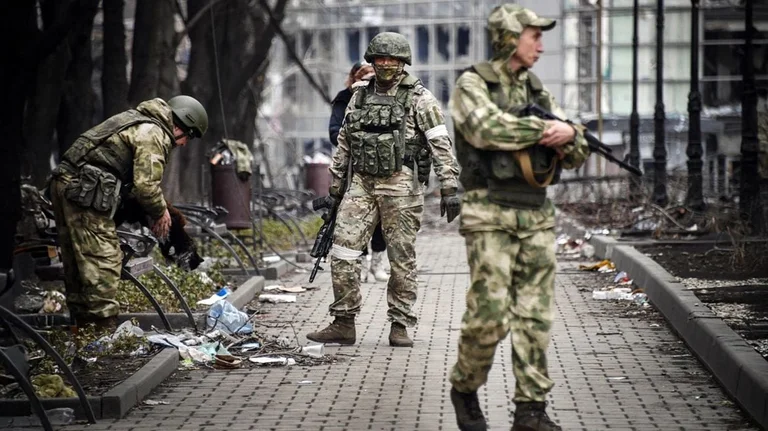
(7 months ago)Russian commanders are deliberately executing or sending soldiers who refuse to fight in Ukraine to safety, according to a new investigation by the Verstka media, which describes a grim view of domestic violence in the Russian Army. The investigation, based on the evidence of soldiers in service, relatives of victims, videos [...]
Russian commanders are deliberately executing or sending soldiers who refuse to fight in Ukraine to safety, according to a new investigation by the Verstka media, which describes a grim view of domestic violence in the Russian Army.
The investigation, based on the testimony of soldiers in the service, relatives of victims, published videos and official complaints reports, identified 101 Russian military officers charged with murder, torture or the death penalty of their colleagues. The media said it has confirmed at least 150 deaths, though it estimates the actual number is much higher.
Since the beginning of the Russian invasion of Ukraine, reports of soldiers killed by their peers have been circulated widely, as well as of the existence of preemptive “units that are being deployed to prevent withdrawals.
The Kremlin has repeatedly dismissed accusations of lack of discipline among Russian troops, claiming that such phenomena are widespread only among Ukrainian forces. However, Verstka's investigation seems to be more comprehensive to date, documenting in detail the methods used to impose obedience and intimidate soldiers.
According to evidence quoted by the media, the commanders appointed “-ex1> to shoot soldiers who refused to fight, then to throw their bodies into shallow rivers or graves, and to register as “killed in battle”.
Other confessions say the commanders used fears and explosives to kill <x0... In some cases, they allegedly ordered fear operators to drop grenades on their soldiers, presenting the killings as enemy attacks.
Verstka, an independent Russian media currently operating in exile and founded by renowned investigative journalists, also documented cases of soldiers being tortured to death. Soldiers who disobeyed the orders were thrown into pits covered with a metal net, painted water, and beaten for hours or even days.
In some cases, they were forced to fight each other at “dules to death”, which witnesses compared to... Roman arenas.
Such an incident has been caught in a video published in May 2025 by Ukrainian groups monitoring Russian forces. The images, writes Guardian, show two semi-naked men in a hole while a voice is heard from outside the screen saying: “Condant Kama said anyone who kills the other comes out of the hole. ”
Men start fighting while the sound challenges them: “
The investigation also links numerous murders with extortion networks, in which commanders demanded money from soldiers to be excluded from suicide missions. Those who didn't pay or refuse were replaced by “, and the military jargon for extermination.
At the same time, there are documented cases of soldiers deliberately sent on suicide missions, where they are used as <x0feners” (“mayachki”) so they are forced to march in front of offensive, unarmed groups to attract enemy fire.
Initially, most domestic execution reports came from criminal battalions made up of thousands of former prisoners recruited from Russian prisons. However, Verstka's database shows that the practice has spread to regular army units. The culture of impunity and the influx of former prisoners, he says, have re-registered violence “, sends tch.
Most of the identified authors are middle-ranking officers, aged 30 to 40, many of whom are veterans of former Russian campaigns or former officers of criminal entities. A little, if there are, they have been prosecuted.
The media reported that it has received detailed biographic information about the name, rank, age and unit of more than 60 of the alleged 101 authors. Despite numerous tests, almost no one has been held accountable.
In addition, Verstka discovered official data, under which Russia's Military Prosecutor's Central Office received nearly 29,000 complaints from military and families in the first half of 2025, of which more than 12,000 dealt with punishment by superiors. /Periscope/