an hour ago
Why are the rewards in Russia being reduced for soldiers who sign up to fight in Ukraine?
Periskopi(8 months ago)
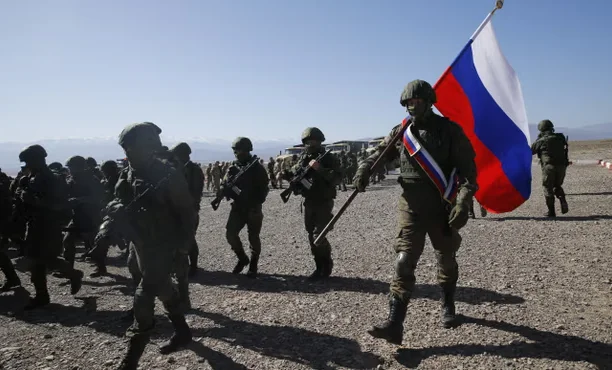
(8 months ago)A growing number of countries in Russia are significantly lowering their rewards for men who deliberately sign up to fight in Ukraine. It shows both the budgetary troubles caused by Russia's weakened economy and the changes to armed forces priorities. In recent weeks, [...]
In recent weeks, at least eight regions, mainly in the central Volga region, but also in the wide subarchic region of Jamal-Nenets, have cut payments given to men signing contracts to join the military.
This includes the Samara region, where new volunteers commonly known as “contractor” now receive only 400,000 rubles, or about 5,000 dollars, at the moment of signing, less than a maximum of 3.6 million rubles in January, are sent. Periscope.
The estimates show that over 1 million have been killed and injured, but Russia has already continued its fight in Ukraine for almost four years thanks to a composite mobilization and recruiting system.
The recruiting system is based on a combination of federal payment from the Defence Ministry, and local payments from regional governments that have been ordered to meet specific quotas. In some cases, even individual towns or municipalities have contributed to the signing rewards.
Volunteers have been lured with extremely high wages and immediate rewards as well as generous benefits for families of the slain. In some regions, the amount received by a new recruit exceeds the average annual salary.
This money has enabled political commanders and leaders to avoid another unpopular mobilization, such as that of September 2022. They have also revived local economies in poorer regions, which are far from rich cities such as Moscow and St Petersburg.
“Work for true men”
In the Volga region of Tatarstan, which has suffered one of the highest rates of victims across Russia, payments have been significantly reduced this year: from 2.7 million rubles to 400,000 rubles.
The deficit of 400,000 rubles ʹ is the minimum required by federal authorities is met with an equal amount by the Ministry of Defence, according to advertising published on the pages of regional news and state media agencies.
In Union, another central region with huge human losses, the signing bonus of 1.6 million rubles has dropped to 600,000 rubles.
In Mary El, a small and poor Volga republic, authorities had offered earlier this year rewards of 2.6 million rubles, making it one of the highest-paid regions in the country. According to official data, the region had managed to recruit 1,300 men in the first quarter of 2025. Now, the bonus is down to 400,000 rubles.
Lawmaker Mihail Deljagin, member of the Economic Policy Committee in Parliament, said these reductions are due to the cuts in the national budget.
“This is the result of the finance ministry's policies... that are crushing the country, including rich regions such as the Unitostan”, he told RTV in June.
Defence Ministry advertising campaigns in billboards, social networks and employment sites highlight the financial benefits of recruiting to fight in Ukraine. In some cases, they are directed specifically to people with economic difficulties.
A contract starting financial stability” is written a recruiting poster in the northern Yamal-Nenets region.
“A job for real men: before immediate payment”, said Ivan Chuvilajev, activist of an anti-war organisation named “Zduku” or “Ik”.
It is clear that the targeted audience are those with micro-loans, debts; those who have lost their jobs, who cannot pay the rent, car or child food”, he said.
Or, there are cases where a mother gets sick, spends six months suffering, and spending all her savings on treatment and then on burial. After that, they have nothing left, and then they receive a recruiting ad in the post box”, he said.
A food manger
When Putin announced the mobilization of the country's total reserves in September 2022, seven months after the start of Ukraine's full occupation, his decision shocked the Russians, as many had believed the war would end soon. Hundreds of thousands of people fled from the country to Caucasus, Central Asia, Turkey, and beyond.
Afterward, authorities built a mixed recruiting system, using federal and local funds to make volunteer participation more convenient.
They also used other methods.
For example, recruits performing one - year compulsory service are not allowed to be sent to war abroad. But commanders and recruiters have often forced them to sign contracts after just a few months of training.
Compulsory rescription is becoming the main source for contract service in the army”, Chuvilyaev said.
Recently, lawmakers have changed the rules for mandatory recruits twice a year, roughing up certain rules and removing certain widely exploited exceptions.
Not all regions are lowering their rewards. The regions of Voronnez, Altay and Tambov have announced increased payments.
In some cases, recruiting campaigns resemble offers for cars or household equipment. In the Siberian region of Tiumen, authorities said they are offering rewards of 3.4 million rubles, but only if the contracts are signed before November 30th.
Similar time-limited incentives have been made in Kanti-Mansijsk, Toula, and even in the Moscow region, promising higher payments for those who sign before the end of the year.
According to Yiannis Kluj, an expert at the German Institute for International Affairs and Security, who has closely followed the recruiting figures, Russia spent about $4 billion in signing rewards in the first half of 2025. It predicts that the total expenses for the recruiting bonus will be spent $10 billion year-on-year.
Slowing the War Economy
After more than three years of rapid growth, Russia's economy is showing serious signs of contraction, in part due to high-wage inflation, which, in turn, is the result of labour shortage, as many men have been lured into the Ukraine front.
This is changing now, with fiscal and monetary policymakers predicting a strong economic slowdown.
The federal government has proposed increasing the VAT tax to keep the budget under control, while simultaneously maintaining high levels of military spending.
In the regions, the crisis is shrinking local budgets and is forcing authorities to seek savings ways, including lowering bonuses for military contracts.
Lawyer Artyom Klyga, from the Movement of Ungovernmental Refusers, said the regions offering higher bonuss were in some way experiments, while policymakers sought ways to lure volunteers.
“They concluded that large payments were not particularly convenient and decided to interrupt these experiments in some areas”, Klyga said.
“Planification of the federal budget for next year may also have played a role. It is now clear that there will be a large failure”, he concluded. /REL/