10 minutes ago
“Polico”: Kosovo's new inflow system expected chaos
Periskopi(8 months ago)
(8 months ago)Passengers arriving in the EU from third countries on Sunday must prepare for long receptions, as the new automated access registration system (Entry/Exit System EES) enters into force. Airlines operating at large centres operate at busy times, so a few minutes late in control [...]
“Airlines operating in large centres operate at busy times, so a few minutes delay in border control could disrupt flight connections”, said Montserrat Barriga, general director of the lobby association “European Regions Airline Association”, reports “Polytico”.
The system will gradually be implemented over the next six months, which means not all border points will be used immediately.
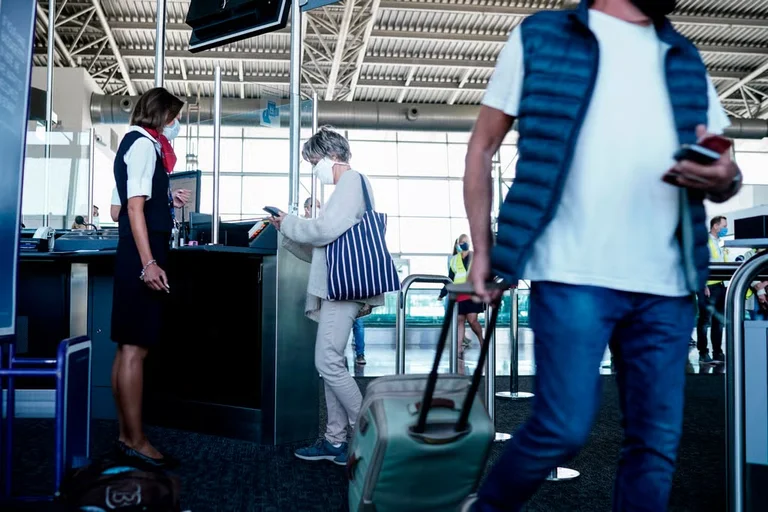
Non-EU citizens will have to stop longer before the passport control official or use self-served kiosks at international airports, ports and railway terminals to give fingerprints and to be photographed. At the internal crossings of the Schengen zone, travellers will not need to re-register, as their data will be used to mark access and exits digitally.
Biometric data will be preserved in the EES system for three years, a deadline lasting in five years if no exit is registered.
The system is being implemented in all countries in the Schengen area, as well as the EU countries of Iceland, Liechtenstein, Norway and Switzerland, while Ireland and Cyprus are not included.
EES will replace the current passport manual sealing system, which does not allow automatic detection of those who have exceeded the authorised 90 days within 180 days.
“Login-Day System is the digital pillar of our new common European framework for migration and asylum”, said Commissioner for Internal Affairs and Migration Magnus Brunner.
In the first six months, both systems will operate in parallel, meaning that travellers may have to pass through both passport control and procedure EES. It will become fully operational on 10 April, when it will fully replace manual passport seals.
This has caused concern among national authorities over the possibility of chaos.
Paris is preparing for more problems than other EU countries, as France is the most visited tourist destination in the world, with over 100 million visitors in 2024.
The EU has announced that EES could be temporarily suspended during the first six months of implementation if the waiting time becomes too long or technical problems are presented.
According to the “The Independent”, only three countries -- Estonia, Luxembourg and the Czech Republic -- will have the EES system in place for all access and exits from Sunday.
Germany has announced that only Dusseldorf Airport will implement EES from Sunday, while Munich and Frankfurt airports will be implemented later. In Italy, airports in Rome (Fiumicino) and Milan (Malpensa) will use the system since Monday. The Netherlands will implement it at Rotterdam Airport on October 27th and Amsterdam Schiphol on November 3rd.
Spain will first use the system for only one flight to Madrid on Sunday to gradually extend it later.
France will employ 230 additional border guards at 120 entry points in the Schengen area to cope with the additional burden as the system gradually applies.
Some airports have discovered details about their capacities. Brussels Airport, for example, has announced that there are 61 self-served remainers for the EES census. /Periscopi