9 minutes ago
Pensioners suffer price hikes in Kosovo, fail to reach end of month at cost
Periskopi(2 hours ago)
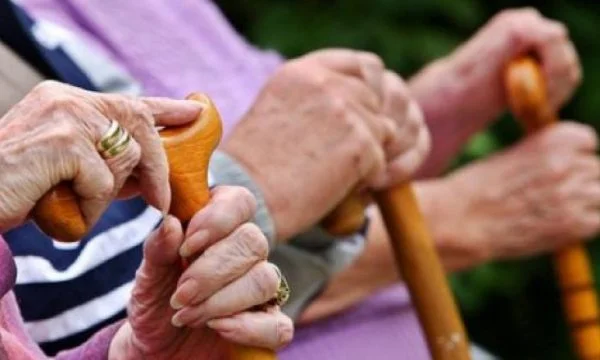
(2 hours ago)Jakup Vitija, pensioner from Pristina, says it is increasingly difficult to cope with basic living expenses. Much of its income goes to medicines, while continued price hikes, according to him, make it almost impossible to arrive by the end of the month, Kosovas reports.
His concern reflects a reality many families are facing in Kosovo. According to data from the Kosovo Statistics Agency, the harmonised Consumer Prices Index (IHÇK) in May 2026 marked an annual increase of 6.8 per cent.
The effects of price hikes also confirm citizens themselves. Imer Gjokaj says the cost of living is becoming more and more serious for families. While businessmen also confirm price hikes in the market, stressing that this is inevitable, as commercial Visar Hajdari and supply prices have also marked increases.
Up to 6 euros a kilo of beans
According to him, there has been a significant decline in the number of buyers. They say the market is no longer the same, as sales are halved and circulation has dropped markedly.
No buyer
Even economic experts consider it disturbing for a country that continues to face poverty, unemployment and high dependence on import, Kosovas reports.
Economics Faculty Professor at Pristina University Nagip Skineri tells Kosovo that the biggest blow from inflation is feeling pensioners and fixed wage workers, as their incomes are not adjusting to the rate of price hikes.
According to him, inflation is becoming increasingly difficult to cover basic family needs.
Inflation around 7% is mostly hitting pensioners and fixed wages workers
According to Skender, the impact of inflation is particularly noted on basic goods and services, which take the greatest weight in household expenses.
One of the sectors he singles out is that of shelter. He estimates that the high demand for housing in urban centres, combined with the limited number of rented residences, has directly affected the price of the sector.
Economist Ismet Mulaj, who views inflation as a structural problem for Kosovo's economy, similarly. According to him, a number of factors are contributing to continued price hikes, while high dependence on import remains a major factor.
About 90% of products imported
Mulaj: That makes Kosovo sensitive to inflation
In addition to its import addiction, Mulaj for Kosova Prees says that the increase in derivative prices has made a significant contribution to overall inflation growth. According to him, international crises remain a key factor in this growth.
However, he points out that the impact also has on the local derivative market structure, which is dominated by a limited number of operators, what can limit competition and affect prices.
In the face of these developments, experts estimate that easing inflation requires long-term measures and deep changes in the country's economic structure.
The “needs to go into changing economic structure, to go further into economic infusion towards production, to support production processes, production firms to further support, but also those who are servants offering new jobs in this context. Even in this respect, it would be very welcome to make all of us, as I say, political subjects to find a common formula for changing the economic structure in Kosovo because with this economic structure as long as we are, we have a very large disbalancing between exports and imports, we have very high trade deficits, we have very high unemployment, we have poverty as well as coming up very high, and in this context all of the major macroeconomic indicators are marking negatives in their subeconomic and socio-economic development, he said.
On the same line, Mulay estimates that the government must pursue a more comprehensive approach to curb inflation and create a more competitive economy.
Mulaj adds that lowering the price of electricity, as well as harmonising the growth of wages and subsidies with local production growth, are among the measures that can help curb inflation.
According to economist, if the trend of price growth continues and is not associated with sustainable economic development, the results can be sensitive to both citizens and businesses.
The harmonised Consumption Awards Index (IHÇK) in Kosovo marked annual growth of 6.8 per cent in May 2026, compared to the same period last year, while a 0.4 per cent drop was registered on the monthly basis, Kosovo Statistics Agency (ASK) suggests. / Periscopi/