44 minutes ago
Millions' elections, minimal transparency
Periskopi(8 months ago)
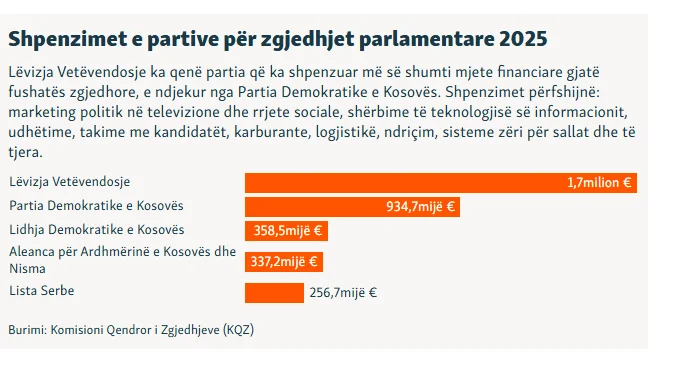
(8 months ago)Nearly fourm euros were spent by 28 political subjects during the campaign for the February 9th Kosovo Assembly elections. Only the five main parties -- the Vetevendosje Movement, the Democratic Party of Kosovo, the Democratic League of Kosovo, the Alliance for the Future of Kosovo/Nisma and the Serbian List -- spent about 3.6m euros, according to data it published [...]
Only the five main parties -- the Vetevendosje Movement, the Democratic Party of Kosovo, the Democratic League of Kosovo, the Alliance for the Future of Kosovo/Nisma and the Serbian List -- spent about 3.6m euros, according to data published by the Central Election Commission.
The law requires parties to submit financial reports within 30 days from the certificate of results.
Local elections were held on October 12th, while their second round will be held on November 9th. The data on these campaigns will be released later, but in past local elections, in 2021, the five main parties spent around 1.3m euros.
Civil society representatives warn that the real sums spent may be much higher, exceeding those reported to the CEC.
This also raises concern for the lack of transparency and control over citizens' money.
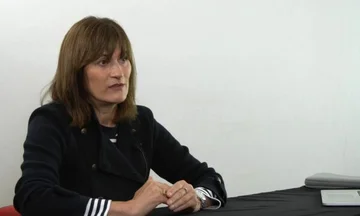
Medjide Demolli, executive director of the FOL Movement organisation promoting accountability in public institutions, says political parties in Kosovo continue to be nontransparent in reporting the means spent during election campaigns.
According to her, it is absurd that in the financial reports of some of the largest parties, the declared revenues are evidently lower than the costs for the respective period.
According to Central Election Commission data, from August 16th 2024 to February 9, 2025, LVV has declared access to over 1.1m euros, The PDK over 559 thousand euros, the LDK over 94 thousand euros and the AAK over 18 thousand euros.
Unfortunately, a clear and effective mechanism for monitoring spending during the campaign is still lacking. This is one of the main problems that the CEC urgently needs to address, says Demolli, adding that only a transparent system would provide real reporting, not “at party option”.
The Central Election Commission did not respond to Radio Free Europe's interest in whether there are any mechanisms for monitoring party spending during election campaigns.
Economics professor at Pristina University, Berim Ramosaj, considers the process of declaring spending by political parties as a positive step towards financial transparency.
However, he expresses serious doubts about the accuracy and reliability of reported data.
According to Ramosj, the cost of election campaigns has increased significantly in recent years, mainly because of widespread use of social networks and political marketing development.